
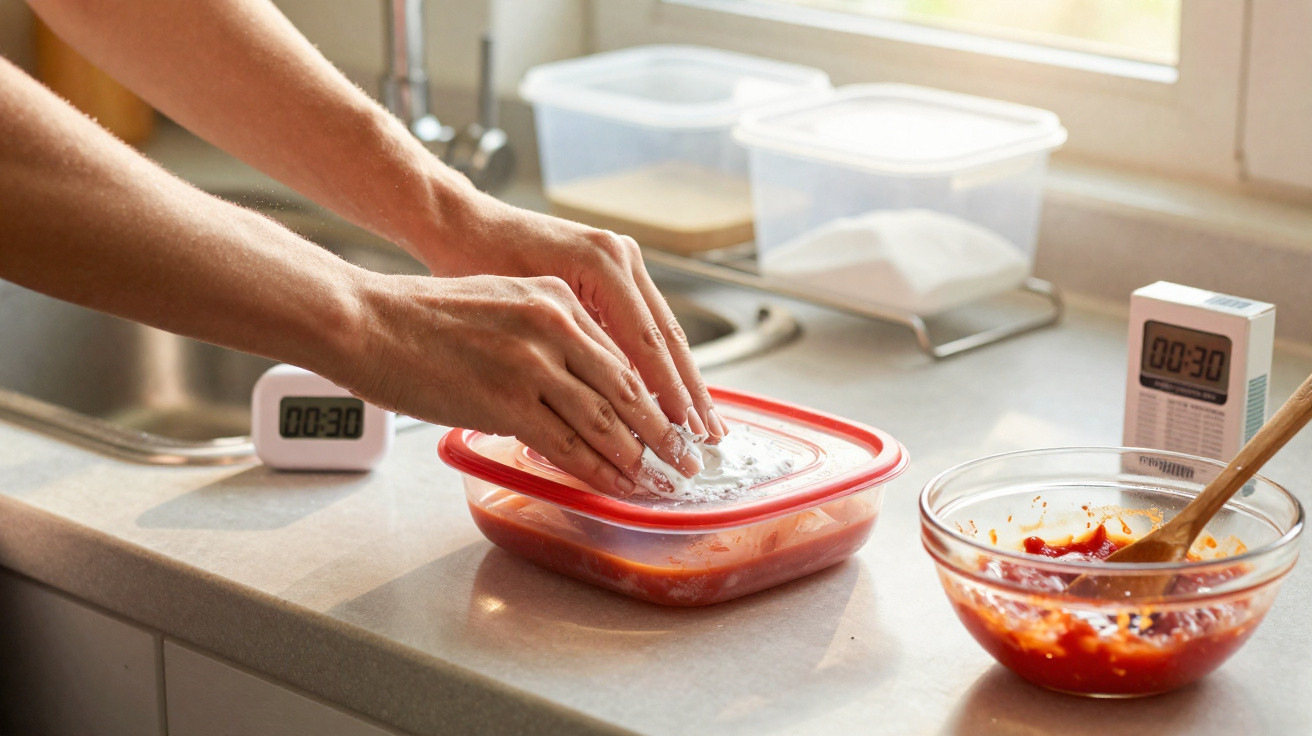
Storing food in plastic containers often leaves terrible reddish stains that ordinary washing will not remove. Fortunately, there is a quick household trick that gets rid of this stubborn grease using just one simple ingredient found in your kitchen.
Why do plastic containers stain so easily?
Plastic containers have a porous surface that readily absorbs the strong pigments in tomato sauce. Heating them in powerful appliances intensifies this process, causing coloured residue to become deeply embedded in the sides.
Washing with ordinary washing-up liquid and a sponge rarely solves the visual issue, which can be very frustrating in day-to-day life. As a result, many people throw away useful containers without realising that a straightforward homemade solution could sort everything out quickly.
How can you remove dark tomato stains?
Removing reddish marks embedded in plastic requires a specific method that restores the container’s original clarity...
Read more
What is the secret ingredient for this cleaning?
The key ally against these persistent stains is bicarbonate of soda, an inexpensive and highly versatile product. Its chemical properties work directly to break down grease molecules and lift even the most difficult pigments.
As well as being exceptionally effective at removing heavy dirt, this natural compound helps get rid of unpleasant food odours. This gives old containers a new lease of life, leaving them fully sanitised for everyday use.
Below is an excellent video from the ARM & HAMMER Baking Soda YouTube channel showing how to carry out this cleaning quickly and effortlessly, making it easier to organise your household food containers:
How do you use the trick in thirty seconds?
The technique is remarkably easy and involves only a few basic steps. First, lightly moisten the stained area of the plastic container, creating the necessary base for the active ingredient to adhere properly to the affected spot.
Next, sprinkle a generous amount of the powder over the red marks. Leave it to work for thirty seconds, then use a soft sponge to wipe away the built-up residue, watching the dirt come away completely without any exhausting effort.
Quick Cleaning Kit
Items Needed
Gather these basic items to clean your plastic containers easily:
- Purified bicarbonate of soda;
- Running water for moistening;
- A soft kitchen sponge.
What care should you take with plastic containers?
Although the process is very effective and safe for most utensils, avoid using steel scourers or extremely abrasive products. These materials can permanently scratch the plastic, creating grooves that harbour even more harmful bacteria.
Another important recommendation is to carry out this washing soon after eating the stored food. Allowing tomato sauce to remain in the container for days considerably increases the adherence of chemical pigments to the container’s porous surface.
To keep your plastic containers well maintained and free from unpleasant dark stains, adopt a few essential practices as part of your organised daily kitchen-care routine, as outlined simply below:
- Wash the container immediately after use;
- Avoid heating greasy sauces in this container;
- Dry it thoroughly before putting it away in the cupboard.
How can you extend the life of containers?
In addition to basic, rapid sanitising care, storing containers dry and without their lids on helps prevent the growth of odour-causing fungi. This continuous air circulation preserves the quality of the material for a long time.
Following these simple guidelines ensures that your containers stay clean and ready to store healthy food in complete safety. Save money and avoid unnecessary waste by using this wonderful thirty-second trick in your own cleaning routine.

Comments
No comments yet. Be the first to comment!
Leave a Comment