
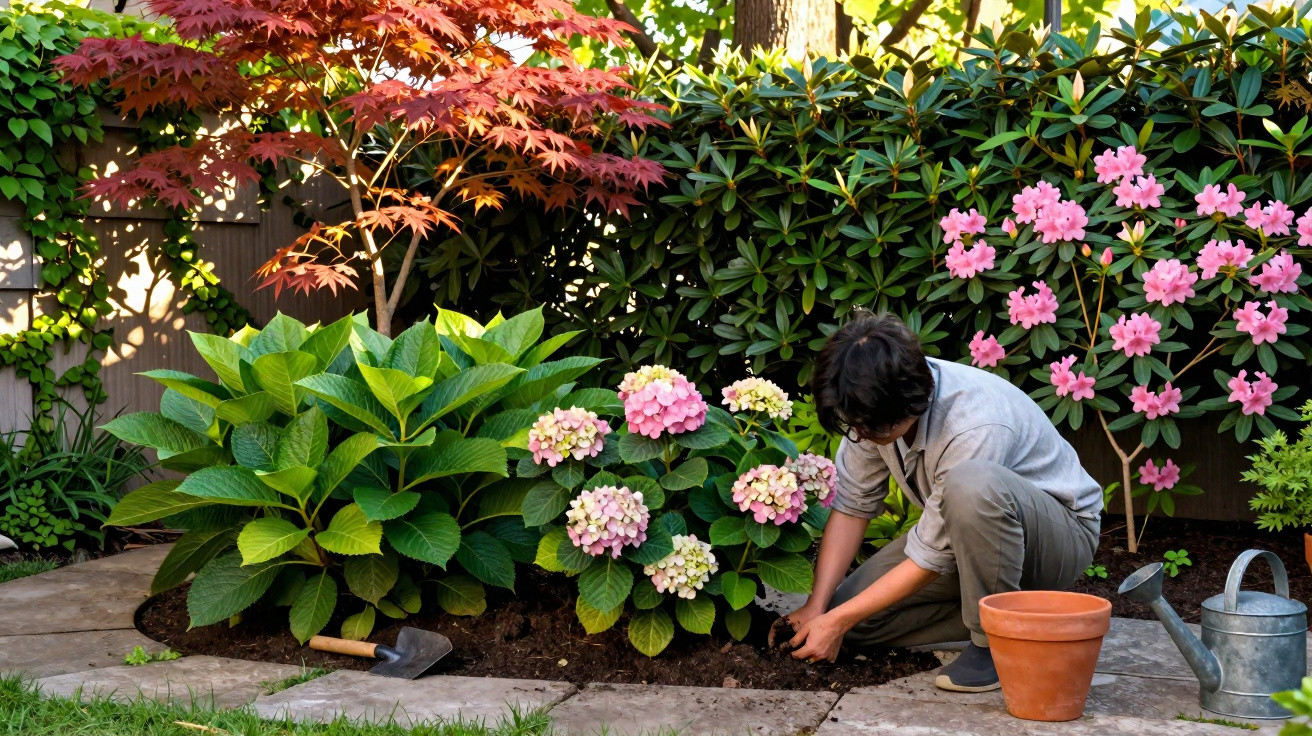
If you have a north-facing garden, a dark house wall or a corner beneath trees, you will know the issue: grass dies off, flowers struggle and the space looks bleak. With the right shrubs, however, this very area can become a cool, lush oasis – without daily watering marathons or professional gardening expertise.
Why shade in the garden is an opportunity, not a problem
Many amateur gardeners dismiss shady areas as “dead zones”. They receive little sunlight, and the soil is often packed with roots or bone-dry; in some cases, it stays permanently damp. That may sound like a nightmare, but it is actually a garden type in its own right.
“Those who understand shade properly gain a retreat that is worth its weight in gold on hot days.”
Before putting new plants into the ground, it is worth assessing the site carefully:
- Type of shade: dappled shade beneath tall trees, partial shade on the north side, or deep shade cast by a building?
- Pattern of light: does the area receive one or two hours of sun in the morning or evening, or does it remain dark all day?
- Soil: is it sandy and dry, or heavy and prone to waterlogging? Is it chalky, or rich in humus and slightly acidic?
- Surroundings: is it sheltered in a corner, or exposed and draughty?
Checking these points briefly makes it possible to choose shrubs that will do more than simply survive: they can truly thrive in shade. To begin with, five carefully positioned species are often enough to bring structure, colour and height to a dark corner.
The 5 best shade-loving shrubs for difficult corners
1. Cherry laurel: rapid screening in partial shade
Cherry laurel is considered the workhorse of hedge plants. It grows quickly, remains green through winter and copes with a wide range of light levels – from full sun to shade.
It is especially useful in tricky corners because it:
- forms dense, opaque barriers, making it ideal at the back of a shade border
- tolerates pruning well, so it can be cut several times a year
- also performs well on a north-facing side or beneath open-canopy trees
For all its benefits, cherry laurel needs to be kept in check. Left unpruned, it soon becomes too wide and deprives neighbouring plants of light. A firm annual cut, ideally straight after flowering, will keep it neat. Wear gloves when pruning, and do not dispose of leaves or seeds on compost heaps used for animal enclosures, as parts of the plant are poisonous.
2. Hydrangeas: bursts of colour for seemingly impossible spots
Few groups of shrubs bring as much colour to shade as hydrangeas. The familiar mophead hydrangeas with their large, rounded flower heads are far happier in cool locations than in blazing sunshine.
“Hydrangeas turn dark house walls into colourful backdrops that shine well into late summer.”
Key requirements for success are:
- Soil: rich in humus, slightly acidic and consistently moist, but never allowed to become completely dry for months
- Watering: water deeply on hot days rather than merely giving the surface a light sprinkling
- Choosing varieties: Macrophylla and Aspera cope with heavy shade, while types such as panicle hydrangeas appreciate a few hours of morning sun
There is a practical added benefit: the abundant blooms attract bees and butterflies. This is particularly valuable in shadier gardens, helping to ensure that the area still feels full of life.
3. Japanese maple: delicate elegance for partially shaded spaces
For anyone who wants more than simply greenery in a shady corner and is looking for real design impact, Japanese maple is an excellent choice. Its finely cut leaves resemble small works of art, while many varieties glow in shades of orange, red and purple during autumn.
Its ideal conditions are:
- bright shade or partial shade, preferably with protection from wind
- no intense midday sun, which can scorch the delicate foliage
- light, humus-rich soil that does not dry out completely
Japanese maples are also very suitable for large containers on a north-facing terrace or in a partially shaded courtyard. With only a little effort, they can make a very austere space feel noticeably more attractive.
4. Fatsia japonica: instant jungle for dark courtyards
Fatsia, often sold under its botanical name Fatsia japonica, looks rather like a houseplant that has moved outdoors: its large, glossy, hand-shaped leaves create an immediate holiday atmosphere.
“A single fatsia can make a dreary back yard look like a green hotel lounge.”
It enjoys shade to partial shade, tolerates urban conditions and grows well in larger pots too. In mild regions, it can stay outside all year; in colder winters, it needs protection or a sheltered position, such as beside a house wall.
One important point: its black berries in autumn are poisonous to people and pets. Anyone with children or dogs in the garden should remove the fruiting stems in good time or place the plant where it cannot easily be reached.
5. Rhododendron: a spring display in the shade
Rhododendrons favour acidic, humus-rich soil and grow well in partial shade. In many front gardens, they languish because the soil is unsuitable or because they are left permanently dry. Positioned correctly, they are among the most striking flowering shrubs of all.
They will be happiest if you:
- improve the soil with leaf mould or specialist rhododendron compost
- avoid pure chalky soil, otherwise the leaves develop chlorosis and the plant weakens
- use water with as little lime as possible; in areas with very hard water, collect rainwater
Their lavish spring flowers provide food for insects, while densely leaved shrubs give birds nesting sites and places to hide.
Caring for shade-loving shrubs: what they really need
Many shade-tolerant shrubs are tougher than their refined appearance suggests. Even so, they benefit from a basic level of care:
- Water systematically: for the first two years after planting, water regularly and deeply, particularly hydrangeas. Infrequent, generous watering is better than frequent small amounts.
- Pruning: shape cherry laurel once or twice each year; thin rhododendrons only when necessary; prune Japanese maple as little as possible to preserve its natural form.
- Mulching: a layer of bark mulch or leaves keeps the soil moist and cool in summer – ideal for shade plants.
- Feeding: start in spring with an organic fertiliser; hydrangeas and rhododendrons also benefit from specialist fertiliser for ericaceous plants.
Dense planting in shaded areas creates its own microclimate. The air stays cooler and more humid, while the soil dries out more slowly. During hot spells, this eases the burden not only on the plants but also on the gardener.
Turning a difficult corner into a harmonious shade border
To stop a dark corner from looking like a random collection of plants, it helps to plan a basic structure. A simple arrangement is enough:
| Position | Plant | Purpose |
|---|---|---|
| At the very back | Cherry laurel | Screening, backdrop, framework |
| Middle height | Rhododendron, fatsia | Flowers, exotic character, volume |
| At the front | Hydrangeas, smaller Japanese maple varieties | Colour, fine texture, focal point |
Ground-covering plants such as epimedium, sweet woodruff or periwinkle work well between the shrubs. They fill gaps, suppress weeds and keep the soil shaded – an important factor in retaining moisture.
What else to know about shady sites
Shade does not automatically mean cool, damp conditions. Under shallow-rooted trees in particular, the ground can become extremely dry in summer because tree roots take moisture from the soil. The following measures help:
- dig generously sized planting holes and add plenty of compost
- use drip hoses or water slowly with a watering can
- ensure plants are firmly anchored, as their roots may not be able to grow as deeply
Hardiness is another consideration. Sheltered shaded corners beside house walls are often slightly milder than open ground. This gives you more scope for tender shrubs such as fatsia or certain Japanese maples, which could otherwise struggle without protection in genuinely frosty regions.
If you prefer to approach the subject gradually, begin with one or two reliable species such as hydrangeas and cherry laurel. If that goes well, expand the range with Japanese maple, fatsia and rhododendron. Over time, this creates a dense, varied shade oasis that becomes a favourite part of the garden at the height of summer.
Comments
No comments yet. Be the first to comment!
Leave a Comment