
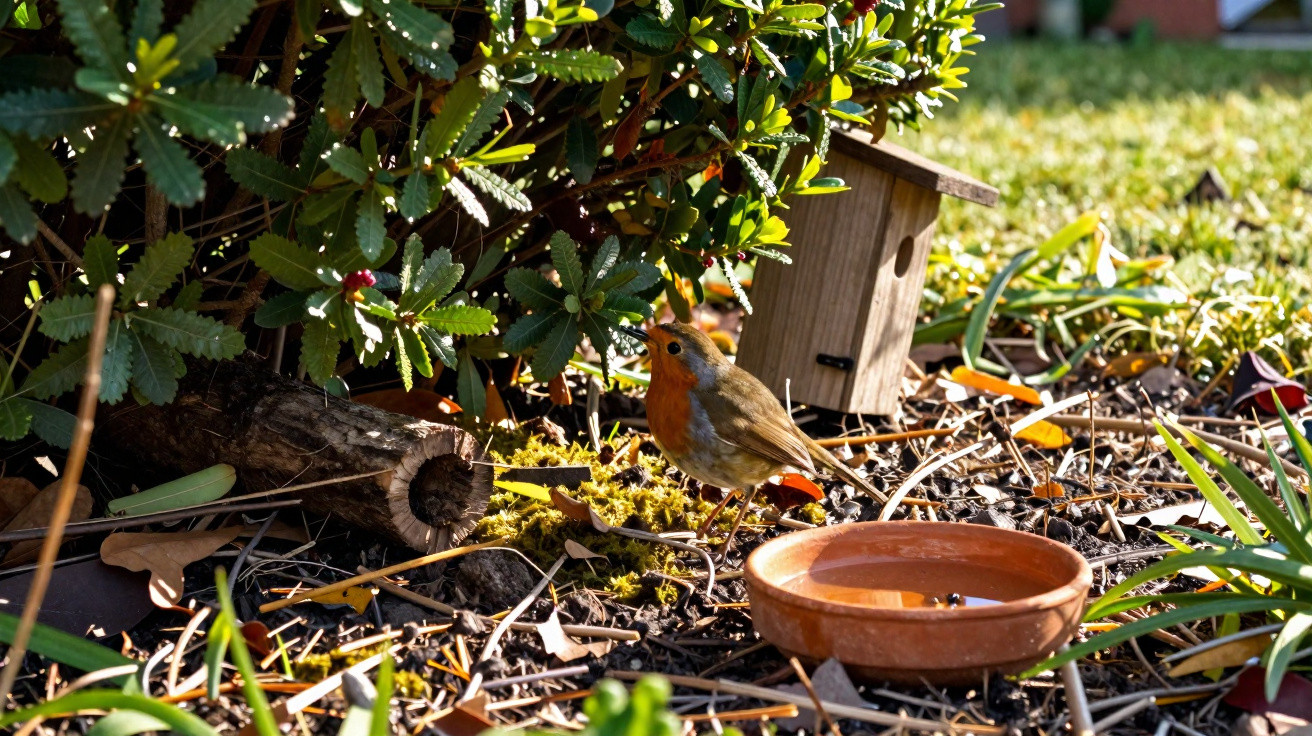
A modest patch right at ground level can make all the difference.
Anyone hoping to see the orange-breasted robin regularly in their garden needs less high-tech feeding equipment and more understanding of how this bird really lives. The most important feature is not the prettiest feeder, but an unremarkable strip of soil beneath shrubs and hedges. This is where it is decided whether a robin settles for good or soon moves on.
Why robins often stay away despite a bird feeder
Many gardeners recognise the situation: a feeder has been hung up, perhaps with an attractive nest box installed too, yet the small bird barely remains for more than a few seconds. The explanation lies in the robin's hunting habits.
Robins hunt on the ground. They find most of their food directly on the soil, in partial shade and beneath thick branches. Seeds hold little interest for them in spring, when they feed their young protein-rich small creatures.
“Anyone who wants to attract robins must offer them one thing above all: a living buffet of insects, worms and small creatures right on the ground.”
A robin's usual prey includes:
- Earthworms and small snails
- Woodlice, centipedes and millipedes
- Spiders and earwigs
- Larvae in the soil and dead wood
- Small caterpillars and other insects
Many young robins die during their first year because they cannot find enough suitable food. Although individual birds may live for up to 15 years, many do not even survive their first three winters. A garden with varied structure and sufficient hunting areas substantially improves their prospects.
The hidden robin haven is beneath shrubs
The key to a robin-friendly garden is surprisingly straightforward: create a miniature woodland floor under hedges and shrubs. Rather than leaving bare, swept soil or spreading gravel, cover this area with a layer of dead plant matter.
“A 10 to 15 centimetre-deep carpet of leaves and dead wood becomes a natural gourmet counter for the robin in spring.”
This spot is so appealing because:
- Leaves and small branches retain moisture and protect the soil surface.
- Fungi and bacteria break down the material, creating a microclimate where countless small creatures can establish themselves.
- Dark, somewhat sheltered corners provide cover for this wary bird. It can hop into open ground but immediately retreat to the shrub when danger appears.
A shady, sheltered-from-the-wind site beneath a dense hedge or wide-growing shrub is ideal. Crucially, do not tread on it or compress it. Keep the layer loose so that air and moisture can circulate.
Wild “ground mulch”: how to create a robin area
The good news is that there is no need to buy anything. Most of the materials are already produced in the garden, but are often put in the bin or garden-waste collection instead. This sort of “garden mess” is especially valuable to robins.
Creating a natural feeding spot step by step
Rake together fallen leaves
Do not clear away all autumn leaves. Instead, rake leaves from the lawn specifically towards the bases of shrubs and hedges.Make a low, loose bank
Form a strip or island of leaves around 10 to 15 centimetres high. Do not compact it.Add dead wood
Place a few thin branches, twigs or small pieces of partly decayed wood within it. Pale, untreated wood works just as well.Work in a little kitchen waste
Bury two to three apple cores or peelings from unsprayed fruit shallowly in the leaves. Their sugar encourages decomposition and attracts tiny organisms more quickly.Leave it undisturbed
From late autumn well into spring, leave the area alone. Do not use a leaf blower, hoe or weed this patch.
This apparently untidy corner becomes an ideal hunting ground for robins. In spring, the bird spends up to 90 percent of its foraging time on the ground; if it finds plenty of insects there, it will return day after day.
Common mistakes that drive robins from the garden
The robin's greatest enemy is not winter, but excessive tidiness. Anyone who clears every corner with a leaf blower as early as March removes the bird's basis for survival.
“A clinically tidy garden is like a desert to robins: no prey, no shelter, no reason to remain.”
The most frequent mistakes include:
Removing every last leaf
Without a leaf layer, the ground dries out, while worms and insects retreat further down or disappear.Cutting hedges back hard to the base
Radically cut hedges offer little cover and create little shade, leaving the soil barren.Gravel and stone-covered areas beneath shrubs
They may look neat, but are generally hostile environments for ground-dwelling creatures.Constant disturbance
Repeated raking, digging or walking around directly at shrub bases scares away this cautious bird.
Anyone determined to keep part of the garden very neat can still do so. What matters is having at least one quiet, “wild” strip beneath bushes and hedges that remains largely undisturbed.
Add water, food and a nesting site without disturbing the ground
Living soil provides the foundation. A few additions can make a garden even more appealing to robins, provided they do not interfere with the hunting area.
Offering drinking water and supplementary food properly
A shallow dish of fresh water at ground level, close to a bush or wall, acts like a magnet. The bird can drink and bathe there while always having an escape route 2 to 3 metres away.
In winter, energy-rich food can help:
- Fat-based bird food or fat balls, preferably without plastic netting
- Fine, shelled sunflower seeds
- Porridge oats mixed with a little fat
As soon as sufficient insects are active again in spring, robins should hunt for themselves. Seeds cannot replace the animal food required by young birds.
Planning a nest box and keeping robins safe
A nest box with a relatively large entrance hole in a quiet location can give robins additional security. Sheltered, partially shaded positions are best: not too low to the ground, but not right at the top of a tree either. It is important that cats and martens cannot reach it easily.
It is also worth checking the ground for potential dangers. In many residential areas, cats are the main threat. Avoid placing feeding stations in open spaces from which a robin cannot quickly fly into cover. Dense shrubs, dead-wood piles and hedges with undergrowth provide vital places for the bird to retreat.
Why the “untidy” garden is becoming increasingly popular
Many bird conservation organisations now recommend a more relaxed approach to gardening. Leaf piles, pieces of dead wood and supposedly “unkempt” areas provide habitat for numerous species, not just robins.
A more natural garden delivers noticeable benefits:
- Fewer pests, because birds, hedgehogs and insect-eating animals help control them
- Less watering, as the soil stays moist for longer
- Greater biodiversity, from beetles and wild bees to songbirds
The apparent loss of control therefore has a clear reward: a living garden full of rustling, fluttering and birdsong, where the robin does not merely stop by briefly but truly feels at home.

Comments
No comments yet. Be the first to comment!
Leave a Comment