
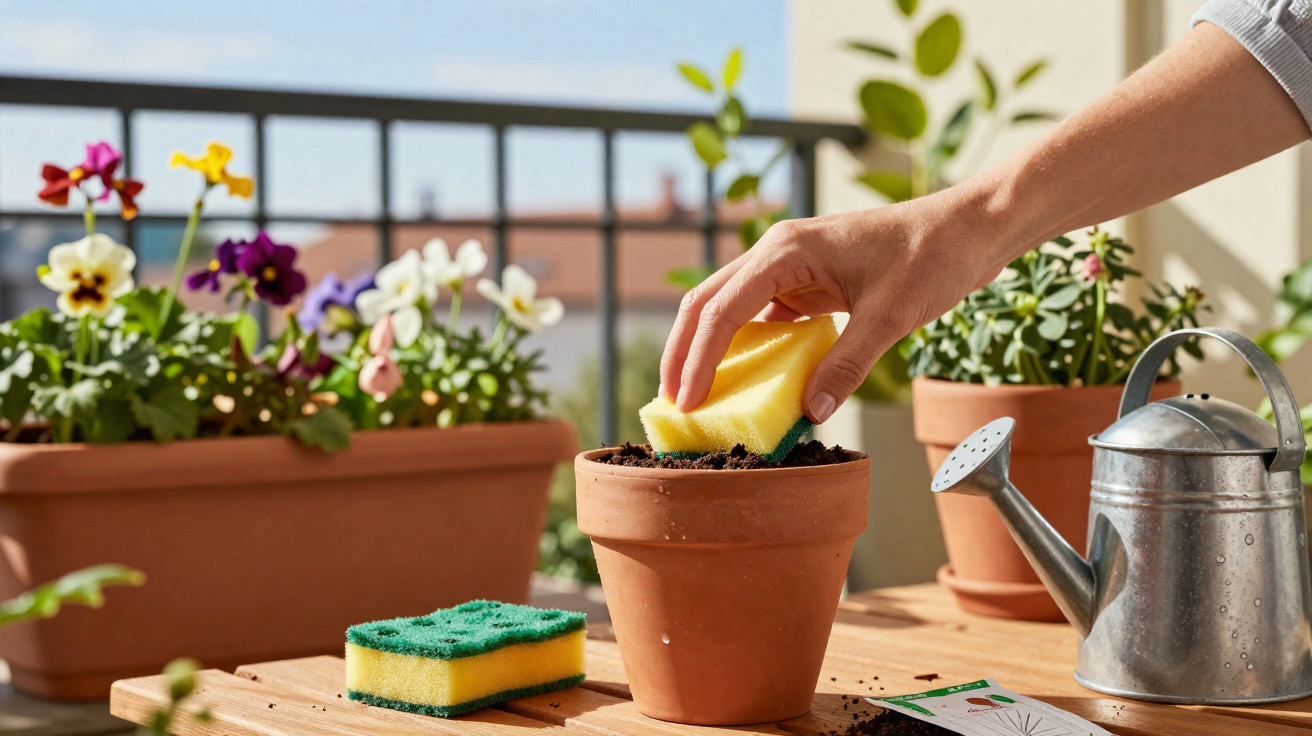
When the gardening season begins, beds, containers and window boxes can quickly be pushed to their limits: young roots, changeable weather, and sometimes too much or too little water. At the same time, a small everyday household item is thrown away in huge quantities, even though it could quietly help retain water and cut waste in the garden.
How a kitchen sponge becomes a water-storage hub in a pot
The principle is straightforward: the soft, porous material that has reached the end of its life by the sink can act like a miniature water reservoir in soil. Place it in a pot or window box above the drainage layer, such as gravel or broken clay pots, and beneath the compost.
Its porous structure absorbs surplus watering water, holds it and gradually releases it back to the roots – like a small sponge within the root zone.
This offers several advantages, especially in spring:
- The compost does not dry out as rapidly.
- Plants cope far better with dry spells.
- In windy balcony locations, moisture stays in the growing medium for longer.
- A short absence, such as a weekend away, becomes less critical for thirsty container plants.
Young plants with delicate roots benefit in particular. Rather than constantly switching between waterlogging stress and drought stress, they can establish themselves more evenly.
Why spring is the ideal time for this kitchen sponge trick
Early in the year, daytime temperatures are often already mild while nights remain cool. The sun becomes stronger, evaporation increases and many amateur gardeners water rather irregularly. This combination can soon lead to watering mistakes.
A built-in water store around the roots cushions these fluctuations. Its effect is especially noticeable in typical spring situations:
- Newly planted containers: Roots have not yet grown deep, but they still need reliable moisture.
- Window boxes in exposed, windy spots: Wind can dry out the compost within a few hours.
- Young tomatoes, herbs and summer flowers: They cope with brief dry periods much less well than older, well-rooted plants.
Planning for this unobtrusive aid from the start can prevent watering stress later on. The difference is particularly clear on urban balconies, where there is little compost volume.
Natural or plastic: which kitchen sponge types suit the garden
Before taking a kitchen sponge into a bed or pot, check what it is made from. Not every type is suitable for soil or compost.
| Type | Characteristics in the garden | Suitable for compost? |
|---|---|---|
| Cellulose / plant fibre | Biodegradable, retains water and allows air to reach the roots | Yes, provided it is not laden with chemicals |
| Loofah | A completely natural material, highly airy and gives compost a good structure | Yes, ideal |
| Synthetic plastic type | Contains plastic and may release microplastics and residues | No, use only as a temporary water reservoir in a pot |
For flower beds, vegetable gardens and compost heaps, cellulose or loofah types are clearly preferable. Over time, they break down and can even support soil structure. Synthetic versions should not go into compost or remain permanently in soil used for edible crops.
Preparing a kitchen sponge for garden use
Before the material goes anywhere near the soil, it needs thorough cleaning. Grease, washing-up liquid residue and bacteria build up around the sink, and nobody wants those transferred to a vegetable bed.
Cleaning steps before using it in the garden
- Rinse thoroughly: Squeeze it out under hot water until there is barely any foam or smell left.
- Boil it: Leave it in boiling water for a few minutes to reduce a large proportion of germs.
- Vinegar soak: Then saturate it with clean water and a little clear vinegar, which helps remove further residues.
- Optional microwave treatment: Put it into the microwave briefly while damp, but only if it contains no metal, to reduce additional germs.
After this treatment, the sponge should leave the kitchen for good. It should not return to household use, but remain in the garden permanently.
Four clever places to use a kitchen sponge in spring
Once properly prepared, the material can be used in several areas around the home, whether on a small city balcony or in a large vegetable garden.
1. Water storage in pots and window boxes
This is the most common use: place a piece of sponge above the drainage layer and cover it with compost. When watered, the material fills with moisture and later releases it into the soil.
Ideal for:
- Summer flowers in window boxes
- Culinary herbs in pots
- Tomatoes, peppers and chillies in containers
2. A moisture booster for compost
Natural versions can simply be cut into pieces and mixed through the compost heap. They absorb water, keep the heap moist for longer and create small air pockets.
Well-moistened, airy compost gets microorganisms working – decomposition proceeds more evenly, and the finished material becomes more crumbly.
Important: use only natural, plastic-free types, and make sure they are not heavily contaminated with washing-up liquid or grease.
3. A mini germination station for seeds
Anyone without room for large seed trays can cut the kitchen sponge into small cubes. Put one seed into each cube. The material stays lightly moist, giving seedlings a consistent water supply.
As soon as the young plant is roughly hand-height, transfer the whole cube into a pot or bed. Natural material will simply break down in the soil over time.
4. Light protection and a barrier against pests
Placed flat on the soil and held down with a small stone, the sponge can give sensitive plants modest protection from cold ground in spring. Air can still reach the soil, while night-time cooling is less severe.
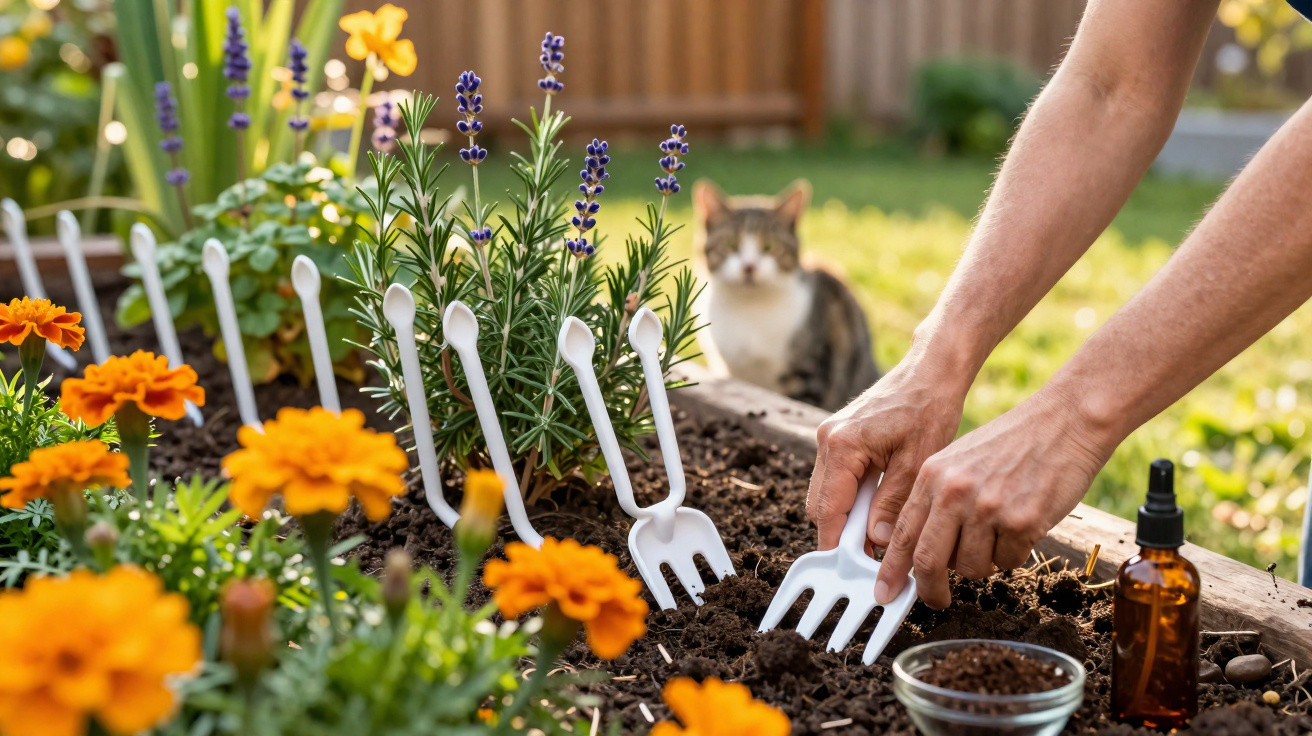
Adding a few drops of strongly scented essential oils that certain insects are known to dislike also creates a small scent barrier. This can offer individual plants some protection without immediately resorting to harsh chemical treatments.
When the kitchen sponge needs to come back out of the soil
No material lasts forever, including in the garden. Regular checks help prevent unpleasant surprises:
- Mould growth
- A strong, rotten smell
- A crumbly structure that is breaking down completely
If this happens, a natural type belongs in the compost heap, provided it is not full of cleaning-product residues; a plastic type should go in general waste. In beds containing edible plants, a cautious, considered approach is advisable, especially with material that has spent a long time in the kitchen.
Why this trick benefits both the climate and your budget
Billions of kitchen sponges are discarded every year. Moving some of them to the garden or balcony reduces waste while also saving money on costly water-retaining granules or specialist gels.
In areas with frequent watering restrictions or rising water prices, every small measure that keeps soil moist for longer can help. Cities with many balcony gardens benefit too: fewer dried-out plants mean fewer replacement flowering plants to buy and less plastic waste from new pots and bags.
Anyone who tries this simple spring trick will soon see where it is most useful in their own garden: in a herb box on the windowsill, a tomato container on the patio or the compost heap behind the garden shed. An unassuming kitchen sponge can quietly ensure that plants are far less likely to go thirsty – without high-tech equipment or much effort.
Comments
No comments yet. Be the first to comment!
Leave a Comment