
Many hobby gardeners breathe a sigh of relief in February: their potted lemon tree has survived the winter, the first fresh leaves are appearing and everything seems stable. Yet at precisely this point, one icy March night can be enough to damage the roots through the cold ground – even on a balcony that appears well protected.
Why March is so treacherous for potted lemon trees
Potted citrus plants often look vigorous in late winter. Days are getting longer, the sun warms the leaves and new growth emerges in the canopy. However, the threat is not above ground but below it: in the surface beneath the pot.
On clear March nights, concrete, stone and tiled surfaces cool down sharply. That cold travels upwards into the root ball and can suddenly harm the fine roots. A healthy-looking tree in the evening can have curled, blackening leaves just days later – a typical consequence of what is known as radiation frost.
The greatest cold attack on a potted lemon tree often comes not from the air, but directly through the balcony floor.
Many people protect only the canopy, using a little horticultural fleece, placing the tree in a sheltered spot or reducing watering. These measures help, but they are not enough. The floor remains an effective conductor of cold, creating direct contact between the root ball and an icy slab. That contact is exactly what needs to be interrupted.
The simple solution: an insulating board beneath the pot
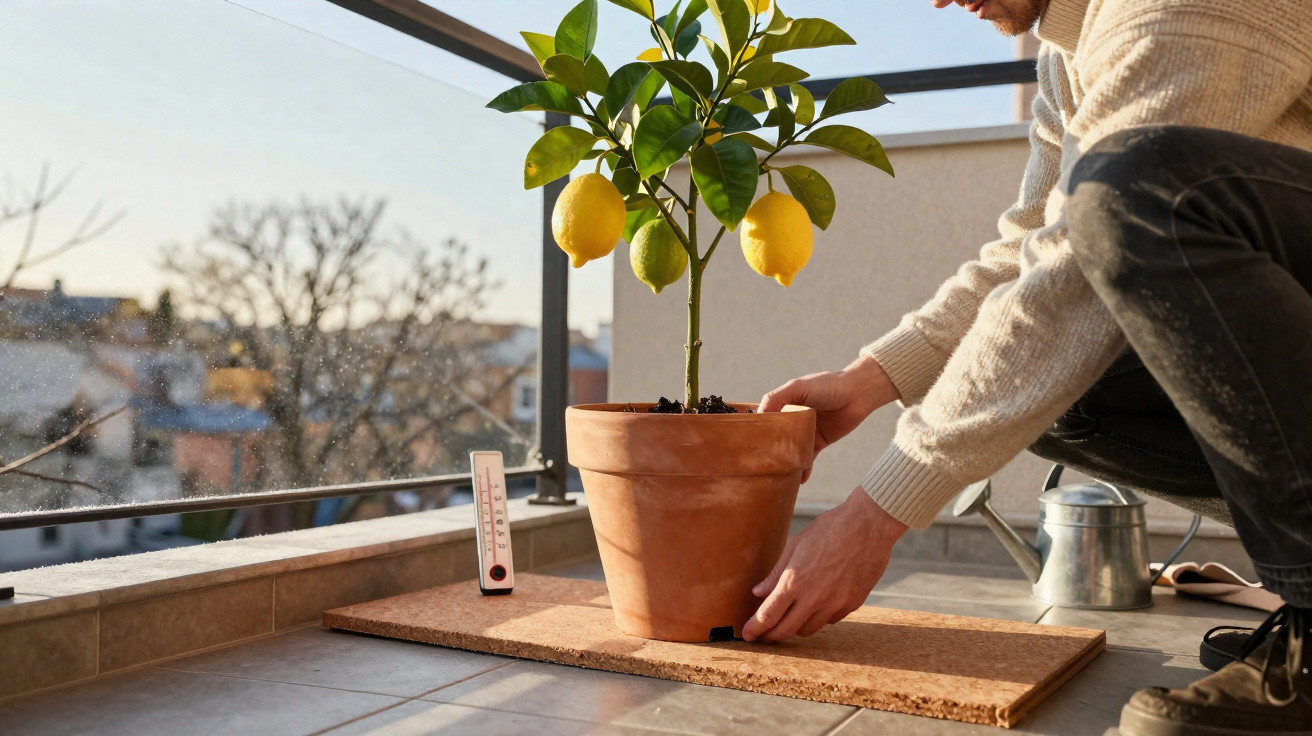
The key measure is remarkably straightforward: place the container on an insulating board. This separates the pot from the cold surface and prevents the so-called thermal bridge effect.
Suitable materials include:
- a thick polystyrene board, such as packaging material
- a sturdy cork board or several cork mats glued together
- a thick, rigid wooden pot stand with as continuous a surface as possible
- a combination of an insulating board and small blocks or pieces of cork
The board should be around 2 to 5 centimetres thick and extend 1 to 2 centimetres beyond the pot base on all sides. This creates a kind of protective island beneath the container. Although the floor can still become cold, that cold no longer reaches the roots directly.
A 5-minute DIY solution using packaging padding is often enough to carry a lemon tree safely through late March nights.
Important: keep the drainage hole clear and create an air gap
One common mistake is insulating the pot while blocking its drainage hole. Waterlogging combined with cold is toxic to citrus roots, so make sure water can drain away freely.
A practical DIY idea used by many balcony owners is:
- Cut wine corks in half lengthways.
- Position three or four halves beneath the base of the pot as small feet.
- Place the insulating board underneath them.
This produces a thin air gap, keeps the drainage hole unobstructed and gives the pot two barriers against the cold: air and insulation. The arrangement needs very little material, costs virtually nothing and can be reused year after year.
How cold from a balcony attacks the root ball
Agricultural researchers repeatedly point out that potted plants react differently to frost than plants growing in the ground. Trees planted outdoors benefit from the soil's ability to retain heat. By contrast, a container stands directly on a usually hard, highly conductive surface.
Materials such as concrete, stone and tiles retain little heat during the day, then release the cold more intensely at night. The bottom part of the pot cools down, and the compost may freeze partially from the base upwards. Fine feeder roots die, leaving the tree barely able to take up water. The canopy responds with limp leaves that later turn brown.
On a sunny south-facing balcony, the lemon tree may look healthy during the day while a cold shock passes through the container from below at night.
Situations that are particularly critical include:
- south- or west-facing balconies with tiled or concrete floors
- daytime temperatures clearly above 10 degrees, followed by brief night-time lows of −1 to −3 degrees
- relatively dry air and cloudless skies
Horticultural fleece or plastic covering over the canopy can provide a buffer of around three additional degrees. A healthy, well-protected lemon tree can even tolerate −6 to −7 degrees for a short time. Without protection beneath the pot, however, even a light frost can severely damage the roots.
Until the Ice Saints: combine protective layers wisely
When caring for container plants, gardeners often use the so-called Ice Saints in mid-May as a guide. Until then, sensitive species such as citrus plants should always have frost protection in reserve. Ideally, the insulating board should therefore remain beneath the pot until around mid-May.
For forecast cold snaps, protection can be layered as follows:
- Base: An insulating board beneath the container (an essential measure).
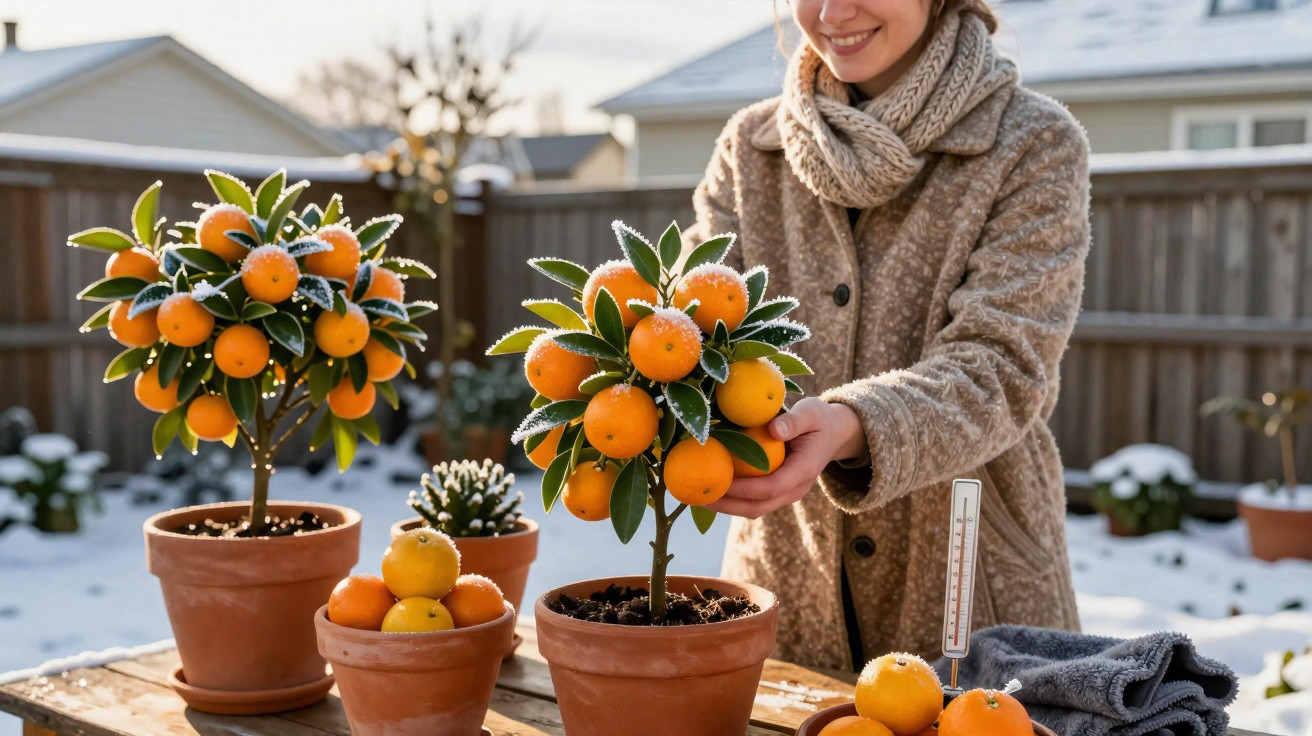
- Extra protection where frost is expected: A fleece cover or winter horticultural fleece over the canopy, supported by small stakes so that the fabric does not touch the leaves directly.
- Moving the plant: Position the pot close to a sheltered house wall, ideally on the south side or beneath a roof.
- Raising it up: Where the ground is extremely cold, also use a shelf board, wooden pallet or plant table.
It is also possible to build a kind of second covering around the container. Many people wrap bubble wrap around the pot and cover it with hessian or decorative fabric. This keeps the root area warm while maintaining a homely appearance. Importantly, the covering should not be completely sealed at the bottom, so water can escape.
Watering and care during late frost
Wet compost cools more slowly, but waterlogged roots suffer badly when frost arrives. The right approach lies in the middle: do not let the compost dry out, but avoid soaking it before a cold night.
Useful rules of thumb include:
- In March, water in the morning where possible, allowing surplus water to drain away during the day.
- Before forecast frosty nights, water only lightly or pause watering.
- Consistently prevent standing water in the saucer.
Start feeding cautiously in spring, once temperatures have become reliably milder. Following frost damage, allow the tree to recover before applying a strong feed. Yellowish or scorched leaves often become noticeable only several days after the frosty night – do not discard the tree too quickly; observe the whole plant instead.
How to spot damage – and what can still help
Frost damage in the root area appears with a delay. Common signs include:
- Leaves lose their firmness and droop limply.
- Leaf edges turn brown or black.
- Young shoots appear to dry out from the tips.
- The tree barely responds to watering, while the compost stays damp for longer.
In this situation, move the pot promptly to a bright, frost-free place that is not too warm. Keep the insulating layer in place. Prune back carefully only once it is clear which shoots have died. Some lemon trees produce new growth from deeper sections that are still viable several weeks later.
Why this small amount of effort is genuinely worthwhile
A potted lemon tree grows slowly and requires patience, water, fertiliser and plenty of summer light. That makes it all the more frustrating when a few icy nights in March undo that effort. In many cases, a simple insulating board, a few cut corks and some horticultural fleece can prevent exactly this outcome.
Once gardeners have used this trick, they usually make it a permanent part of their winter and spring routine: put the board underneath in autumn, leave it there until after the Ice Saints, and briefly wrap the canopy and container more thoroughly when cold spells are forecast. The lemon tree then remains stable and produces stronger new growth – while the chances of harvesting home-grown fruit from the balcony or terrace in summer are considerably better.
Comments
No comments yet. Be the first to comment!
Leave a Comment