
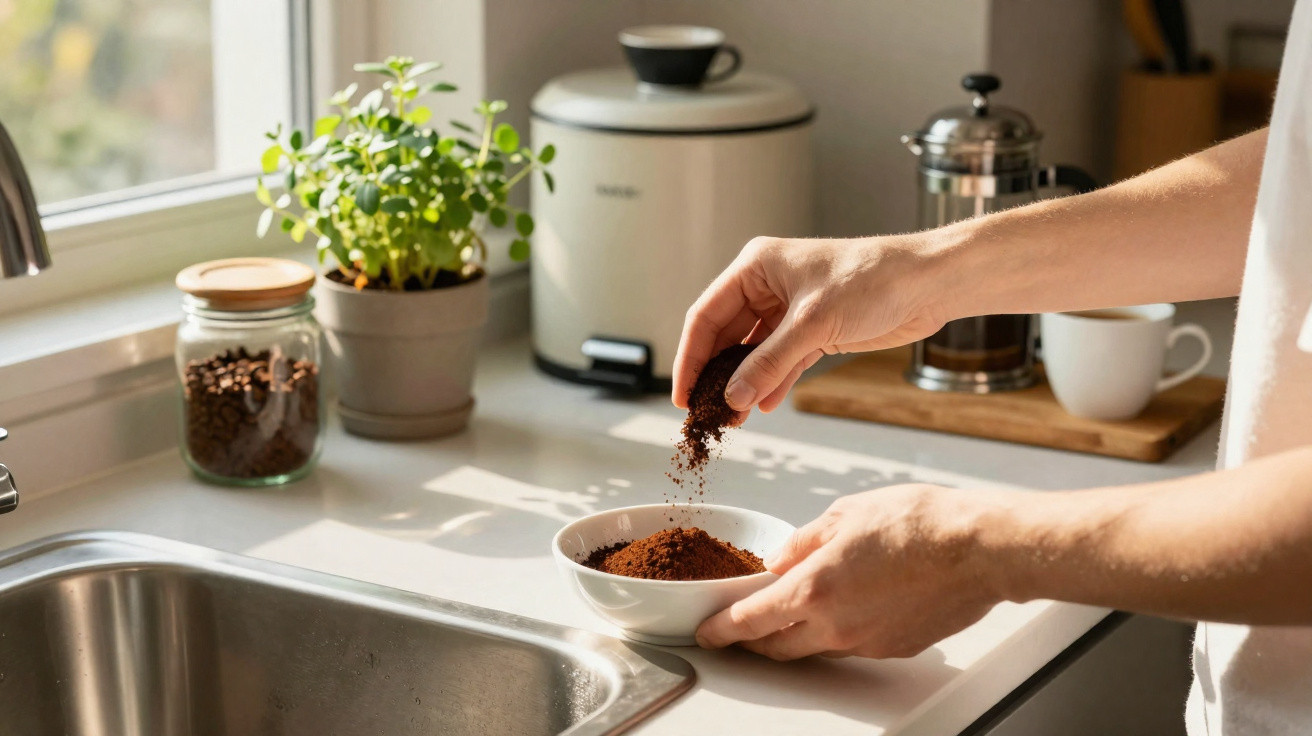
Used coffee grounds are often thrown straight into the bin, yet they can first help tackle a very common kitchen issue: unpleasant smells from the sink, bin and certain utensils. Rather than being discarded without further use, this everyday waste can offer a practical, simple and low-cost purpose, while also helping to reduce the amount of organic waste sent to landfill.
How do used coffee grounds help reduce kitchen odours?
Used coffee grounds can help lessen unpleasant odours in particular areas of the kitchen. Their distinctive scent and compounds can neutralise strong smells, especially those produced by food waste in small, enclosed spaces.
For kitchen bins, they can be placed in an open container at the bottom of the bin, underneath the bin bag. At the sink, use a moderate amount to scrub the metal surface, or put them into small fabric bags near the drain. Once thoroughly dry, they can also be placed in the fridge, provided they are kept in clean, ventilated containers.
How should used coffee grounds be applied in the sink and kitchen bin?
To prevent blockages and unnecessary mess, avoid tipping large amounts directly down the drain. Instead, use the grounds as a mild exfoliant on surfaces, then collect them after cleaning and dispose of them with organic waste or add them to compost.
The following steps explain how to include used coffee grounds in your cleaning routine simply and safely:
- Drying the grounds: After making coffee, spread the used grounds over a baking tray or plate and leave them to dry in the open air or in a well-ventilated place to reduce moisture.
- Using them in the sink: Put a small amount of dry grounds in the sink bowl and rub with a soft sponge to reduce odours and remove light grease residue.
- Using them in the kitchen bin: Place the dry grounds inside a paper filter, piece of cloth or perforated sachet, then position it at the bottom of the bin.
- Replacing them: Renew the sachet regularly, according to how often the bin is used and how strong the smells are in the room.
What other uses can used coffee grounds have in the kitchen?
As well as managing odours in sinks and bins, repurposed coffee grounds can assist with cleaning pans and baking trays with more stubborn dirt. They work as a gentle abrasive, helping to lift stuck-on residue from tougher metal surfaces that are not easily scratched.
They can also be useful for washing glass or plastic containers that retain food odours, such as garlic, onion or sauce smells. In these cases, add a small amount of grounds to the container, pour in warm water and scrub with a sponge. Leave it for a few minutes if needed, then rinse thoroughly to remove any remaining residue and smells.
What precautions are important when reusing used coffee grounds?
Despite their practical benefits, a few precautions can prevent further problems. One of the most important is not to pour large quantities into plumbing, as accumulated grounds combined with grease and food scraps may encourage blockages in already overloaded pipes.
Moisture must also be controlled: if the grounds stay wet for too long, they may develop mould and an unpleasant smell. They should therefore be dried thoroughly before being used in kitchen bins, cupboards or fridges, stored in clean containers and replaced frequently, so that they do their job without creating new inconveniences in the kitchen routine.





Comments
No comments yet. Be the first to comment!
Leave a Comment