
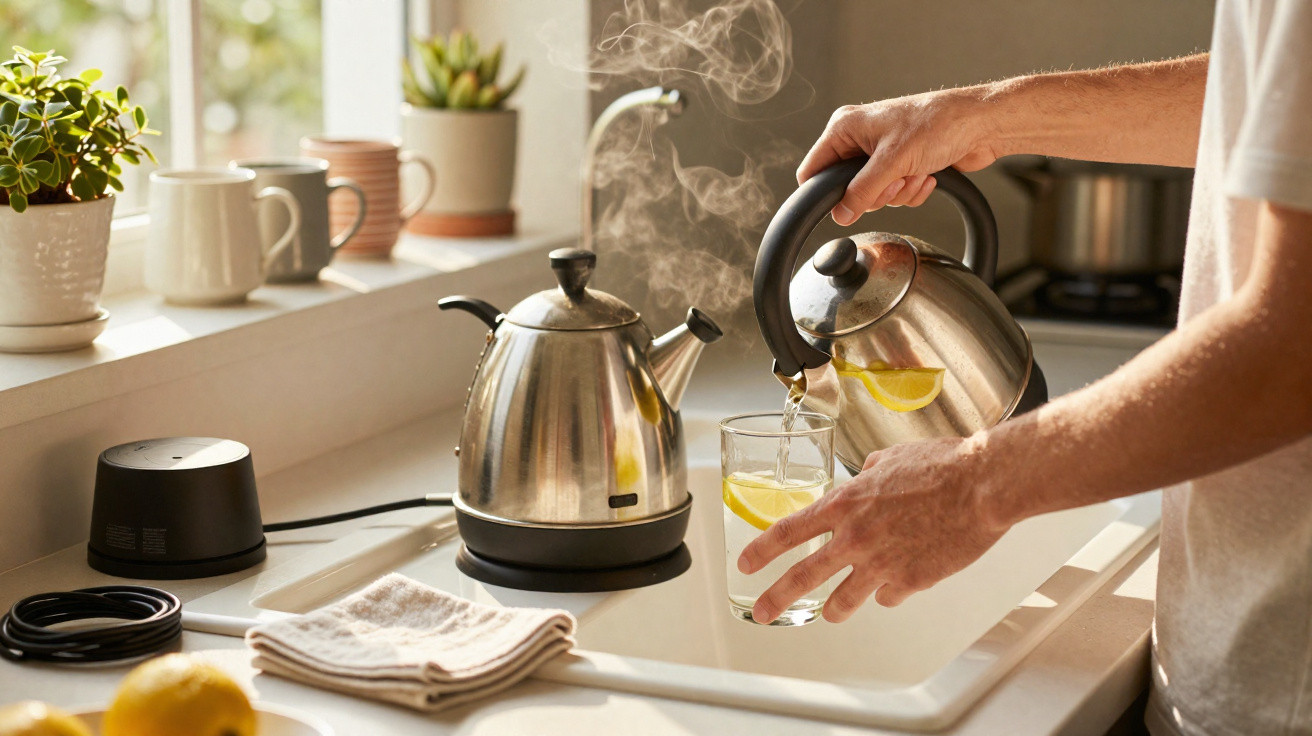
An electric kettle makes it easy to prepare coffee, tea, mate, quick soups and hot water within minutes, but daily use calls for a few precautions to prevent unusual tastes, limescale build-up and problems with the base. The key is not to leave water sitting inside for hours, to descale it regularly and to keep the electrical components protected. With a few straightforward habits, the appliance will heat more effectively, last longer and keep the water free from odours and residue.
Why should you not leave water in an electric kettle all day?
Water left standing in an electric kettle encourages minerals to collect on its metal base, particularly in areas with hard water. Over time, this white or greyish layer can affect the water’s taste and make heating less efficient.
Once you have finished using it, pour away any remaining water and leave the lid open for a few minutes so the inside can dry properly. This simple measure reduces trapped moisture, helps prevent a stale smell and makes crusts less likely to form on the bottom.
How do you remove limescale from an electric kettle?
Limescale develops when minerals in the water remain behind after boiling. To clear this deposit, use a mild acidic solution, such as diluted white vinegar, lemon or citric acid intended for cleaning utensils.
A safe household method is as follows:
- Add 1 part white vinegar to 3 parts water.
- Boil the solution in the kettle.
- Switch it off and leave the mixture to work for around 20 minutes.
- Empty the liquid and rinse the kettle thoroughly.
- Boil clean water once or twice before using it again.
How often should you descale an electric kettle?
How often descaling is needed depends on the hardness of your water and how many times the kettle is used each day. If you use it several times a day, it may need descaling once a month, especially when white marks appear on the base or loose particles can be seen in the water.
In areas with softer water, a thorough clean can be carried out every two or three months. Visual signs are the best guide: if the base starts to lose its shine, boiling takes longer or the water develops a mineral taste, the kettle is due for cleaning.
What precautions protect the electric components?
The base of an electric kettle must never be wet, immersed in water or washed under a tap. It contains electrical contacts that need to stay dry to prevent faults, short circuits or risks while using the appliance.
A few habits help prevent common damage:
- Lift the kettle off its base before filling it.
- Do not fill beyond the maximum level mark.
- Dry any splashes before placing the kettle back on the base.
- Wipe the exterior with a damp cloth, never with a jet of water.
- Do not use wire wool, abrasive products, chlorine or bleach.
How can you use an electric kettle every day without wasting energy?
The most effective way to save energy is to boil only the amount you need. Filling the whole kettle to make one cup increases the heating time, uses more electricity and leaves more water standing afterwards.
It is also best not to reboil the same water repeatedly. As well as using energy, this practice concentrates minerals and can make drinks taste less pleasant. For daily use, the most efficient routine is to measure the water before switching on, empty any excess after preparation and keep the kettle clean so that the heating element can work without deposits on the base.



Comments
No comments yet. Be the first to comment!
Leave a Comment