
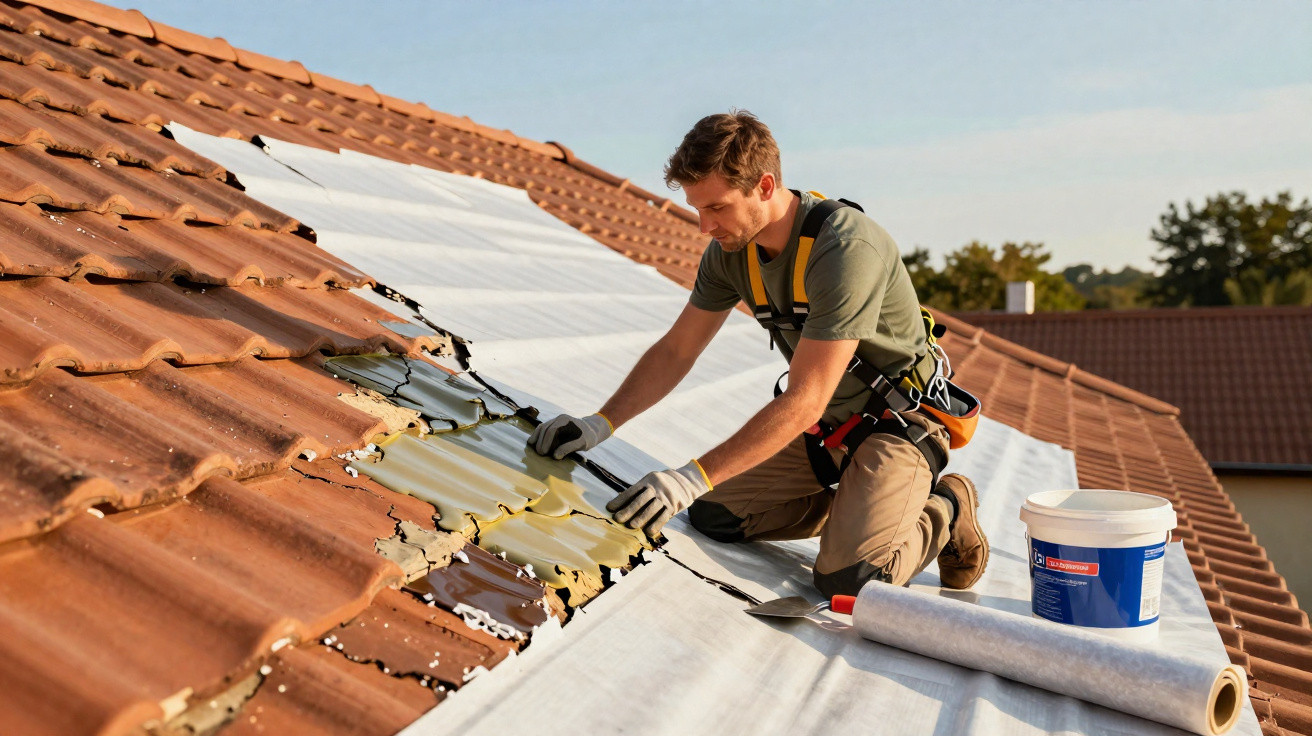
An ageing roof with water ingress can understandably cause concern, yet resolving the issue does not always mean replacing every roof tile. Refurbishment solutions can extend the service life of the roof covering, improve waterproofing and lower maintenance costs. The key is to establish where the leak originates, repair localised defects and use suitable products to strengthen protection against water, while prioritising safety throughout any work.
How can you identify leaks in an ageing roof?
The first stage in refurbishing an old roof is finding the route by which water is entering. Dark marks on the ceiling lining, peeling paint, mould in wall corners and drips during rainy weather are common signs of a leak. On the outside of the roof, cracked or broken tiles, fractures, displaced pieces and uneven overlaps are often the principal causes of water ingress.
Checking the property soon after heavy rain can help pinpoint vulnerable areas. Concentrated drips usually point to isolated faults, whereas widespread dampness may indicate capillary water ingress or porous tiles. Blocked gutters, poorly sealed flashings and junctions between the roof and walls should also be inspected, as these can retain water and lead to hidden leaks.
Watch a video on the UVS Calhas YouTube channel for practical maintenance advice on dealing with drips and leaks in old roofs:
How should refurbishment of a leaking roof begin?
Restoring an ageing roof without changing every tile will generally require a close inspection, surface preparation and the application of a waterproofing system. During the inspection, move carefully and place weight on rafters or battens to reduce the risk of breaking tiles or having an accident. Always wear non-slip footwear and, where possible, use a safety harness.
Each tile should be examined for cracks, loose sections and signs of wear. It is also necessary to inspect metal components for rust and ensure that the gutters drain correctly. In many situations, well-executed minor repairs can prevent the need for a full renovation and extend the lifespan of the original roof structure.
Which materials are suitable for refurbishing a roof?
Various products can be used to restore ageing roofs, with the appropriate choice depending on the roofing material-clay, fibre cement, metal or concrete-and the extent of deterioration. Cleaning the surface, rectifying defects and applying a waterproof coating together form a continuous barrier against water, reducing leaks and, in some cases, improving thermal performance.
The following materials and applications are commonly used when refurbishing roof coverings:
- Liquid membranes and acrylic or elastomeric waterproofing products for clay and fibre-cement tiles.
- Resins that seal pores and minor cracks, increasing resistance to moisture.
- Self-adhesive aluminium tapes and polyurethane or neutral silicone sealants for flashings, ridge tiles and joints.
- Anti-corrosion products and purpose-made seals for metal roof sheets, applied after loose rust has been removed.
What care helps extend a roof's service life?
Once the roof has been refurbished, preventive maintenance becomes essential for avoiding further issues. Visual inspections every year, or following storms, make it possible to spot displaced tiles, damage caused by fallen branches and early signs of leaks. They also help ensure gutters remain clear and free from accumulated leaves.
Straightforward routines-such as regular cleaning in dry weather, reinforcing seals around flashings and pipe penetrations, reapplying waterproofing products in accordance with the manufacturer's guidance, and managing vegetation close to the roof-normally provide good durability. With an accurate diagnosis, appropriate materials and consistent minor maintenance, an old roof can be preserved for many years without fully replacing every tile.


Comments
No comments yet. Be the first to comment!
Leave a Comment