
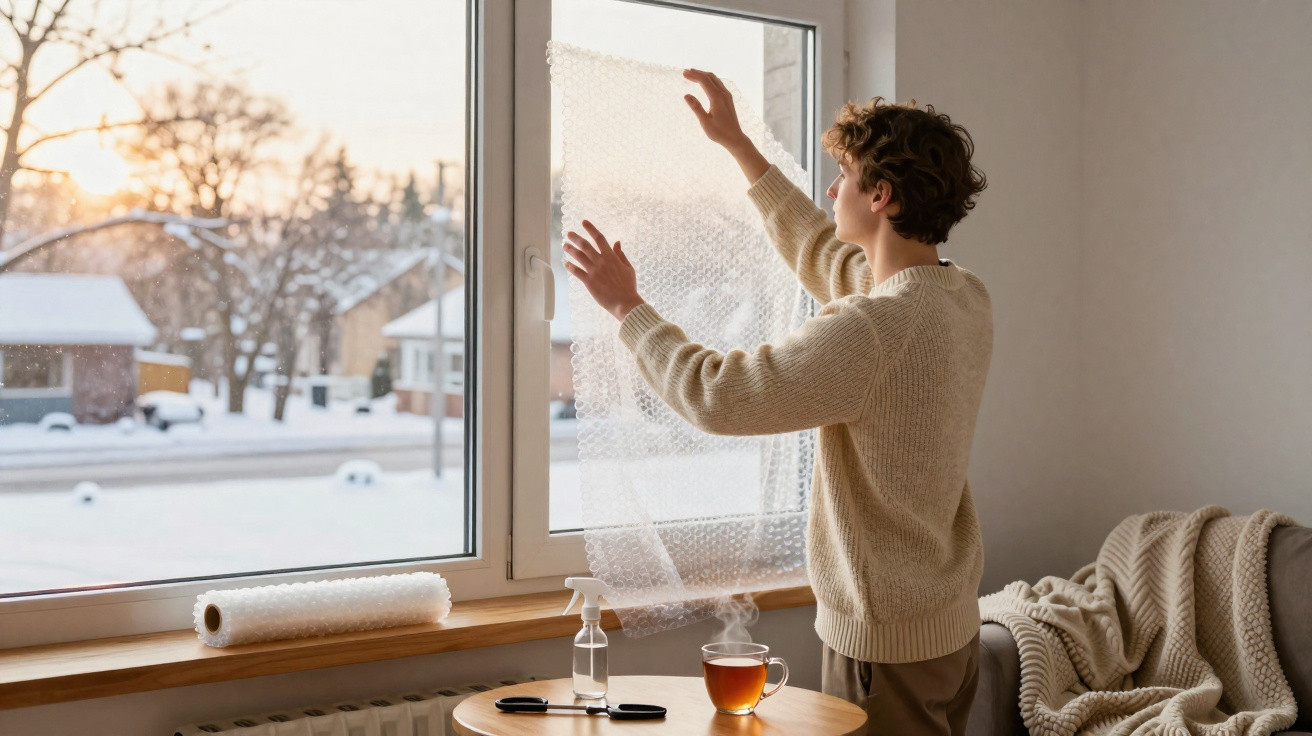
Keeping a home warm through winter is a continuing concern in cold-climate regions, including parts of Chile and southern Brazil. As temperatures fall, even minor draughts coming through windows can undermine heating efficiency and contribute to respiratory problems. In this context, straightforward thermal insulation methods are becoming more popular, particularly when they make use of materials already available at home.
How does bubble wrap on windows help keep the house warm?
The principle behind placing bubble wrap on glass relies on the behaviour of the air trapped inside its bubbles. Air conducts heat poorly, so it helps retain the temperature of the enclosed space for longer, creating a simple barrier against the cold.
Once attached to the glass, the material creates a type of air cushion between the inside of the home and the outdoors. This layer limits heat transfer between both sides, reduces the feeling of cold near windows and may lessen the workload on heaters and fireplaces, particularly in homes with single glazing.
How can bubble wrap be fitted to windows practically?
Turning bubble wrap into window insulation is a quick, uncomplicated process. The aim is to secure it directly to the glass so that it stays in place throughout the colder months, then can be removed afterwards without damaging the surface or leaving difficult-to-clean residue.
A few basic items are generally all that is needed, and gathering them before starting makes the job quicker:
- Bubble wrap large enough to cover the glass;
- A spray bottle or mister filled with clean water;
- Adhesive tape for the edges, if the window is exposed to strong winds;
- A dry cloth to remove any excess moisture after fitting.
The method usually follows a straightforward sequence: cut the bubble wrap to the size of the pane, mist the glass with water until it is slightly damp, then place the wrap with its smooth side against the glass and press it into position with your hands. Where gusts of wind are common, reinforce the edges with tape for a tighter seal and to stop it coming loose.
What precautions matter when using bubble wrap as insulation?
Although it is an affordable method, a few precautions can make bubble wrap more effective and comfortable to use. It is best to prioritise large windows facing colder areas, or those where draughts are most noticeable at night and during the early morning.
It is also worth keeping an eye on some everyday factors that can affect comfort and the material's lifespan:
- Minimum ventilation to prevent excessive indoor humidity;
- Condensation on the glass, ensuring that water does not build up behind the bubble wrap;
- Periodic removal at the end of winter to dry and store the material;
- Distance from intense heat sources, such as direct flames or very hot heaters.
Is it worth using bubble wrap on windows in winter?
Bubble wrap on windows is used in various countries as an additional way to improve thermal comfort at home. In properties with single glazing, poorly sealed doors or visible gaps, this approach can reduce discomfort around openings and help keep indoor conditions more stable, especially on nights when a cold front arrives.
Reusing the material is another appealing aspect: many families receive bubble wrap in delivery packaging and, rather than throwing it away, can put it to practical use during winter. In only a few minutes, windows gain an extra protective layer against the cold, which may be particularly beneficial in older buildings, where extensive refurbishment can be more expensive or take longer.

Comments
No comments yet. Be the first to comment!
Leave a Comment