
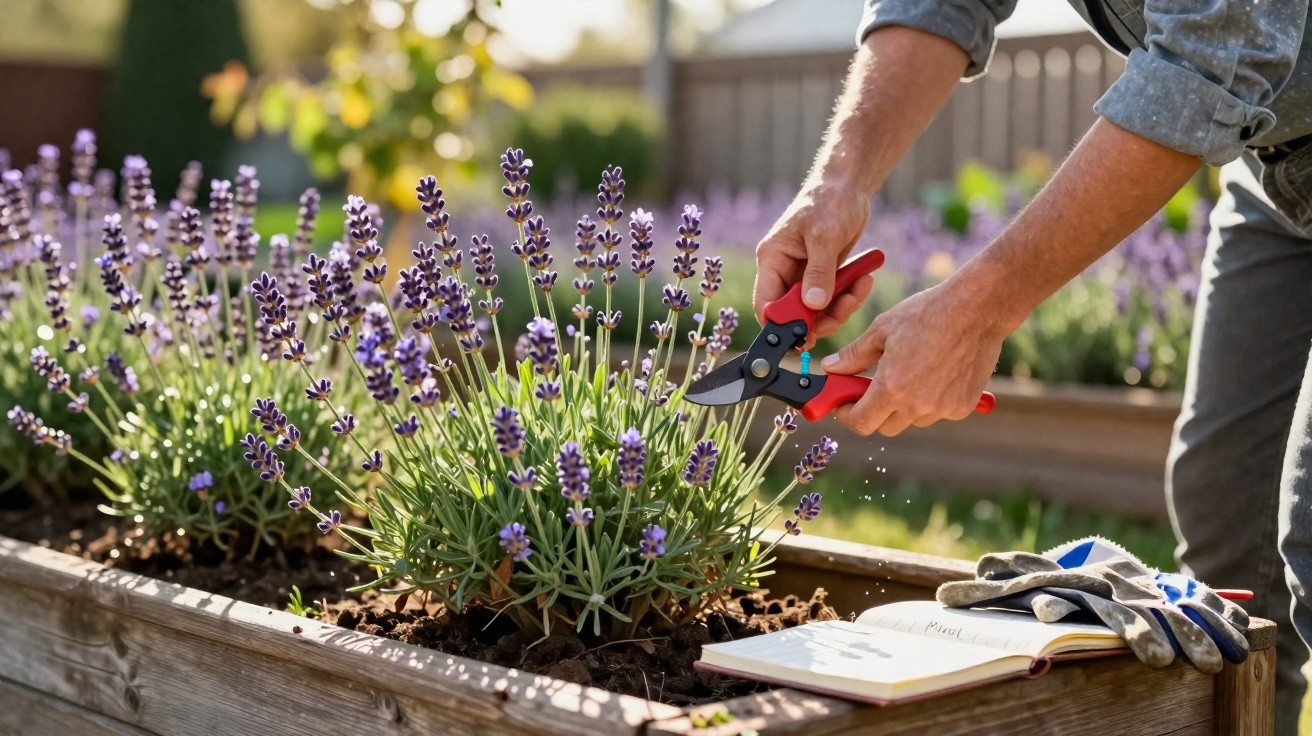
A small cut in March can change everything.
Many amateur gardeners are puzzled when their lavender flowers only sparsely in high summer, even though the plants have already grown into large bushes. The reason usually lies several months earlier: in spring, and more precisely in March. A few well-placed cuts during this short window can turn tired-looking woody stems into remarkably compact cushions covered in violet blooms.
Why an early cut turns lavender into a flowering powerhouse
Lavender is a subshrub. In other words, it develops more hard, brown woody growth at the base of its shoots each year. Left unpruned, it produces long bare stems with only a few flowers at the top. It soon looks untidy and tends to flop open.
Pruning in March directs the plant's energy where it is needed. Rather than putting its strength into old woody shoots, the lavender produces fresh, soft green growth. Most of the later flower spikes form on these young shoots.
Anyone who lightly cuts back their lavender by the end of March creates the basis for significantly more flowers, denser foliage and a compact, cushion-like shape.
Garden professionals point to another benefit: pruning clears away winter damage. Dried-out tips, brown shoots and sections weakened by wet conditions can all be removed in spring. What remains is a vigorous shrub, with light and air able to reach every bud.
If it is not pruned at all, or is cut back very late in the year, the plant will still flower, but far less abundantly. Late pruning delays the start of flowering and shortens the period in which lavender is at its best.
How to prune lavender in March without ruining it
The biggest concern for many gardeners is: “If I cut off too much, my lavender will die.” This worry is understandable, but a simple rule makes it easy to avoid.
The key rule for pruning lavender
Every lavender shoot has two sections:
- at the bottom: brown, hard, woody growth
- at the top: soft, green growth with leaves
When pruning in March, make every cut within the green section. Leave the old wood untouched. Lavender reshoots from this area very unreliably, and cutting too far down can cause a shoot to die.
As a practical guide, use sharp, clean secateurs to cut each stem around two to three centimetres above the woody part, always where leaves are still present. This removes roughly one-third of the shoot length, or sometimes a little more depending on the plant's habit.
Step-by-step guide to the ideal March prune
- Wait for dry weather: Prune on a dry day so that cut surfaces dry quickly and rot does not develop.
- Inspect the plant closely: Find the woody base, then follow the stem upwards until the fresh green growth begins.
- Use the first shoot as a guide: Neatly cut one stem two to three centimetres above the wood, within the green section. This becomes your reference height.
- Even out all shoots: Cut stems around the shrub to a similar level to create an even shape.
- Create a rounded form: Shorten the outer growth slightly more than the centre, producing a gentle dome that is particularly attractive.
- Remove damaged growth: Cut dead, blackened or frost-damaged branches right back to healthy wood.
The aim is a dense, rounded bush that remains entirely green but looks noticeably more compact than it did before pruning.
Light spring pruning and heavier summer pruning: the ideal schedule
Garden experts recommend not cutting lavender back drastically in a single session. It is better to divide the work across the year:
- March: Carry out only a light shaping and maintenance prune within the green growth. Remove old flower heads and winter damage at the same time.
- August: After the main flowering period, give it the “heavier” cutback. At this point, you can cut further into the young wood to firm up the cushions again and encourage new shoots.
Those who prune only once, usually in autumn, or do not prune at all, risk developing long gaps in the shrub that never properly fill in again. Combining a spring cut with a late-summer prune keeps the bush young and free-flowering for years.
Lavender varieties that respond especially well
Not every lavender variety behaves in exactly the same way, but the basic pruning principle is similar. Modern cultivars demonstrate how gratefully these plants respond to correct timing.
Lavandula x intermedia ‘Phenomenal’, a robust lavandin type, is often praised. It forms broad cushions around 60 to 70 centimetres high and equally wide, with intensely fragrant blue-violet flower spikes.
If varieties like these are planted in a sunny, dry position and shaped in March, they can provide a violet ribbon of flowers for months, continually attracting bees, bumblebees and butterflies.
Classic “English” lavender (Lavandula angustifolia), along with so-called “French” lavender types with butterfly-like blooms, also benefit from March care. The more sensitive varieties in particular repay an airy, well-lit structure with fewer fungal problems and better winter hardiness.
Site, care mistakes and what lavender really needs
Even the best pruning has little effect if the site is unsuitable. Lavender originates from sparse, sunny regions with free-draining soil. In heavy garden soil that stays wet, it becomes bare more quickly and is more likely to die back in frost.
The most important factors for abundant lavender
- Plenty of sunshine: At least six hours of direct sunlight each day, preferably more.
- Free-draining soil: Mix in sand or fine grit, prevent waterlogging and add a drainage layer in the planting hole.
- Few nutrients: Avoid nitrogen-rich fertiliser; lean soil makes lavender longer-lived.
- Restrained watering: Water only during the first few weeks after planting and in prolonged dry spells.
Too much water and excessively rich soil lead to soft, lush growth. Such plants flop over more easily and become woody unevenly. Combined with missed pruning, this produces the typical “broom lavender”: flowers at the top and bare stems underneath.
Common lavender pruning mistakes – and how to avoid them
The same problems recur in many gardens. Once you know them, they are easy to prevent.
| Mistake | Result | Better approach |
|---|---|---|
| Not pruning at all or pruning only every few years | Heavy woody growth, long bare shoots and unstable bushes | Prune every year in March and after flowering |
| Cutting too deeply into old wood | Shoots produce little or no new growth, leaving gaps in the shrub | In March, cut only within the green section |
| Pruning too late in spring | Later flowering and fewer blooms overall | Finish by the end of March, depending on the region |
| Cutting in wet weather | Greater risk of rot and fungal disease | Choose a dry day and allow the plant to dry after rain |
Regional differences: when the end of March really means the end
In mild wine-growing regions, lavender may start producing new growth as early as the beginning of March, while snow can still be lying in higher areas or colder locations. The calendar therefore provides only a rough guide.
A useful indicator is this: once prolonged frost is no longer expected and the first delicate new leaves are visible, it is time for a light shaping cut. In exposed areas, this window is more likely to fall towards the end of March, while in towns and western areas it is often noticeably earlier.
Using lavender as an everyday all-rounder
Anyone who puts in the effort with a spring prune is rewarded with more than just a better-looking plant. Lavender also provides plenty of aromatic cut material. The flowers can be tied into small scented sachets for the wardrobe, dried blooms can enhance bath products, or they can be used in fragrant wreaths for the balcony.
Lavender also shows its strengths in the border. Planted with roses, it reduces aphids because its strongly scented oils confuse some pests. Combined with thyme, rosemary and sage, it creates a Mediterranean strip that is visually and culinarily appealing while also supporting insects almost as a bonus.
So, if you find yourself looking at sparse lavender cushions every summer, make a clear resolution for this season: one hour of work by the end of March, clean cuts in the green growth, and the shrub can change from a problem plant into a long-flowering performer.
Comments
No comments yet. Be the first to comment!
Leave a Comment