
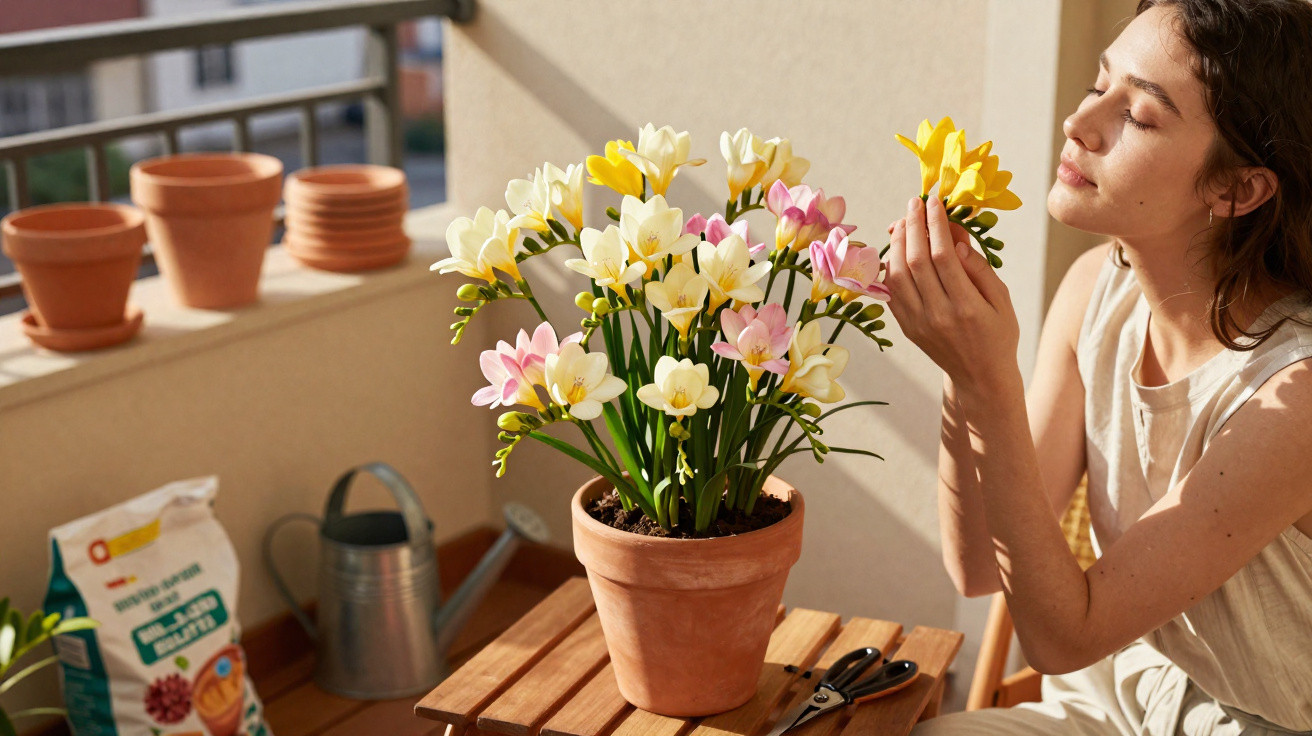
A tiny balcony, an early coffee, mild air – and then that fragrance, instantly reminiscent of a summer holiday.
Many city dwellers dream of a terrace filled with floral scent, yet end up with a clutter of pots that occupy valuable space while delivering little. In reality, a single flower can turn an entire balcony into a fragrant retreat, rather than buying dozens of varieties – provided it is planted and cared for properly.
Why you do not need to fill every spare centimetre with pots
Anyone planting up a balcony can quickly become a collector: lavender here, jasmine there, plus a scented rose and perhaps a gardenia somewhere else. The result often looks more unruly than intended and, above all, creates work.
Window boxes dry out, pots need constant turning, some plants sulk in shade and others scorch in full sun. In the end, the fragrance frequently falls well short of expectations.
A handful of pots containing the right flower usually delivers more scent than half a terrace full of impulse purchases.
That is where the approach comes in: rather than pursuing variety at any cost, the aim is one concentrated source of fragrance. It comes from a plant most people know only from florists, but which few grow in containers.
The secret fragrance hero for balconies and terraces: freesias
The centrepiece of this scent strategy is the freesia (Freesia). Its delicate, gently curved stems carry rows of trumpet-shaped flowers – and these flowers pack a real punch. Their perfume suggests a blend of honey and citrus: pleasantly warm, without being heavy or overpowering.
Originally from southern Africa, freesias are classic spring cut flowers. What many people do not realise is that their fragrance becomes noticeably stronger in pots on a balcony or terrace, because the aroma gathers in a small area.
- intense, clear floral fragrance
- a wide range of colours: white, yellow, pink, red and purple
- ideal for compact spaces, as only a few pots are needed
- very well suited to container growing
Garden guides regularly rate freesias among the most strongly scented potted plants. Even two or three larger containers can wrap an entire seating area on a small balcony in a light veil of perfume.
How to plant freesias in pots for maximum fragrance
Freesias grow from what are known as bulbs – more precisely, corms. They can remain in the ground in mild climates, but in Germany they are generally grown in pots, which makes them ideal for a city balcony.
Choosing the right pot
Freesia roots grow deeper than their slender stems might suggest. They therefore need a sufficiently large container:
- diameter: at least 20–30 cm
- height: preferably somewhat deeper, allowing the roots room to spread
- drainage holes are essential so water cannot collect
A pot measuring around 15 cm in diameter can hold 5 to 7 corms. Spacing matters: leave roughly 5 to 6 cm between each corm so that the plants eventually resemble a dense bouquet.
The best compost for scented flowers
Freesias prefer a freer-draining, airier growing medium than many balcony plants. A typical mix is as follows:
| Component | Proportion | Purpose |
|---|---|---|
| Potting compost | approx. 50 % | Provides the basic nutrient supply |
| Sand | approx. 25 % | Improves drainage |
| Organic material, such as compost | approx. 25 % | Adds extra nutrients and keeps the mix open |
Plant the corms 3 to 5 cm deep, with the pointed end facing upwards. Water thoroughly afterwards so the compost settles around them, but do not drown them.
Location: where freesias prefer to stand on a balcony
For plenty of fragrance, the position needs careful consideration. Freesias require light to flower strongly.
- at least six hours of sunshine daily
- warmth is welcome, but avoid unprotected, blazing midday sun
- a sheltered spot, for instance in front of a wall or balcony railing
A perfect location is beside the balcony door or directly by the seating area. You will pass the blooms repeatedly during the day, noticing their fragrance immediately without having to stand in front of them deliberately.
The closer the pots are to the door or seating area, the more intensely you will notice their aroma in everyday life.
Care: keeping freesias healthy and fragrant all summer
Watering and feeding
Freesias like slightly moist compost but cannot tolerate waterlogging. Let the top layer dry briefly between waterings. Pots need watering more often on hot days, especially on south-facing balconies.
A potassium-rich fertiliser works wonders while buds are forming and plants are flowering. A liquid feed for flowering plants every two weeks is entirely sufficient. Too much nitrogen encourages leaves but reduces flowers and fragrance.
Supporting stems and cutting flowers
Flower stems can become fairly long and topple easily, especially in windy conditions or when carrying many blooms. Slim canes or small hoops placed discreetly in the pot will keep everything upright.
There is an added benefit: individual flower stems can be cut for a vase. This does not reduce the fragrance produced by the pots, while bringing the scent of freesias to the kitchen table or bedroom too.
What to consider in cold regions
Below around –3 to –4 degrees, freesia corms can be damaged. In many areas, this means they cannot stay outdoors permanently. After flowering, leave the foliage in place until it turns yellow naturally. During this time, the plant draws nutrients back into the corm.
Once the first frosts have passed and the leaves have died back, lift the corms, remove loose dirt and store them:
- dry
- cool, at around 4 to 10 degrees
- dark and airy, for example in a wooden crate in the cellar
In spring, plant them back into fresh compost on the balcony. This lets you repeat the fragrant display year after year without having to buy new corms each time.
How many pots do you really need?
A narrow city balcony needs surprisingly little. Two larger containers, positioned to the left and right of the balcony door, are usually enough to fill the entire outdoor space with fragrance. On a wider terrace, three to four pots placed thoughtfully will suffice.
A good setup for small spaces:
- 2 containers of 25–30 cm for strong pockets of fragrance
- perhaps 1 additional small pot on the table
- a few subtle, lightly scented companion plants for visual interest
This leaves enough room to move around, prevents the balcony from feeling overcrowded and still gives you that distinctive “summer as soon as the door opens” feeling.
Tips on combinations, risks and alternatives
Visually, freesias work well with understated foliage plants, such as grasses or compact citrus plants in containers. For flexible colour combinations, choose white or yellow varieties, which go with almost anything. Deep purple or red is particularly effective alongside simple wooden or metal furniture.
One point that is often underestimated is that the fragrance may quickly become too much indoors for sensitive noses if the balcony door or windows stay open all the time. Anyone with a pollen allergy should first try a single pot to see how well they tolerate freesias.
To create more visual variety on the balcony, plant freesias at staggered times – some in spring and some a little later. This extends the flowering period, allowing the fragrance to accompany you through much of the summer. Combined with a few herbs such as mint or thyme, they create a distinctive, lively blend of scents without dozens of flowering species competing with one another.
Ultimately, one principle matters most: choose a few well-placed scented plants rather than an unmanageable collection. Freesias offer a surprisingly powerful foundation for this, transforming even the smallest balcony into a summer-scented place that feels familiar every morning.
Comments
No comments yet. Be the first to comment!
Leave a Comment