
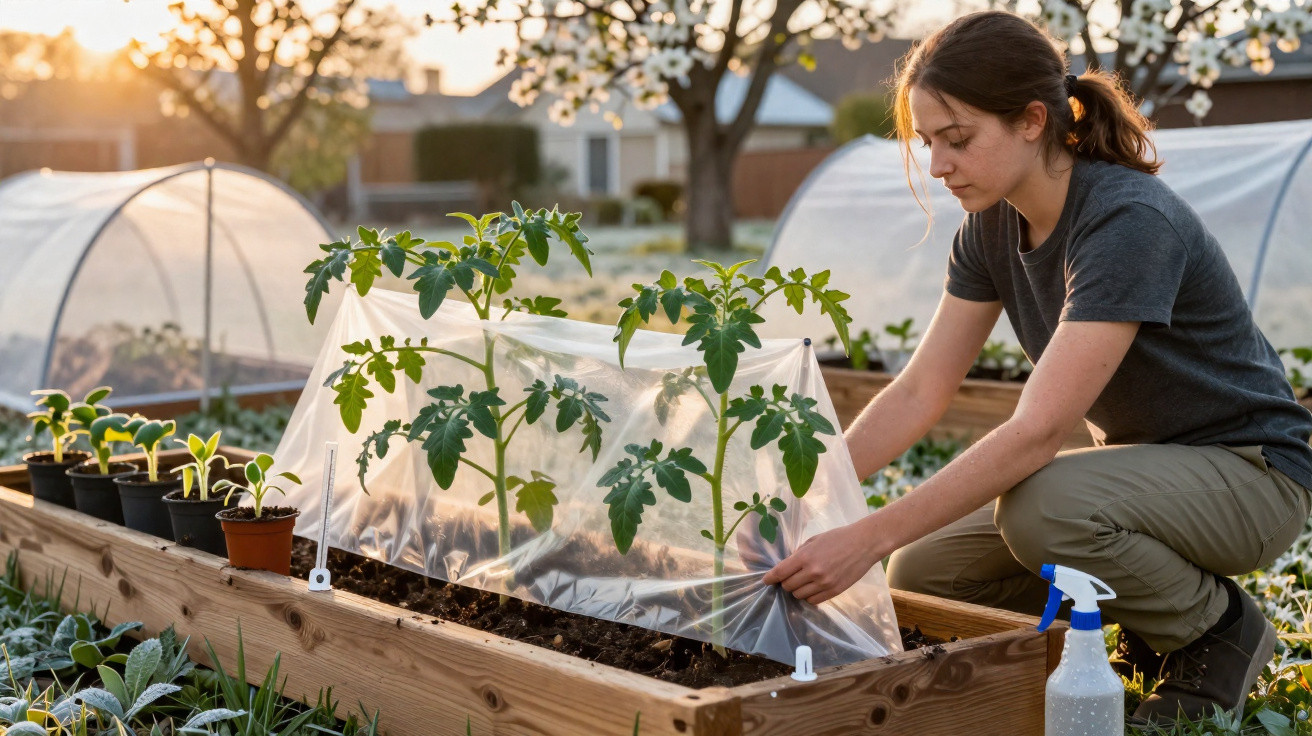
Many keen gardeners are impatient to get going in spring: garden centres are packed, the sun is shining and the young plants look healthy – so into the bed they go. Yet this is precisely where success and disappointment are divided each year. Before planting out, experienced vegetable growers do something that is often entirely overlooked in home gardens: they deliberately prepare tomato plants for real life outdoors.
Why tomatoes suddenly wilt in the garden bed
Temperature shock: from living-room warmth to spring cold
Most young tomato plants are raised in sheltered places: on a windowsill, in a warm greenhouse or in a polytunnel. Conditions there are often around 20°C, with barely any temperature variation and no cold wind.
Putting these plants straight into the open ground without preparation brings two entirely different environments together: mild air during the day, followed by nights that may reach only 5 or 6°C. For the plant, this is pure stress. Its metabolism is disrupted, growth comes to a halt, and leaves may discolour or curl.
“The abrupt change from cosy warmth to cold spring nights causes a genuine shock in tomatoes – often with lasting damage.”
Anyone who has seen this will recognise the result: plants that looked vigorous only days earlier soon droop, remain small and flower late, or fail to flower properly at all. The cause is usually not “poor soil” or “the wrong variety”, but planting out too quickly.
Weak stems because they have never been trained by a breeze
A second factor is frequently underestimated: movement. Indoors, a tomato plant stands in still air. No breeze forces it to develop sturdy stems. It grows tall, soft and full of water – ideal for a cosy windowsill, but wholly unsuitable for strong spring gusts.
When the first proper wind arrives, stems bend, collapse onto the ground or even snap at their base. The plant rarely recovers well from this. This is exactly where the professional method, used almost automatically by market gardeners, comes in.
The professional trick: hardening off tomatoes like muscle training
Ease them outdoors: a daily dose of fresh air instead of cold shock
Vegetable-growing professionals refer to “hardening off” or acclimatising plants. This means making a gradual transition from indoors to outdoors. The process is straightforward but highly effective.
- Begin on mild days: put plants outside for 1–2 hours in the afternoon.
- Choose a sheltered spot: beside a house wall, on a balcony or in a courtyard – never somewhere exposed to draughts.
- Leave them outside a little longer each day.
- After a few days, the plants can stay outdoors throughout the day.
This brief yet regular outdoor exposure allows the plant to respond to changing temperatures and moving air. Internally, it produces more lignin, a strengthening fibrous substance in the stem tissue. The stems become noticeably sturdier, thicker and tougher.
“After only three to four days of short periods outdoors, tomato stems feel distinctly stronger – that is the effect of hardening off.”
Acclimatise plants to real sunshine gradually or the foliage will scorch
Light is another point that is easily missed. Sunshine filtered through glass is less intense than direct midday sun. Moving a plant from a windowsill into blazing sunshine without a transition can cause genuine “sunburn” on its leaves.
A sensible approach is:
- Keep plants in shade or partial shade for the first few days, for example beneath a tree or canopy.
- Then introduce more direct light step by step, initially in the morning or late afternoon.
- Do not expose them to intense midday sunshine until they have had several days to adjust.
This lets leaf tissue gradually tolerate higher levels of UV light without scorching. Patchy, pale-whitish leaves after the first day outside are a clear sign of overly rapid sun exposure.
An invisible garden danger: late frost on fruit trees
Check blossoms early in the morning
While tomatoes are still being trained in their pots, something crucial may be happening in the fruit garden. Cherry, apple and plum trees often flower while nights remain cold. At this stage, just a few degrees below zero can cause enormous damage.
Anyone who values their fruit should make an inspection round in the morning during flowering. Dark, slightly brown or black patches inside individual blossoms show that frost has already struck. Those flowers will no longer produce fruit.
Watch for late frost and protect plants in time
If weather services forecast cold nights, prompt protective action is worthwhile. Sensitive young trees, berry bushes or apricots can be covered with breathable plant covers, old bed sheets or garden fleece.
It is important to remove the cover again in good time before sunrise, so heat does not build up beneath it. Keeping up this routine for a few nights often saves the greater part of the fruit harvest.
A practical plan for the tomato transition period
A useful temporary setup: simple protection for cold nights
Few people enjoy carrying dozens of pots back indoors every evening. A small, makeshift protection system in the garden can greatly reduce the workload. This could be, for example:
- a simple wooden frame with a clear panel used as a lid;
- a low polytunnel with roll-up sides;
- an old table covered with garden fleece when frost is likely.
Leave the protection open during the day, so fresh air and light can reach the plants. In the evening, as temperatures fall, close the lid or put the cover in place. This keeps the tomatoes outdoors while shielding them from the worst of the cold.
Follow a consistent routine for 10 to 15 days
The transition generally takes around one to two weeks. During this period, one simple rule applies: place plants outdoors as often as possible during the day and keep them protected at night – returning them to a garage or shed if necessary.
“Anyone who hardens off their tomatoes consistently for around 10 to 15 days begins the season with considerably more robust plants – and that pays off in summer.”
An important guide is the period known as the “Ice Saints”. Once these final cold risks have passed in mid-May, most tomatoes can be moved permanently into open ground, depending on the region.
When tomatoes are genuinely ready for the garden bed
How to identify a well-hardened plant
Rather than relying blindly on a calendar date, inspect the plant closely. Good signs of a successful start include:
- firm, stable stems that do not wobble, preferably short and strong rather than tall and thin;
- dark green leaves without pale scorch marks;
- visible new growth even during the hardening-off period;
- no limp, drooping shoots after a day outdoors.
At that point, planting into the bed is worthwhile – ideally in soil that has warmed slightly and is not waterlogged. A planting hole containing a little mature compost, followed by thorough watering, helps the plant establish its roots.
Higher yields, fewer losses
Tomatoes that have been well prepared establish themselves more quickly after planting. They form flowers earlier, produce more trusses and recover better when summer turns windier or more changeable.
Once gardeners have seen how carefully hardened-off plants develop, they usually do not want to abandon the routine. Those few extra days of work in spring are rewarded with baskets full of aromatic fruit.
Practical additions for even stronger plants
Gentle challenges instead of constant pampering
Interestingly, it is not complete protection but mild stimulation that makes plants strong. A gentle indoor fan that occasionally moves air over young plants can, for instance, strengthen stems before their first day outside. Briefly creating a temperature difference between day and night indoors also imitates real outdoor conditions.
When watering, it is better to water less often but thoroughly, rather than offering constant small amounts. This makes roots “work” and grow deeper, helping the plant withstand dry spells later on.
Good companions in the bed and possible risks
Outdoors, tomatoes benefit from suitable neighbouring plants. Proven companions include:
- basil – said to enhance flavour and attract beneficial insects;
- marigolds – used by many gardeners against certain soil problems;
- onions or leeks – whose scent can confuse some pests.
Risks are more likely where the site is unsuitable: standing water, prolonged rain without a protective roof, or plants spaced too closely together with no air circulation. Fungal diseases such as tomato blight can spread easily in such places. A rain cover, an airy position and regular leaf checks reduce the pressure considerably.
Anyone who follows the combination of hardening off, monitoring frost and choosing the site wisely lays the foundation in spring for a vegetable garden that not only looks attractive but reliably produces bowls full of tomatoes – year after year.

Comments
No comments yet. Be the first to comment!
Leave a Comment