
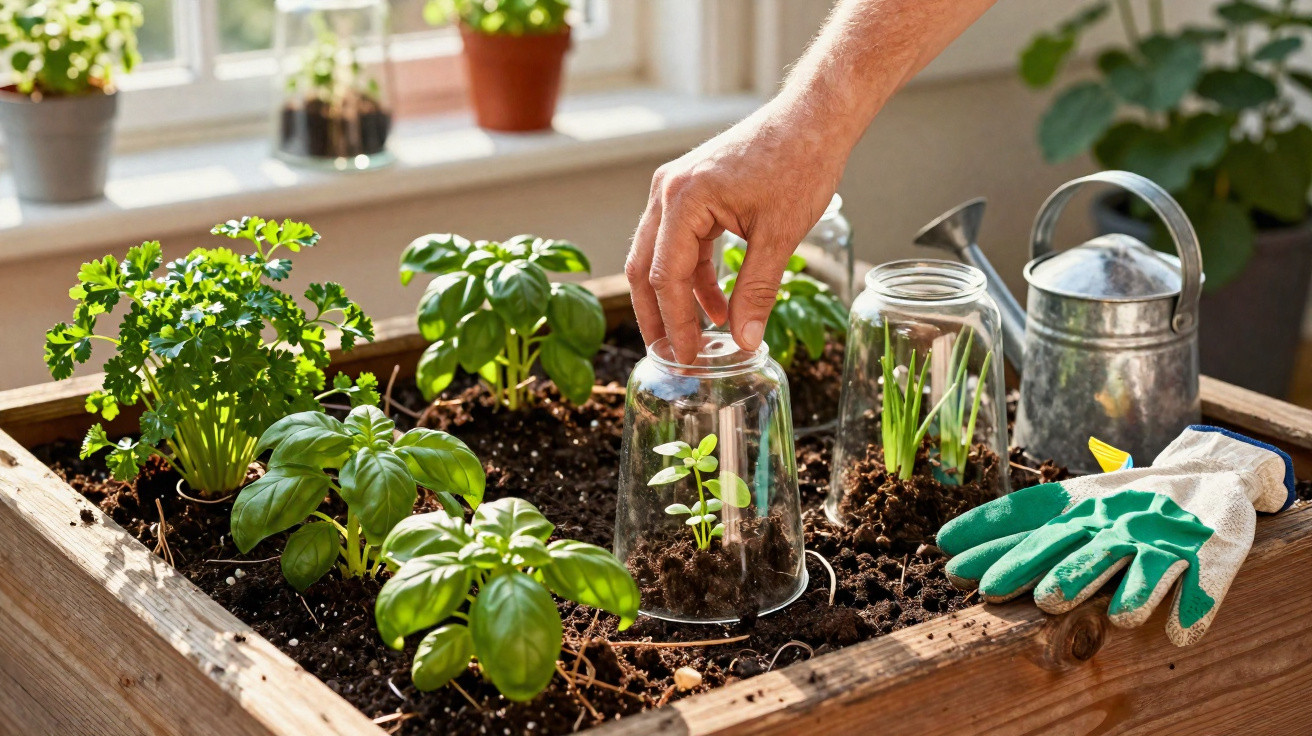
Many keen gardeners will recognise the feeling: the craving for fresh herbs is strong, yet outdoors everything still appears dormant. This is exactly where a remarkably easy method comes in, requiring nothing more than a large jar from the kitchen. Placed over herbs, it creates a miniature greenhouse that can bring noticeably stronger growth, flavour and yields in March.
Mini greenhouse from the kitchen cupboard: how the jar trick works
The principle is simple: place a large glass jar upside down over young herbs like a small cloche. This creates a protected space where the air warms up more quickly than it does outside.
"The glass retains warmth from the sun and soil, keeps out cold and wind, and creates a warm, humid microclimate – ideal for getting growth under way in March."
In practice, this is what happens:
- Warming effect: When the sun shines, the air inside the jar becomes considerably warmer than the surrounding air. Soil temperatures rise and the roots begin working at full speed earlier.
- Humid air: Moisture from the soil and plant evaporates, condenses on the glass and drips back down. This small “water-cycle system” keeps the area consistently moist.
- Wind protection: Cold winds can no longer dry out the plants, leaving tender new shoots protected.
The result is that herbs begin growing sooner, become denser and develop a more intense flavour. Rather than waiting until late spring, you can often cut the first stems and leaves much earlier.
How to make your own herb glass cloche
There is no need to visit a garden centre for this method. Almost every kitchen has the key material already available: empty jars.
Suitable jars at a glance
- Large gherkin jars
- Large preserving jars with wide openings
- Empty storage jars that previously held fruit or vegetables
- Sprouting jars, provided their diameter is large enough
A wide diameter is important so that the jar does not restrict the plants. The broader its opening, the more evenly warmth is distributed and the more room the herbs have to grow upwards.
Step-by-step guide
- Choose a location: A sunny spot in a border, raised bed or balcony planter is ideal. The soil should not be frozen.
- Check the herbs: The first green tips of chives, parsley or other perennial herbs should already be visible.
- Prepare the jar: Wash the jar thoroughly and remove any labels so that as much light as possible can pass through.
- Position the jar: Carefully place it upside down over the young plants, pushing it slightly into the soil so that it stands securely and does not topple in every gust of wind.
- Remember to ventilate: On particularly warm days, lift the jar for a while or remove it completely, preventing it from becoming a heat trap.
"As a rule of thumb: while the soil still feels cold and the nights remain chilly, the jar trick works for you – after that, the plant needs more air again."
These herbs benefit particularly from the jar trick
This technique is especially suitable for perennial herbs that retreat into the ground in winter before producing fresh shoots in spring.
Favourites in the herb bed
- Chives: These often emerge early and respond particularly well to extra warmth. Under glass, they produce thicker, sturdier stems.
- Parsley (biennial in the bed): If it has survived the winter, it starts growing more quickly under glass and provides fresh leaves sooner.
- Rhubarb: Strictly speaking, it is not a herb, but the effect is similar: beneath a glass cloche, it develops tender stems much earlier.
Other hardy herbs, such as thyme or oregano, can also gain from an early-season head start, especially in cooler regions or exposed locations.
Glass cloches for lettuce, kohlrabi and other young plants
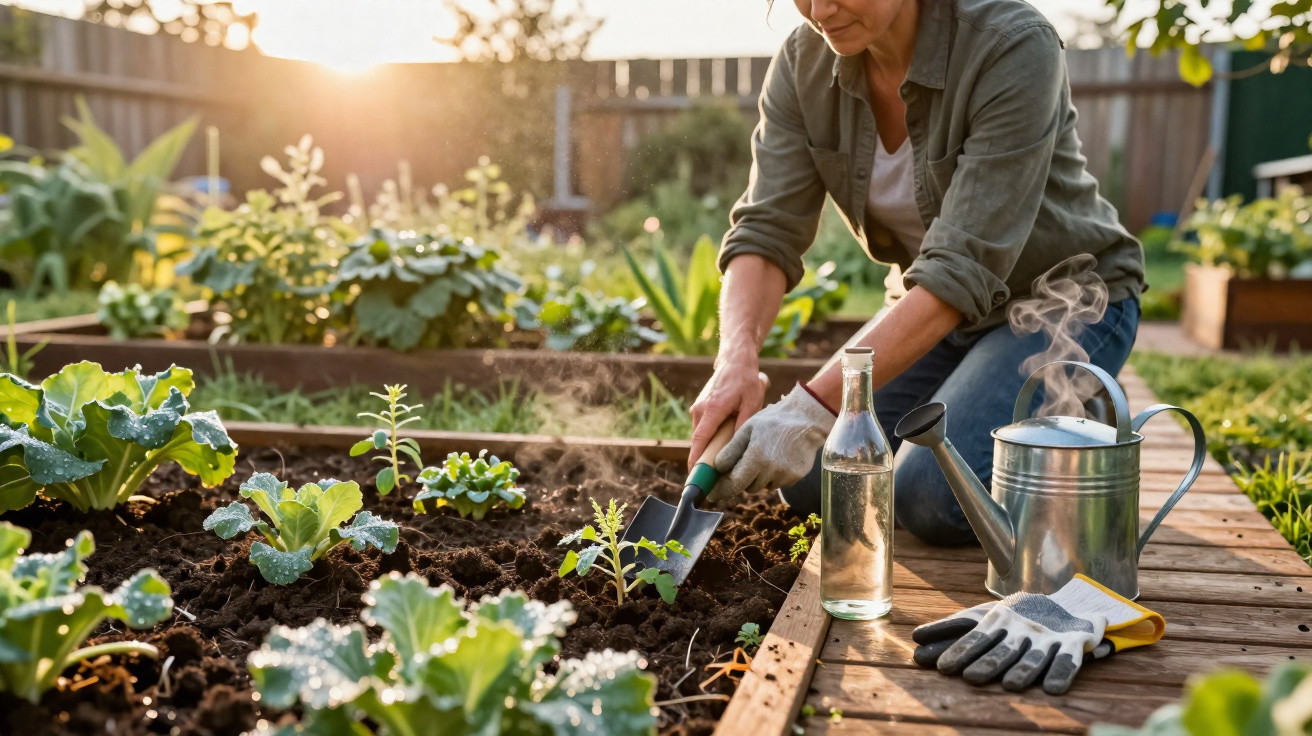
The method is not limited to herbs. A jar can also give young vegetable plants a useful boost.
The jar trick is well suited to these seedlings:
- Early lettuce seedlings
- Young kohlrabi plants
- Other cold-sensitive young plants in early spring
There is also a side benefit that many gardeners appreciate: the mini cloche helps keep slugs at bay. While plants establish themselves in the protected space, the slimy pests cannot reach the tender leaves in the first place – without any slug pellets.
No garden? Make it work on a windowsill
Anyone with only a flat and a windowsill does not have to go without fresh greenery. Instead of using a glass cloche in a bed, choose a bright spot by the window and a shallow container.
Possible choices for the windowsill
- Cress
- Radish leaves as microgreens
- Broccoli sprouts
- Fine-leaved cut-and-come-again salads and baby leaf mixes
For microgreens or sprouts, a thin layer of growing medium or natural fleece is often enough. Many mixes provide their first harvest after just five to seven days – ideal when nothing is yet growing outside but the desire for fresh vitamins is already strong.
When should the jar come off again?
As useful as the jar trick is in March, removing it at the right time matters just as much. Keeping plants under glass for too long can damage them.
Watch for the following:
- Plant height: Once the shoots are nearly touching the bottom of the jar, space quickly becomes limited. Remove it so the plants can develop freely.
- Temperature: If daytime and night-time temperatures rise noticeably, there is a risk of heat build-up. In particular, temperatures beneath glass can quickly exceed 30°C on sunny days.
- Condensation: A misted-up jar is normal. However, if it drips heavily for prolonged periods and mould develops on the soil, ventilate it or remove the jar.
"It is better to remove it a few days too early than too late: strongly established plants cope well with normal outdoor temperatures."
How the jar trick affects flavour and yield
Anyone giving herbs an early start with a jar will notice the effect at the first cut. The stems and leaves not only appear larger, but are often firmer and more intensely flavoured.
Warmer soil encourages root formation, allowing plants to absorb more nutrients and produce more leaf growth. This applies particularly to chives, which form dense clumps when well supplied, and parsley with its deeply green, aromatic leaves.
There is another advantage: an earlier start shifts the whole season forward. Those who begin in March will usually have substantially larger clumps by high summer and can harvest more frequently without weakening the plants too much.
Risks, limitations and useful additions
Although this technique is straightforward, several points need attention:
- Heat stress: Strong sunshine combined with mild outdoor temperatures can cause overheating under glass. Ventilate it or remove it temporarily on hot days.
- Unsuitable plant selection: Very frost-sensitive species can only be protected to a limited extent this way. On freezing nights, they often need additional protection, such as horticultural fleece.
- Stability: In exposed areas, place the jar where wind cannot knock it over – for example, bury it slightly or secure it with stones.
Other simple measures work well alongside the jar. A thin mulch layer of leaves or grass clippings keeps the soil warm and moist for longer. The jar trick is especially effective in a raised bed because the soil there warms up faster than it does in a conventional garden border.
Those exploring native wild herbs in greater depth can use the same effect for wild species in the garden. Many edible wild plants begin shooting in March and respond just as positively to a little extra warmth – ideal for anyone wanting to grow more than standard herbs.

Comments
No comments yet. Be the first to comment!
Leave a Comment