
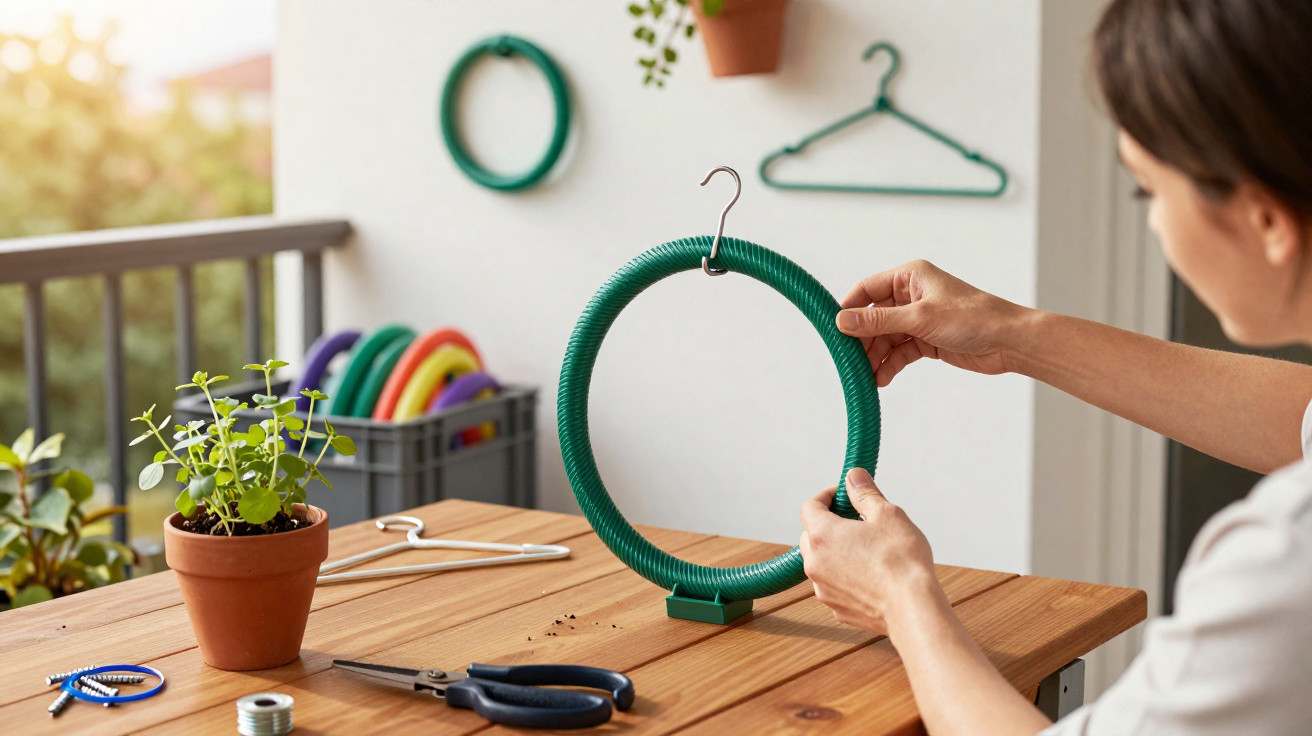
Many householders face the question of what to do with old hoses that have become punctured or dried out over time. This kind of household reuse prevents an unnecessary build-up of plastic waste and encourages genuine sustainability, offering economical, practical ways to refresh any living space.
Why is it worth reusing plastic materials at home?
The construction of flexible tubing is highly resistant to continual moisture and changing weather conditions. By embracing creative recycling of these components, you can avoid excessive spending on new purchases while making personalised items that support everyday organisation with strong environmental awareness.
Throwing away damaged hoses too soon adds long-lasting compounds to landfill. Small manual alterations can turn seemingly unusable items into durable pieces, delivering significant savings for the household budget while adding practical visual value to a range of indoor and outdoor spaces around the home.
Why do broken hangers hold a valuable secret?
Many Spaniards keep them out of the bin because these old pieces conceal clever ways to organise household items without spending… Read more
How can you make a decorative holder from a garden hose?
Making a hanging wall display requires only accurate cuts in the lengths of tubing to create sturdy concentric circles. A covering of twine provides an elegant finish, completely hiding flaws in the old hose and enhancing the rustic look of the wall feature.
Once the main hoops have been shaped, small plant pots are secured directly to the sides of the handmade piece with hot glue. This suspended vertical arrangement makes efficient use of compact spaces and introduces a charming natural touch, turning empty areas into truly personalised visual highlights.
Below is a video from the Creative Decor YouTube channel demonstrating the complete step-by-step process:
Which basic materials make the project easier to assemble?
Gathering the right tools before starting ensures faster work and accurate joins between the rings. Internal wire gives the circles firm support, while adhesive tape strengthens the connections without affecting the required flexibility.
Additional materials, such as sharp scissors, instant glue and cotton string, provide permanent attachment for every decorative detail. This simple combination removes the need for complex industrial tools, making the craft project accessible for anyone to complete safely at home.
Essential project kit
Essential items to get started
Collect the following materials to ensure a perfect finish:
- Cleaned hose pieces cut to the correct measurements;
- Strong wire and adhesive tape to shape and secure the circles;
- A roll of twine and hot glue for the decorative finish.
In what other ways can old rubber be useful?
As well as artistic wall displays, lengths of hose cut into spirals can be made into highly durable draining mats for balconies and gardens. This practical use withstands constant moisture without rotting, providing excellent grip to prevent slipping on wet floors and offering great durability.
Plastic cable ties hold the rubber sections firmly together, allowing you to make modular mats in the exact size needed for the entrance to your home. The versatility of this material enables countless practical adaptations, encouraging individual creativity to meet daily needs in a fully sustainable way.
See other practical ideas for using leftover hose:
- Blade protector: cover the cutting edges of hand saws and hatchets with pieces sliced lengthways;
- Ergonomic handle: wrap the handles of heavy metal buckets to stop them hurting your hands when carrying them;
- Plant guide: use small plastic rings to tie delicate branches without damaging the stem.
How can the new pieces be kept in good condition for longer?
Regular cleaning with water and mild soap preserves the twine fibres and prevents dust from collecting around the joins. Avoiding continual exposure to severe storms extends the life of the glue and keeps the entire decorative structure intact.
Applying a thin coat of matt varnish to the strings helps repel excessive moisture in open outdoor areas. This straightforward care provides protection for the craftwork, recognising the time spent making it and ensuring a charming result for many years.





Comments
No comments yet. Be the first to comment!
Leave a Comment