
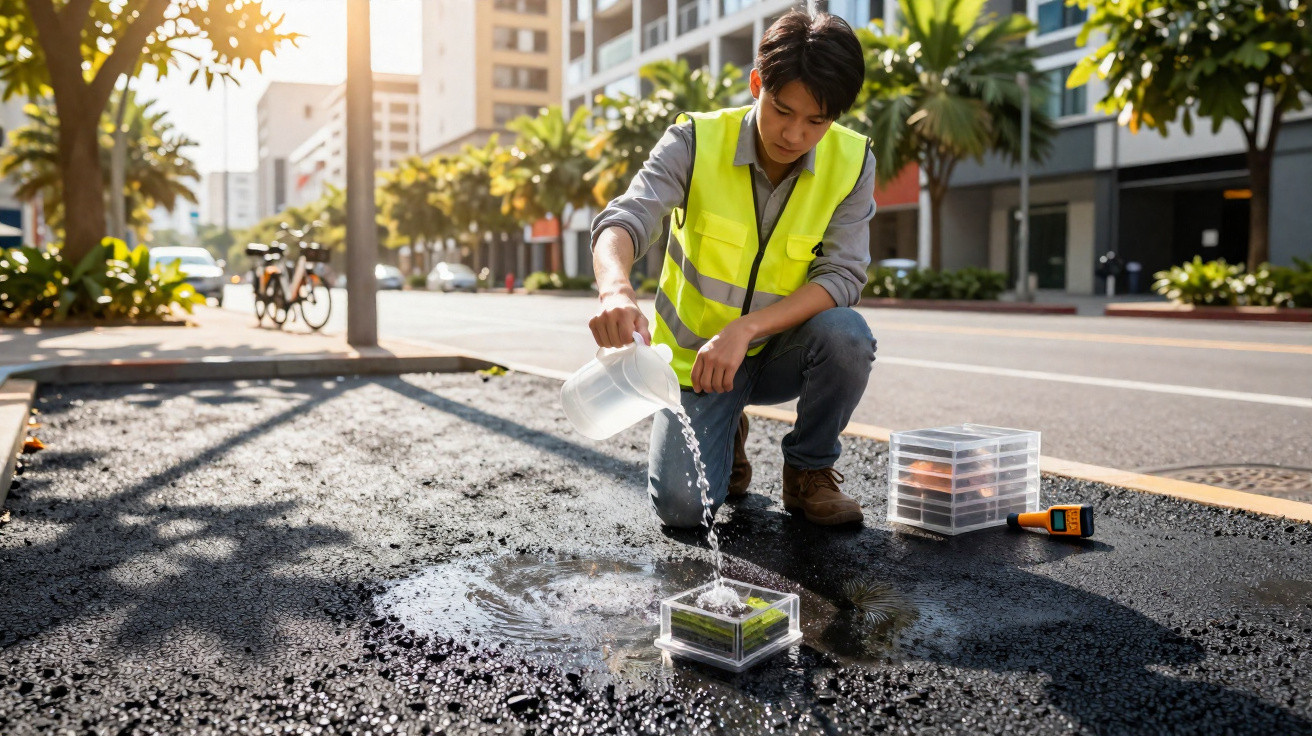
Major cities face substantial challenges from intense downpours and high temperatures on public roads. Using modern technology in paving is emerging as an effective way to improve urban drainage and moderate the microclimate in affected areas.
How does the sponge pavement tested in cities in Morocco work?
In urban parts of Marrakech and Agadir, heat building up on conventional surfaces causes considerable thermal discomfort. Applying porous asphalt lets rainwater seep directly through it, turning the structure into a temporary reservoir.
As the moisture held within the pavement begins to evaporate, local temperatures gradually fall. This natural process draws thermal energy from the surroundings, helping to counter the urban heat island that affects residents every day.
How can an innovative brick cool buildings and tackle urban heat?
Developed by inventors, this material uses electricity to cool buildings without harming the environment and promises a revolution… Read more
Why does permeable pavement help prevent urban flooding?
Sealed ground prevents rainwater from being properly absorbed during severe storms. Permeable pavement channels runoff into the subsoil, substantially reducing the flooding that causes ongoing damage and disruption in central areas.
As well as preventing long-lasting puddles on roads, this material improves vehicle grip on rainy days. This technical solution promotes road safety and safeguards road infrastructure from cracks caused by uncontrolled water infiltration.
Below is a video from the Barrett, Bonacci & Van Weele, P.C. YouTube channel that examines the points discussed in this topic in greater depth:
What environmental benefits does evaporative cooling provide?
The heat exchange caused by evaporation lowers the heat stored on the surface of ordinary asphalt. This physical phenomenon eases discomfort on streets and lessens the need for air conditioning in buildings constructed along these avenues.
By retaining moisture and releasing vapour on hot days, the pavement directly supports thermal balance. The system contributes to sustainable urban planning and improves comfort for pedestrians moving through densely populated centres.
Essential Sponge Pavement Kit
System pillars
Discover the essential components for successful urban infrastructure:
- Porous layer for rapid rainwater infiltration;
- Internal spaces for temporary moisture storage;
- Natural mechanism for continuous cooling through evaporation.
How can these drainage solutions be applied in Brazilian cities?
Many municipalities in Brazil experience seasonal storms that exceed the capacity of street drains. The adoption of porous pavement provides a practical route to renew roads and protect public assets in areas with a history of flooding.
Incorporating permeable surfacing into urban regeneration schemes ensures more efficient local water management. This strategy updates municipal network infrastructure and strengthens the development of neighbourhoods better prepared to withstand severe weather events.
See below the main stages for implementing this technology efficiently on public roads:
- Replacing critical sections of traditional asphalt with porous blocks;
- Creating infiltration channels to direct rainwater;
- Continually monitoring the soil’s retention and drainage capacity.
What can we expect for the future of urban infrastructure?
The outcomes of the Moroccan trials provide inspiration for major cities around the world. Innovation in construction materials shows that environmental preservation can be combined with orderly, sustainable urban growth.
Investment in resilient solutions makes public spaces far more pleasant and safer. The combination of drainage and cooling points towards a future in which engineering works in complete harmony with nature.



Comments
No comments yet. Be the first to comment!
Leave a Comment