
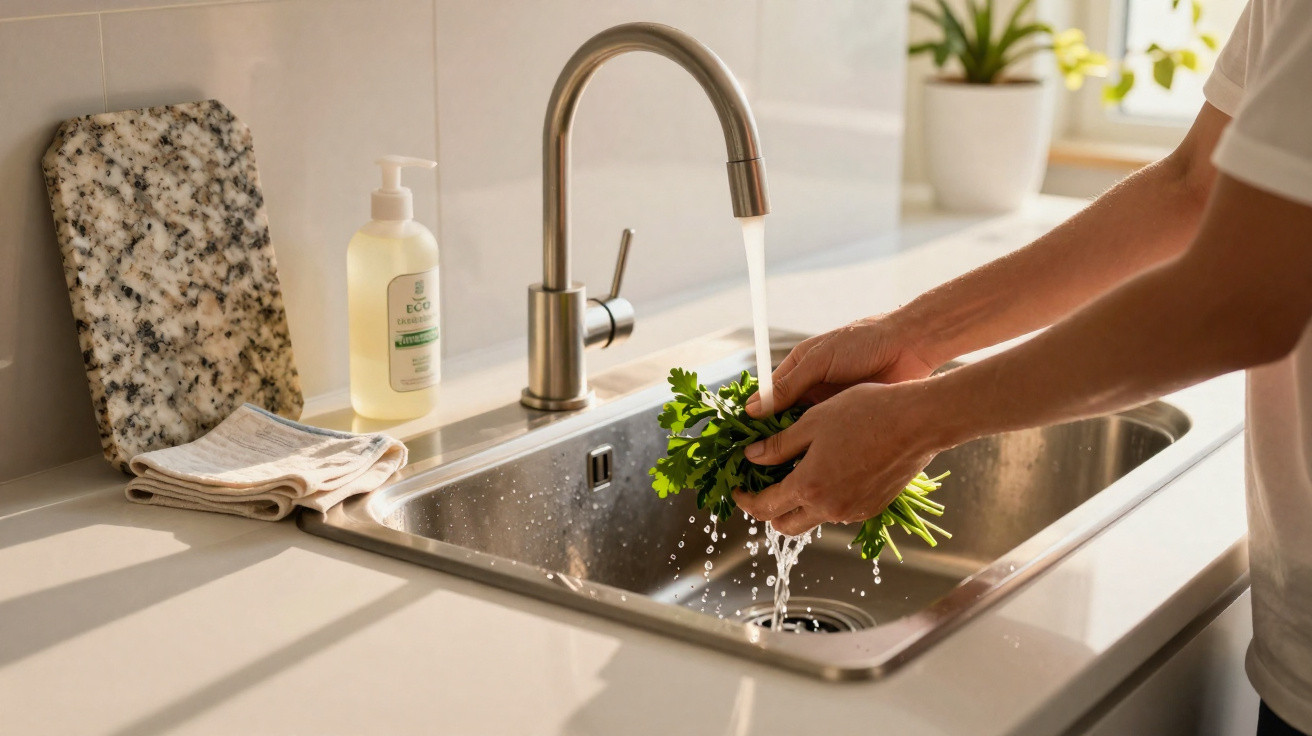
A stainless steel sink is once again becoming a feature in home kitchens as an alternative to granite. Its non-porous surface can incorporate an integrated bowl and is generally lighter than a solid-stone worktop, making it easier to clean and adapt for compact designs or refurbishment projects.
What material is replacing granite?
The proposed alternative is stainless steel, a material long used in professional kitchens because it withstands water, everyday heat and frequent contact with food. For domestic installations, the sheet can be shaped over a structural base and made to measure.
- It can combine the sink bowl, worktop and upstand;
- It does not require regular sealing;
- It suits industrial and minimalist kitchens;
- It can be tailored to the available space;
- A well-designed installation has few joins;
- It makes the wet area easier to keep hygienic.
Why is a stainless steel worktop usually lighter?
Granite is fitted in thick slabs of natural stone, whereas a stainless steel worktop generally consists of a metal sheet formed over a supporting structure. This lowers the weight of the worktop itself, making transport and fitting easier in certain projects.
The benefit depends on the complete construction, as the base beneath the sheet also adds weight. Before making the change, the cabinetry should be checked to ensure it is level, stable and protected against water ingress.
Does stainless steel really remain unstained in use?
The stainless steel used in a kitchen sink does not absorb coffee, wine, oil or sauce in the way an unprotected porous surface may do. This limits permanent staining caused when liquids penetrate the material.
- Clean it with mild washing-up liquid and a soft sponge;
- Rub in the direction of the brushed finish;
- Dry it after cleaning to prevent water marks;
- Do not use ordinary steel wool;
- Avoid products containing concentrated chlorine;
- Use a chopping board to avoid scratching the worktop while preparing food.
What are the disadvantages of a stainless steel sink?
Although it does not absorb liquids, stainless steel can show fingerprints, dried droplets and superficial limescale marks. The sheet may also be scratched or dented, particularly if it is too thin or subjected to impacts from pans and heavy objects.
Brushed, satin or textured finishes conceal signs of everyday use more effectively than mirror-polished surfaces. Sheet thickness, steel quality, lower reinforcement and correct installation all directly affect its durability and the noise made when utensils come into contact with it.
Has the granite sink really fallen out of use?
It would be an exaggeration to say that granite is no longer used. The stone remains strong, durable and highly valued, and in some areas it may cost less than a bespoke stainless steel worktop. However, natural stone requires suitable sealing to reduce liquid absorption and staining.
Stainless steel stands out for those who prioritise straightforward cleaning, a contemporary appearance and a continuous surface with an integrated bowl. The most suitable option depends on the budget, the desired look and the willingness to live with the natural scratches in steel or the sealing maintenance required by granite.
Comments
No comments yet. Be the first to comment!
Leave a Comment