
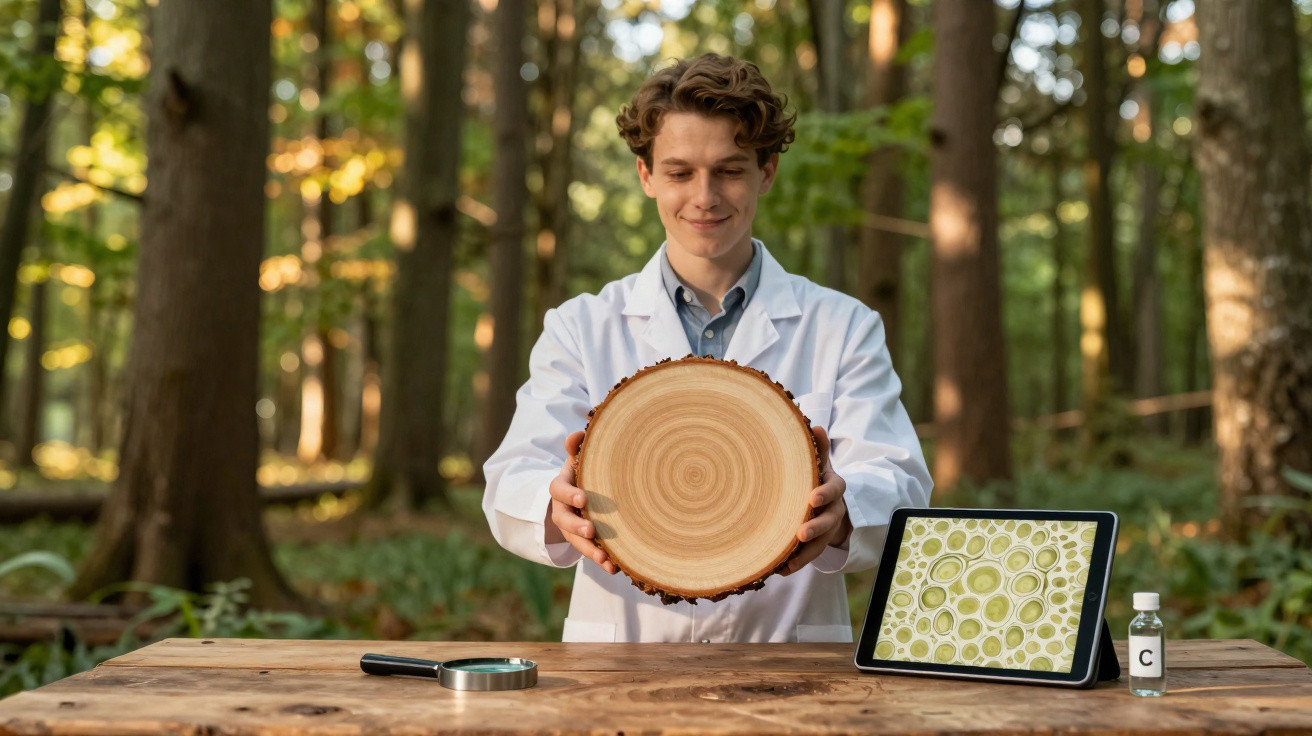
Tulip trees, widely grown in gardens for their attractive blooms and leaves, have apparently concealed an unexpected characteristic.
The timber of the two tulip tree species (Liriodendron) fits neither the hardwood nor softwood categories. Instead, it represents an intermediate type of wood that had not previously been recognised. Researchers also report that this material appears especially effective at sequestering and retaining carbon.
Tulip trees and carbon storage
According to biochemists Jan Łyczakowski of Jagiellonian University in Poland and Raymond Wightman of the University of Cambridge in the UK, this capacity may be linked to the trees’ macrofibrils. These long, thread-like assemblies of cell-wall material and cellulose are substantially larger than the macrofibrils found in hardwoods.
The finding may also help inform the development of new carbon-storage approaches.
"Both tulip tree species are known to be exceptionally efficient at locking in carbon, and their enlarged macrofibril structure could be an adaptation to help them more readily capture and store larger quantities of carbon when the availability of atmospheric carbon was being reduced," Łyczakowski explains.
"Tulip trees may end up being useful for carbon capture plantations. Some east Asian countries are already using Liriodendron plantations to efficiently lock in carbon, and we now think this might be related to its novel wood structure."
Two tulip tree species exist: Liriodendron tulipifera and Liriodendron chinense. Their evolutionary lines split from the Magnolia genus around 30 to 50 million years ago.
A possible evolutionary response
At roughly that point in time, atmospheric carbon dioxide levels fell sharply and rapidly. The researchers suggest that the emergence of Liriodendron may be connected with this change.
"This," Łyczakowski explains, "might help explain why tulip trees are highly effective at carbon storage."
Macrofibrils occur in the secondary cell walls of woody plants, an important part of their anatomy. Formed after the primary cell walls, these secondary walls strengthen the overall structure of the plant.
Most of a plant’s woody biomass is located there, although this material remains poorly understood.
Łyczakowski and his team identified the feature while investigating how the structures of these plants evolved. Their work included softwood species, such as pines and conifers, alongside hardwoods including oak and birch.
Cell-wall structures across woody plants
Using scanning electron cryomicroscopy (cryo-SEM), the researchers examined the cell walls of 33 plants in a state as close as possible to their natural condition. Wood samples were collected, preserved and imaged over several hours, allowing the team to view them as they exist in life rather than in the dry, dehydrated condition usually seen in dead wood.
The research showed that the distinction between angiosperms, or flowering plants, and gymnosperms, which produce seeds, is not invariably straightforward.
As well as identifying a new type of wood, the team discovered that two gymnosperms from the Gnetum genus possess secondary cell walls structured in the same way as those of woody angiosperms.
The researchers describe this as convergent evolution, in which separate species independently acquire the same characteristics. Taken together, the results offer fresh understanding of evolutionary links between plant cell-wall composition and wood nanostructure.
These discoveries could affect disciplines ranging from biology to engineering.
"The main building blocks of wood are the secondary cell walls, and it is the architecture of these cell walls that give wood its density and strength that we rely on for construction," Łyczakowski says.
"Secondary cell walls are also the largest repository of carbon in the biosphere, which makes it even more important to understand their diversity to further our carbon capture programmes to help mitigate climate change."
The research was published in New Phytologist.





Comments
No comments yet. Be the first to comment!
Leave a Comment