
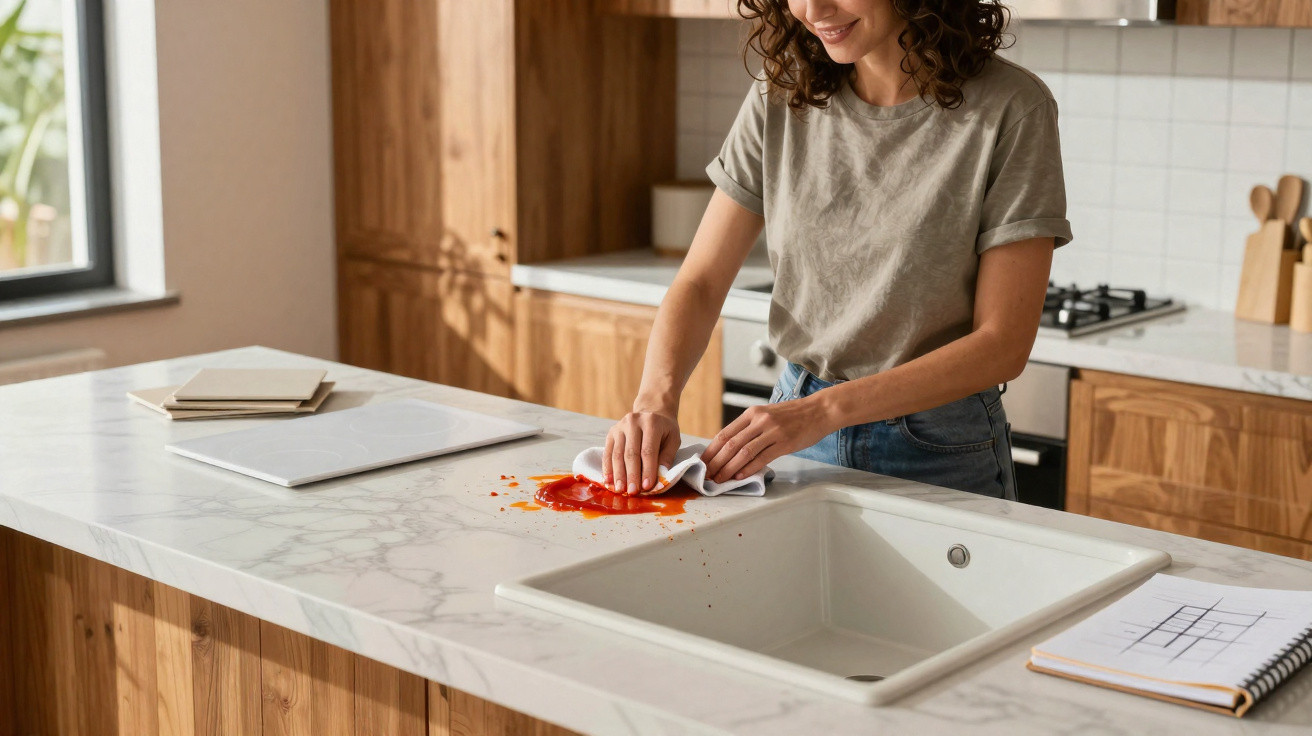
A porcelain worktop is emerging as one of the leading choices for kitchens in 2026, taking ground once dominated by granite and marble. Its refined appearance, strong durability and straightforward upkeep have made the material popular in both contemporary schemes and existing kitchens.
Traditional stone faces serious competition
Large-format porcelain slabs can produce worktops that resemble natural stone, polished concrete or a smooth plain surface. This choice of finishes enables architects to tailor the material to a wide range of interior styles.
In kitchens, it stands out because it is less porous than many natural stones and can create a seamless finish. This makes cleaning easier while giving the room a more current look.
- Porcelain: provides a contemporary look and an extensive range of finishes.
- Maintenance: its surface makes everyday cleaning simpler.
- Durability: when correctly fitted, it performs well against heat, moisture and stains.
- Appearance: it recreates marble, concrete and stone with a lighter visual effect.
Everyday cleaning influences the decision
Granite remains hard-wearing, although its pattern can be more pronounced and, in certain cases, it needs sealing. Marble is elegant, but is more vulnerable to stains, acids and scratches.
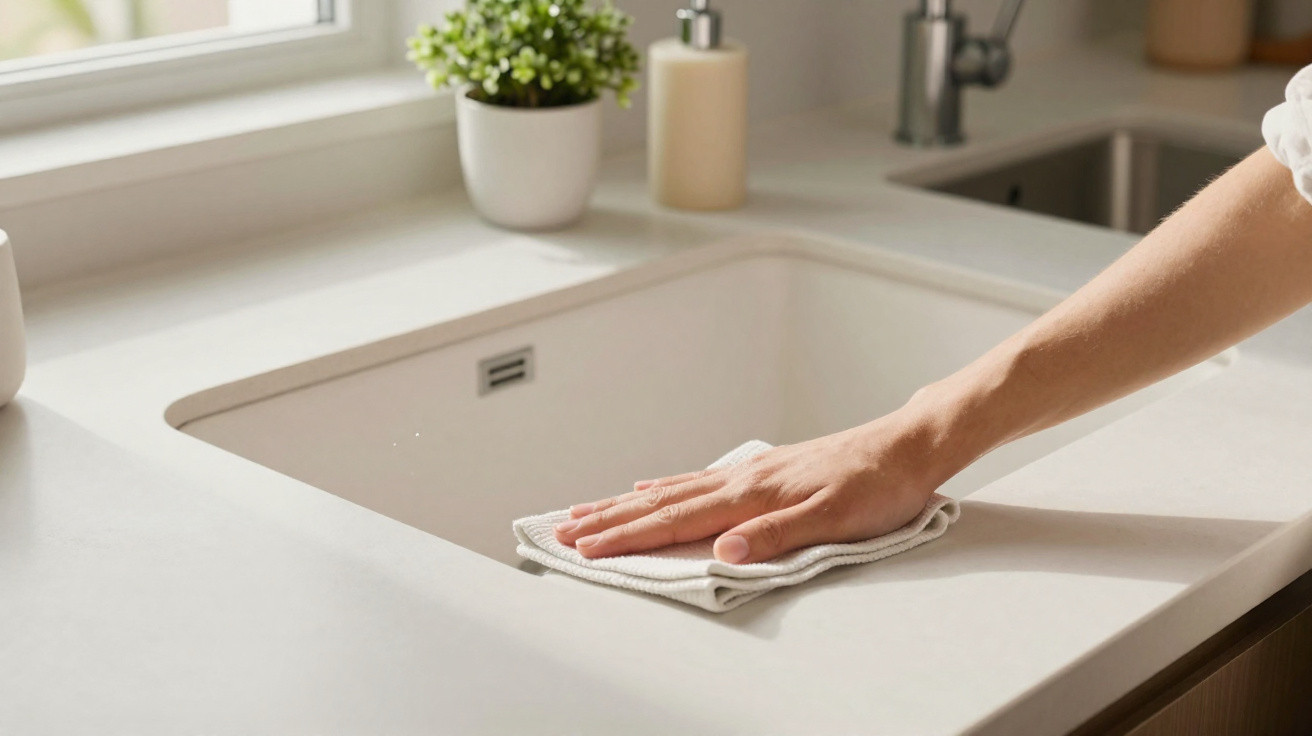
A porcelain worktop is an alternative for those seeking a sophisticated finish with fewer maintenance concerns. A soft cloth, mild washing-up liquid and care to avoid impacts handle much of the routine maintenance.
The detail that determines a good result
Selecting the right porcelain depends on how the kitchen will be used. For food-preparation areas, choose slabs designed for worktops, with suitable thickness, a durable finish and professional installation.
Installation makes all the difference
The material requires skilled workmanship
Porcelain can chip around the edges if it is cut incorrectly, inadequately supported or fitted without appropriate reinforcement.
It is therefore worth employing a professional experienced with large-format slabs, sinks, cut-outs and worktop finishing.
Satin and matt options generally conceal daily marks more effectively. Polished versions are shinier, but may show scratches, fingerprints and splashes more readily.
Cost and fitting into existing kitchens
The price of a porcelain worktop depends on the brand, thickness, format, cut-outs and labour. In some projects, it can be more affordable than premium marble, although it is not always cheaper than standard granite.
In an existing kitchen, the replacement can be completed in stages. Updating an island, a small worktop or simply the supporting surface can refresh the look without requiring a full refurbishment.
A modern look without sacrificing functionality
The kitchen of 2026 favours clean, durable surfaces that are easy to coordinate. For this reason, porcelain is gaining traction in pale shades, subtle marble-effect patterns, concrete grey and natural finishes.
Ultimately, the trend does not replace granite and marble, but it highlights a clear shift in current projects. The porcelain worktop has become an option for those who want beauty, practicality and a contemporary appearance in one material.
If this trend suits someone considering a kitchen refresh, share it with anyone who enjoys practical décor and modern materials.


Comments
No comments yet. Be the first to comment!
Leave a Comment