
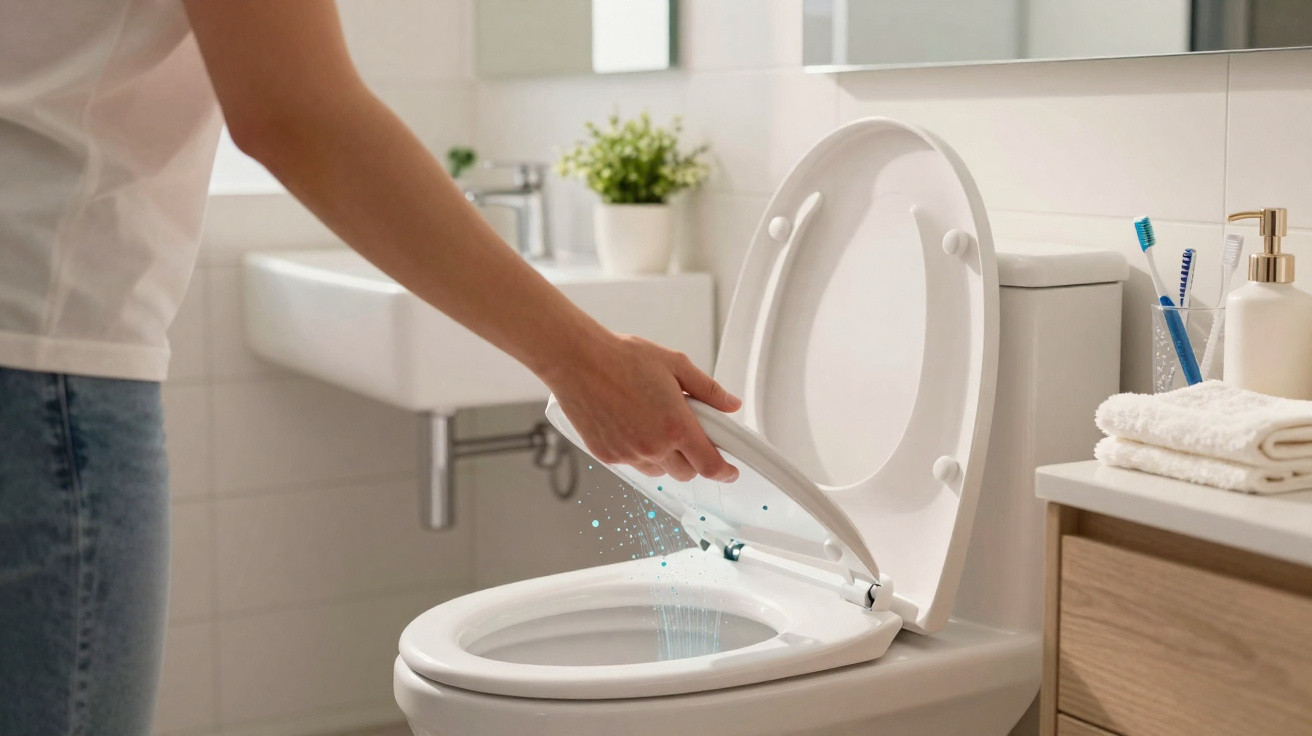
The toilet lid may seem like a minor detail in the everyday bathroom routine, yet it affects how dirt spreads after flushing. As water rushes away, droplets and aerosols can leave the bowl and reach nearby surfaces. Closing the lid before operating the flush has therefore become a straightforward household hygiene measure.
Why should the toilet lid be closed?
The toilet lid acts as a physical shield against splashes and some of the particles expelled during flushing. Even when the water appears clean as it drains, movement inside the bowl can lift tiny droplets containing waste, bacteria and traces of cleaning products.
This effect is known as a toilet plume. It does not mean every bathroom is hazardous, but it shows that flushing does not end inside the toilet bowl. The precaution matters even more in small bathrooms, where the sink, towels and brushes are close to the toilet.
What happens when you flush with the toilet lid open?
Flushing produces turbulence. Water swirls, strikes the inner sides of the bowl and pushes air upwards. In the process, small particles may remain airborne for a while before settling on the seat, floor, sink or other bathroom items.
- Larger droplets generally fall close to the toilet.
- Smaller particles may stay in the air for longer.
- Nearby surfaces can collect invisible residue.
- Bathrooms without ventilation retain more moisture and odours.
Closing the lid before flushing limits direct dispersal, but it does not make the bathroom a microorganism-free space. Small gaps may still allow some aerosols to escape. The lid is useful, therefore, but it needs to be part of a complete cleaning routine.
Which bathroom items are most exposed?
Items closest to the toilet require particular attention. Toothbrushes, face towels, soap dishes, make-up, combs and open containers may be positioned where splashes or particles invisible to the naked eye can reach them.
How the bathroom is organised can help reduce this contact. Toothbrushes should be covered or kept in a ventilated place away from the bowl. Towels need to dry thoroughly between uses. Toiletries should not be left open on the sink when the toilet is very close by.
How can you create a safer hygiene routine?
A safer routine brings together quick habits and regular cleaning. Closing the lid is the first step, but the bathroom also needs ventilation, disinfection of frequently touched areas and attention to damp cloths, which can retain unpleasant smells and dirt.
- Close the lid before flushing.
- Wash your hands after using the toilet.
- Clean the seat, flush button and door handles regularly.
- Store toothbrushes and personal items away from the toilet.
- Keep the bin covered and empty it regularly.
The flush button is often overlooked, although it is touched directly before hands are washed. The door handle belongs on the same list. These areas should be cleaned more often than decorative shelves or walls away from wet areas.
How this habit changes everyday bathroom cleaning
Closing the lid before flushing does not require costly products, renovations or special equipment. The habit reduces splashing, helps control odours and limits some of the particles circulating in the room. This precaution is even more valuable in homes with children, older people, pets or a shared bathroom.
Bathroom cleaning becomes more effective when every step has a clear purpose: close the lid before flushing, wash hands after use, disinfect surfaces and protect personal items. The toilet remains an area that needs attention, but this routine leaves less opportunity for invisible dirt to spread across the sink, floor and hygiene products.


Comments
No comments yet. Be the first to comment!
Leave a Comment