
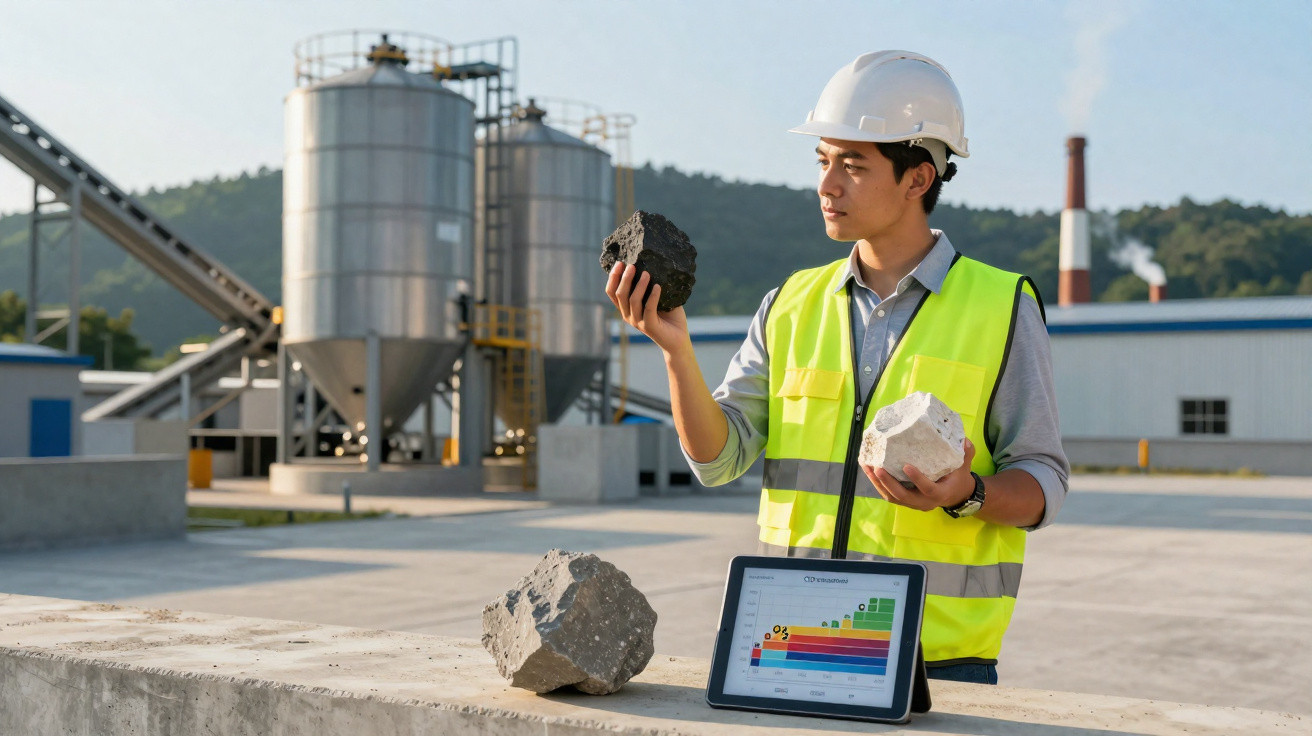
The search for sustainable solutions in construction has recently gained an important ally. A study published in Communications Sustainability shows that replacing conventional inputs could drastically reduce the environmental impacts caused by the worldwide manufacture of this essential material.
How can basalt replace traditional limestone?
Research led by J. P. Prancevic closely examined whether the industry could replace limestone with silicate rocks. Basalt has emerged as the leading technological alternative for reducing the release of polluting gases during manufacturing.
This structural change removes the need to decarbonise traditional components, a process that releases large volumes of pollutants. By incorporating elements that react in a clean and highly efficient way, the approach reshapes the ecological standards of modern manufacturing.
The replacement offers several advantages across the industrial supply chain:
- Lower emissions: A drastic reduction in greenhouse gases.
- Basalt use: Traditional limestone is replaced with silicate rocks.
- Climate impact: Environmental damage linked to construction is mitigated.
- Portland cement: The production of conventional cement is reformulated on ecological grounds.
- Industrial efficiency: The new methodology has been tested in recently published research.
What is the real impact on CO2 emissions?
Tests suggest that replacing the conventional model with silicate rocks dramatically lowers the ecological footprint. Reconfigured cement production could reach historic levels by cutting harmful emissions to the planet by more than 80% in practical terms.
This substantial decrease results directly from the absence of thermal carbon released by limestone. The major change to thermal processing sets a new standard for a commercial sector seeking to meet demanding sustainability targets in the years ahead.
Why were silicate rocks selected?
Basalt’s chemical properties make it possible to achieve the melting required to produce the hydraulic binder without creating harmful gaseous by-products. Researchers found that these specific rocks provide ideal mineralogical stability throughout the highly complex industrial firing processes.
Scientific study
Mineralogical analysis
Using alternative materials such as basalt prevents harmful volatile compounds from being released into the atmosphere.
This innovation reinforces the search for viable ecological inputs within the global infrastructure market.
Moreover, the geographical abundance of these minerals supports a continuous supply for Portland cement plants around the world. The economic viability of this sustainable strategy depends directly on the broad availability of this mineral resource, which is plentiful in the Earth’s crust.
Selecting the new minerals involves crucial strategic criteria:
- The natural abundance of silicate rocks across the planet.
- Greater chemical stability when heated.
- Direct compatibility with existing industrial machinery.
How does construction benefit from this discovery?
The infrastructure sector gains a practical answer for reducing its vast environmental footprint without compromising production volumes. Commercial adoption of basalt enables companies to achieve the climate neutrality required by recent international regulations.
Beyond ecological compliance, the new processes ensure robust inputs suitable for large-scale residential projects. This technical innovation enhances modern engineering schemes, turning conventional building sites into hubs focused on entirely sustainable urban development.
The principal practical benefits identified in civil engineering include:
- Higher property value associated with green certifications.
- A significant reduction in polluting waste generated by factories.
- Full compliance with the ecological requirements of today’s market.
What are the industry’s next steps?
A large-scale transition requires investment in factory adaptations and the mapping of accessible mineral deposits. While specialists seek the ideal solution to replace the conventional material, this mineral alternative stands out as a viable and ecologically sound option for the current market.
Continued research is establishing silicate rocks as an irreversible trend in global ecological production. As a result, the market expects international consortia to adopt this clean technology quickly, driving a genuine revolution in modern global architecture.
Official source: Information reported directly by Nature.






Comments
No comments yet. Be the first to comment!
Leave a Comment