
Between rain, snow and persistent damp, terraces can quickly develop a slippery layer of moss, algae and lichen. Besides looking neglected, this growth can make surfaces dangerously slippery. Many people first reach for chlorine-based cleaners or conventional bleach. Experts have warned against this for years: particularly on stone, wood and tiles, these products can do more harm than good, while posing a genuine risk to the environment and garden wildlife.
Why bleach is a poor choice for patios
Chlorine-containing cleaners are often seen as an everyday “all-purpose weapon”. On patios, however, they can cause several types of damage at once:
- Materials can be damaged: Porous stone, joint mortar and wooden surfaces may fade, become crumbly or develop cracks.
- Plants and wildlife suffer: Rinsing water can carry the cleaner into flowerbeds, lawns and soil, harming micro-organisms, insects and plants.
- Legal requirements: Several European countries impose strict rules on using biocides on private land. Applying chlorine cleaners to open patios can often fall into a grey area.
- Health hazards: Fumes may irritate the eyes and airways, while splashes can damage the skin.
“Experts now clearly advise against treating patios with strong bleach products – the risks to the surface, garden and health are simply too great.”
There is another drawback: the result is generally short-lived. Although the surface may look lighter, the conditions that allow new spores to grow are barely changed. After the next damp winter, the problem starts again.
How moss and algae form on patios
Moss and algae are not simply a layer of “dirt” that appears by chance. Their growth follows clear conditions:
- Constant moisture: Standing water, inadequate drainage falls or blocked drains create ideal growing conditions.
- Shady positions: North-facing areas, balconies beneath canopies and spaces beside tall hedges dry out slowly.
- Rough materials: Natural stone, open-pore tiles and wood retain water for longer than smooth surfaces.
- Deposits: Soil, leaves and dust provide nutrients and trap moisture.
Assessing your own patio can significantly reduce future growth, for example by improving drainage, sweeping regularly and selectively cutting back dense vegetation.
The zero-cost trick: potato water as a natural moss killer
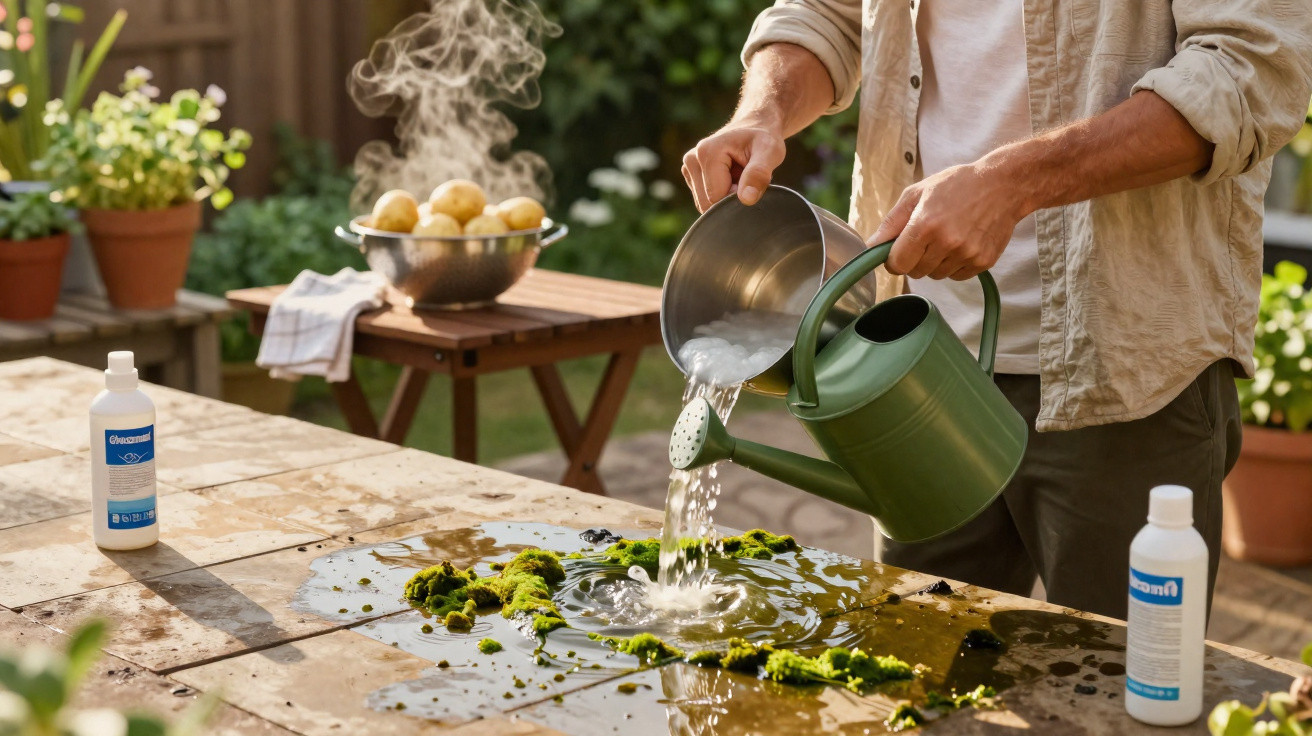
Rather than using hazardous chemicals, gardening experts are increasingly turning to a surprisingly simple household remedy: the water left after boiling potatoes. What would usually go down the sink can be an effective aid against moss, algae and lichen.
Why potato water works
As potatoes cook, large amounts of starch are released into the water. This mixture works in two ways:
- Heat shock: When the liquid is poured over a dry patio while still boiling hot, at around 100°C, the cells in sensitive plant material burst.
- Starch coating: As it cools and dries, the starch forms an extremely thin film. It coats the surfaces of dead plant remains and seals their pores. The remains dry out and “suffocate”.
“The combination of temperature shock and a suffocating starch film weakens moss and algae so much that, after one or two days, they almost fall away by themselves.”
How to use potato water correctly
The method needs a little preparation, but no costly equipment:
- Step 1: Prepare the patio
Sweep away leaves, soil and loose debris. The area should be as dry as possible so that the hot water is not immediately diluted. - Step 2: Boil the potatoes
Cook potatoes in plenty of unsalted water. Salt would place an additional burden on the soil and harm plants. - Step 3: Use it straight away
As soon as the potatoes have been drained, carefully pour the still-boiling liquid over the affected areas. Wear gloves and sturdy footwear to avoid scalding. - Step 4: Leave it to work
Keep off the patio and allow the water to dry completely. Depending on the weather, this may take several hours. Over the following 24 to 48 hours, the moss turns dark brown to black. - Step 5: Sweep off the growth
After one or two days, remove the loosened remains with a stiff brush or scrubbing brush, then rinse with clean water.
Anyone who regularly cooks potatoes can repeat this process several times a year without difficulty, keeping the growth under control over the long term.
Alternative household remedies: what else works – and what does not
Alongside potato water, many people successfully use other treatments against the green film:
- Baking powder or bicarbonate of soda: Mix with water into a paste, apply it to the affected patches, leave it to work, then brush it away. This is especially suitable for smaller areas.
- Soft soap with washing-up liquid: A mixture of water and soft soap, or a little washing-up liquid, loosens greasy deposits and makes brushing easier.
- Vinegar cleaner: Its acid attacks algae, but it should be used sparingly because of its effects on joints and soil organisms, and it must not run into flowerbeds.
Take care with concentrated specialist cleaners from DIY shops. Many contain biocides which are highly effective, but can find their way into groundwater and remain in the environment for a long time. Anyone using them should follow the manufacturer’s instructions strictly and protect adjacent beds.
Simple routines to tackle the green film
The best “secret weapon” is a combination of routine maintenance and targeted treatments using household remedies. Useful habits include:
- Sweeping the patio after heavy rainfall.
- Removing autumn leaves promptly rather than leaving them in place for weeks.
- Placing plant pots on saucers with raised supports so that water can drain away.
- Checking for a gentle fall, or having one installed, if puddles regularly remain.
After a thorough clean, applying a clear sealant to stone or concrete can also greatly reduce water penetration. Moss and algae then have less to cling to and are easier to remove.
What else you should know about moss, algae and lichen
Many people see moss as an enemy, but it is not itself a toxic substance. On a roof or patio, it is mainly a safety and appearance issue: surfaces become slippery and look uncared for. In the garden itself, moss even has an ecological role, retaining moisture and providing shelter for small animals.
Algae and lichen are highly sensitive to environmental toxins. Choosing “harsh chemicals” therefore often kills far more micro-organisms than intended. The potato water trick has an advantage here: heat and starch break down quickly without leaving long-term residues.
Another benefit is that the method costs virtually nothing, as it uses a by-product that would otherwise be discarded. For households aiming to live more sustainably, it is a straightforward starting point that does not mean compromising on a clean, safe patio.

Comments
No comments yet. Be the first to comment!
Leave a Comment