
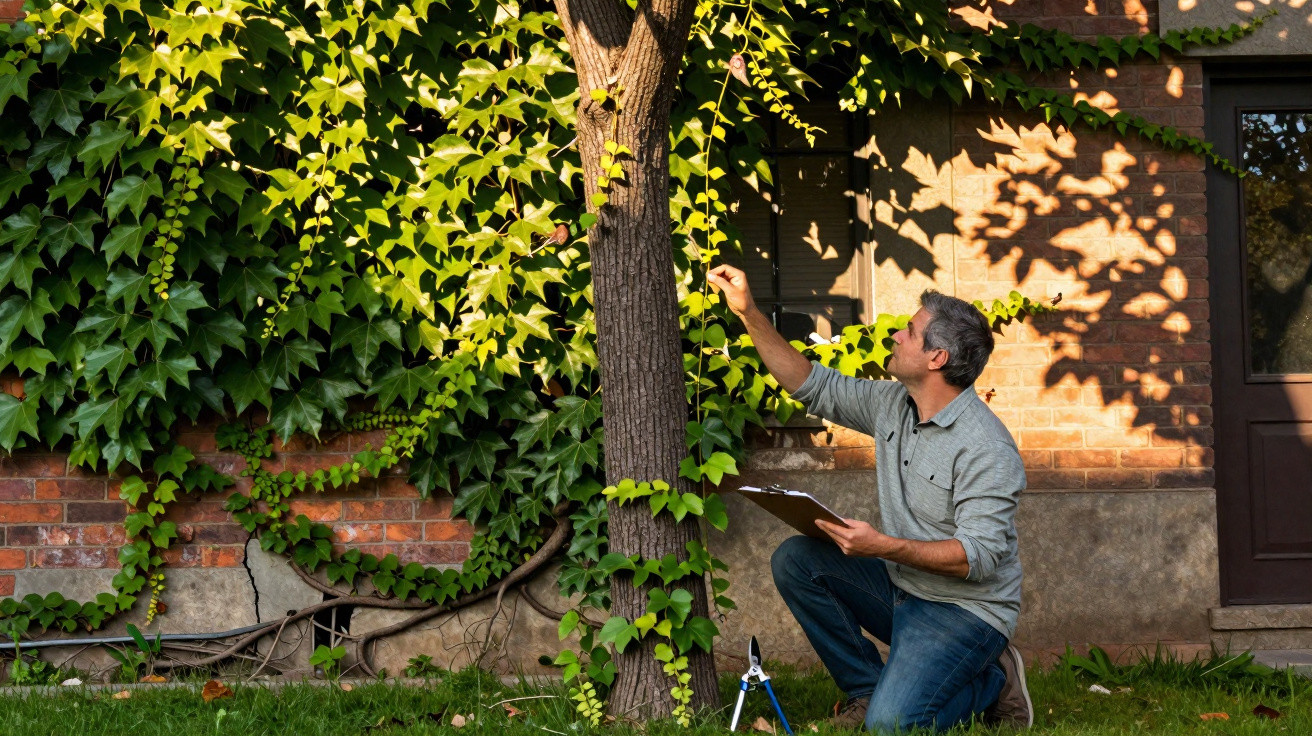
But reaching for the shears with the best intentions can do more harm than good.
Ivy has a poor reputation: it is said to damage walls, smother trees and make entire gardens look “untidy”. Specialists take a much more nuanced view. A closer look soon shows that this climbing plant is far less dangerous than its reputation suggests – and in many places it even acts as a natural protective shield.
Ivy is not a parasite – and is often a quiet helper
One widespread misconception persists: many people confuse ivy with mistletoe, believing that it taps into trees and takes their nutrients. That is not the case. Ivy’s roots remain in the soil, where the plant obtains its water and nutrients. The small clinging roots on a trunk or façade serve solely for anchorage, not for feeding.
Experts stress that a healthy, vigorous tree generally does not lose vitality because of ivy. On the contrary, its leafy cover often provides natural insulation. Tearing ivy off aggressively deprives the tree and many animals of an important habitat, while also frequently damaging bark or render.
Ivy grows independently from the ground, does not draw sap from the tree and often protects healthy trunks more than it harms them.
When ivy benefits trees – and when it can become a problem
On a strong, well-rooted trunk, ivy acts like a green coat. Its dense foliage softens the effects of heat, frost and hail. It also keeps humidity around the bark somewhat more stable, protecting it from extreme fluctuations. This can be a distinct advantage, particularly during summers with intense sunshine.
Ivy plays a second role in the garden: it provides shelter for numerous bird species, small mammals such as hedgehogs and shrews, and a vast number of insects. Specialists estimate that up to around 200 species benefit from ivy, whether as a refuge, a nectar source or winter shelter.
When ivy becomes a danger to trees
The climber is not entirely without risks, however. Problems occur mainly when the tree is already weakened:
- Very old or diseased trees: The additional growth can conceal brittle branches and increase the risk of branches breaking.
- Young trees and fruit trees: Ivy deprives them of light. Young crowns can easily end up competing with the green covering.
- Storm damage: Dense growth in the tree canopy increases its surface area in the wind. During storms, the tree may topple more quickly or lose branches.
- Hidden damage and disease: Fungal growth, cracks and decayed wood are harder to spot behind dense foliage.
In these situations, specialists advise at least keeping the ivy under control. It is important not to pull it off suddenly, but to remove it gradually or keep it consistently low so that it never reaches the uppermost canopy in the first place.
Ivy on house walls: insulation, weather protection – or a risk?
Ivy on façades regularly divides opinion. Some homeowners love it as a romantic feature, while others fear crumbling brickwork and damp walls. As is often the case, the reality lies somewhere between the two – and depends greatly on the condition of the masonry.
On a solid, undamaged wall with sound render, ivy shows its helpful side. The clinging roots largely remain on the surface and do not usually tear away healthy render. Instead, the foliage forms a kind of green screen against driving rain. At the same time, the layer moderates temperatures: the façade heats up less in summer, while slightly less heat is lost to the outside in winter.
A sound façade covered in ivy can heat up by several degrees less in summer – something residents of top-floor flats notice particularly clearly.
When ivy really damages walls
It becomes critical if the façade is already damaged. Clinging roots can take hold in crumbling mortar joints, cracks or loose render, and wind and moisture can widen these weak points further. In old properties that have never been renovated, this can:
- allow moisture to penetrate,
- loosen bricks or push them out of mortar joints,
- block gutters and downpipes,
- encourage damage to shutters, roller-shutter boxes and roof junctions.
Before allowing ivy to climb a wall, homeowners should inspect the masonry. Are there cracks? Crumbling joints? Loose areas of render? Those who carry out repairs first and only then allow the plant to climb will enjoy their green façade for much longer.
How to decide: leave, trim or remove ivy?
Rather than reaching for the saw automatically, it is worth carrying out a quick check. Specialists recommend a straightforward rule of thumb: assess the condition of the “support” first, then decide what to do.
Checklist for trees
The following questions can help with the decision:
- Does the tree appear stable, with a sturdy trunk and a healthy canopy?
- Are there no major cracks, areas of rot or dead branches visible?
- Is it neither a young tree nor a sensitive fruit tree?
If the answer to most of these questions is “yes”, ivy can usually be left in place. Cutting it back every few years is sensible – ideally so that it does not reach the highest parts of the canopy. If the tree shows clear signs of weakness, however, the growth should be substantially reduced to lessen wind loading and shade.
Checklist for façades
A similar principle applies to house walls:
- Does the render appear firm, without flaking or holes?
- Are the mortar joints stable rather than crumbly?
- Are there no visible cracks through which water could enter?
If the façade is in good condition, there is little reason not to tolerate ivy or guide its growth deliberately. If cracks and damaged areas are present, repairs should come first, followed by new planting. When removing ivy, it is best to cut the shoots near the top and allow the remains to dry out for a few weeks. Many of the clinging roots will then come away far more easily.
Why ivy is so valuable for wildlife
Ivy provides year-round features that are often otherwise absent from gardens. It remains partly green in winter and therefore offers cover for birds and small mammals. In autumn, it produces late-flowering nectar when many other plants have long since finished blooming. This makes it an important food source for bees, hoverflies and other insects that are still active.
Removing ivy completely therefore takes more than just a climbing plant out of the garden: it removes an entire small ecosystem. Especially in densely built-up residential areas with little natural vegetation, a single ivy-covered tree or house wall can become a kind of “mini-biotope”.
Practical tips for managing ivy day to day
For ivy to become an ally, moderate maintenance is what matters most. A few practical tips for everyday care:
- Regular pruning: One or two maintenance cuts each year are usually enough to keep ivy in shape.
- Keep windows and roofs clear: Guide or cut back shoots from window frames, roof tiles and gutters in good time.
- Train it deliberately: Ivy can be directed more controllably on trellises or wires than directly over render or bare stone.
- Wear gloves: Ivy can cause skin irritation in sensitive people, so it is better not to handle it with bare hands.
For small gardens, a compromise can also work well: deliberately designate one tree or wall as an ivy zone, while keeping other areas clearly structured and free from growth. This maintains a tidy appearance without losing the ecological benefits.
How ivy relates to climate change and the urban climate
As heatwaves become more frequent, natural shading is receiving greater attention. Green façades lower surface temperatures and can help homes warm up more slowly in summer. At the same time, foliage captures dust and fine particulate matter – a factor that should not be underestimated on heavily trafficked roads.
Ivy is only one of several possible climbing plants, but it is a particularly robust choice. It copes well with partial shade and shade, requires comparatively little maintenance and stays green for a long time. Combined with other shrubs and flowering plants, it can create a lively, structurally rich garden that benefits people and wildlife alike.
Comments
No comments yet. Be the first to comment!
Leave a Comment