
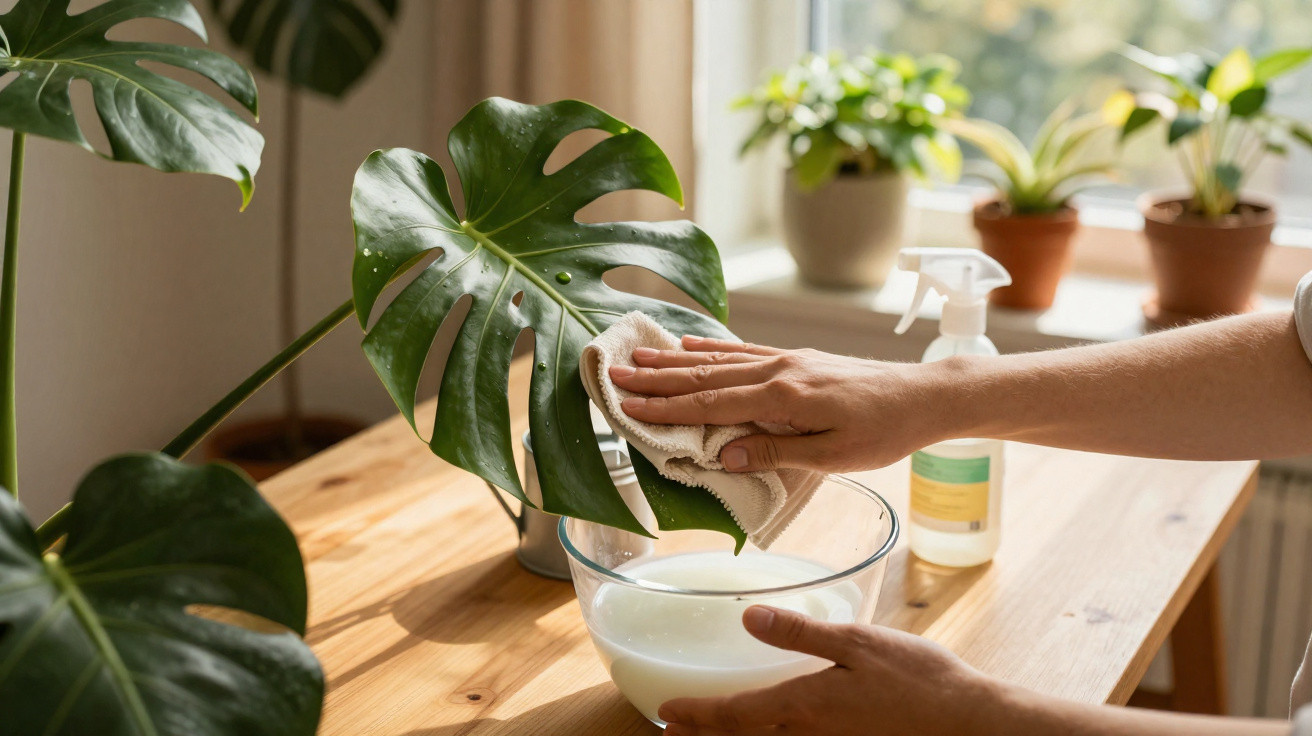
Looking after houseplants can feel much like caring for a pet: you check on them every day, notice every small change and worry when their leaves become dull, slightly yellow and tired-looking. Before buying lots of expensive products, there is a straightforward, low-cost method that many plant enthusiasts have used for years: water with milk. Used in the right proportion and applied carefully, it can help restore vivid green colour and the leaves’ natural sheen without harming the plant or the environment.
How does milk restore the leaves’ vibrant green colour?
When properly diluted, milk can gently clean the leaf surface, removing dust and the dull layer that hinders photosynthesis. It also leaves a very fine coating that brings out the green tone and shine, making the plant look well cared for.
Ordinary carton cow’s milk, whether whole or semi-skimmed, is the type most commonly used and should always be mixed with water. The traditional ratio is one part milk to ten parts water, or as much as 1:15 in warmer places, so it dries quickly and does not develop an odour. It is not a replacement for fertiliser, suitable light or correct watering; it is simply an additional treatment for the appearance and health of the leaves.
How to prepare and apply water with milk to leaves
To make the mixture, use a clean container, measure the ingredients accurately and stir thoroughly: for instance, 100 ml of milk to 1 litre of water. Depending on the plant’s type and size, the solution can be used in a spray bottle or applied with a soft cloth or cotton wool, always gently.
A few simple measures help ensure correct application and prevent marks, smells and excessive moisture on the leaves, keeping the treatment safe over time:
- Dilute the milk in water at a 1:10 or 1:15 ratio, mixing it well.
- Test it on 2 or 3 leaves first, then wait 24 hours to check the response.
- Wipe with a soft, lightly dampened cloth, without soaking the leaves or allowing liquid to run off.
- Avoid periods of strong sunshine and velvety leaves, which hold too much moisture.
- Always use the mixture immediately and discard any leftover solution after application.
What is the ideal frequency, and how should cleaning be alternated?
The frequency generally ranges from every 15 days to once a month, according to the amount of dust and pollution in the setting. Once a month is usually enough indoors, whereas every 15 days often works better on balconies and in more exposed locations.
To prevent residue from building up, many people alternate treatments: one week, they clean using only a damp cloth; the next, they use diluted water with milk. Watching the plant’s response is essential: if marks or dark specks develop after several applications, it is worth increasing the interval or temporarily returning to cleaning with water alone.
Which plants respond best to water with milk, and how can you spot improvement?
Plants with broad, smooth and naturally glossy leaves usually respond best to water with milk. Firm-leaved ferns, pothos, Swiss cheese plants, philodendrons, ZZ plants, peace lilies, dumb canes and snake plants tend to develop more even green colouring and a refreshed appearance within a few days.
Within the first 3 to 7 days, leaves commonly appear less dull, smoother and shinier when viewed against the light, along with a generally more “lively” look. If stains, an unpleasant smell or more insects appear, it indicates that the particular plant has not responded well to the method. The best approach is to stop using it, clean only with water and review the light, watering and fertilising routine to keep the plant healthy.






Comments
No comments yet. Be the first to comment!
Leave a Comment