
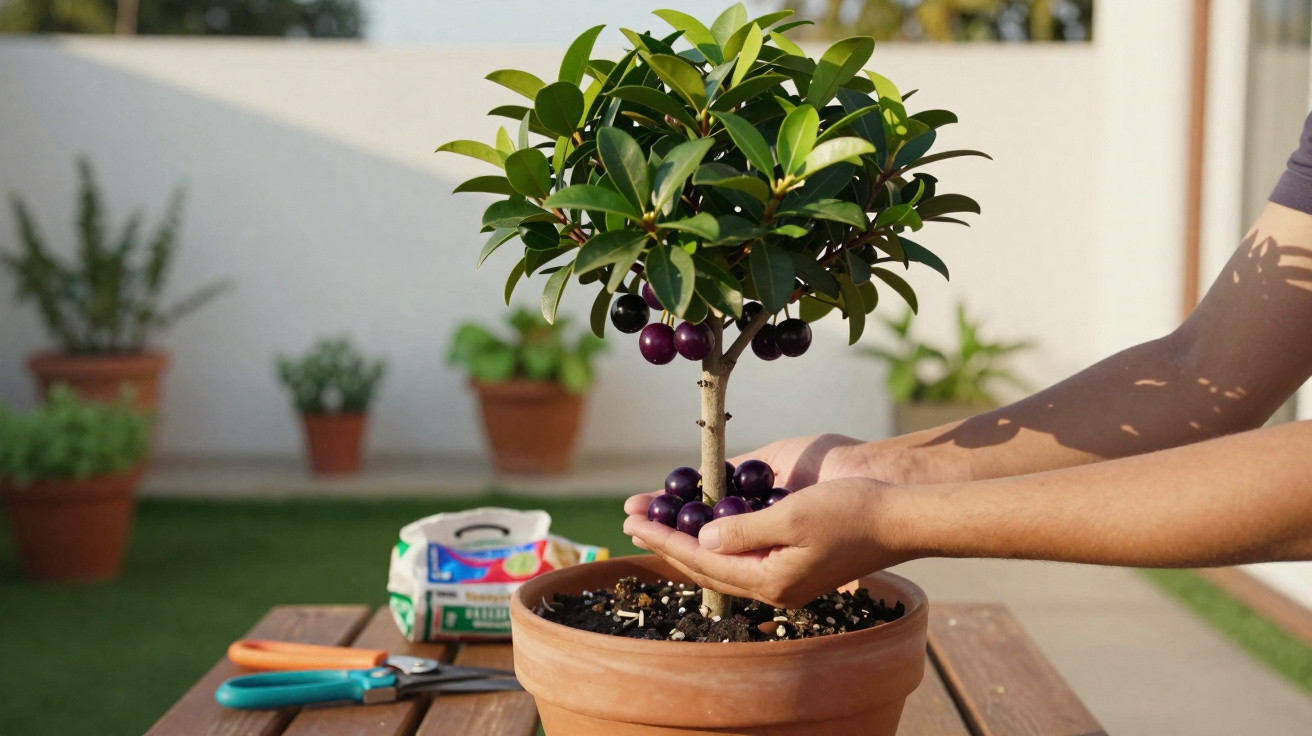
The Sabará jabuticaba tree is a compelling choice for compact gardens: it tolerates formative pruning, adapts successfully to different parts of Brazil and, if grown from a grafted sapling, may bear fruit while still young. Its roots are not generally aggressive, although the tree still requires appropriate clearance from paving, walls and pipes.
Why is the jabuticaba tree suitable for small gardens?
Although a jabuticaba tree can grow to several metres high when left unpruned, it responds well to pruning that limits the canopy and makes harvesting easier. In residential gardens, it can be trained to a more compact size, with evenly spaced branches and sufficient room for light to reach the tree.
Its roots do not behave as aggressively as those of some urban trees, but no species should be planted directly against built structures. Leaving roughly 2 to 3 metres between the tree and walls, very rigid paving or pipework provides a safer area for it to develop.
Does the jabuticaba tree really take many years to fruit?
This reputation largely relates to trees grown from seed, which go through a longer juvenile phase before flowering for the first time. A grafted sapling already contains material from a mature plant and, under good growing conditions, can begin producing fruit considerably sooner.
When buying one, it is therefore worth asking how the sapling was propagated and how old it is. First fruiting also depends on the climate, light levels, watering and nutrition, but choosing a grafted plant significantly shortens the wait compared with growing a jabuticaba tree directly from the stone.
What care helps the tree grow and fruit more successfully?
The jabuticaba tree prefers consistent moisture and does not cope well with long spells in completely dry soil. Planting conditions should provide good water availability, organic matter and enough drainage to prevent permanent waterlogging:
- Select a location in full sun or with several hours of direct light;
- Keep the soil moist through regular watering;
- Use a growing medium rich in organic matter and slightly acidic;
- Do not allow water to remain continually pooled around the roots;
- Apply mulch to limit moisture loss;
- Fertilise according to the tree's growth stage and fruiting season.
How can you keep the canopy compact without harming fruit production?
Pruning should focus chiefly on removing dead, poorly placed or inward-growing branches. Moderate cuts help manage the canopy's height without removing a large proportion of the plant area that produces energy all at once:
- Remove dead or diseased branches;
- Take out crossing branches and those growing too close together;
- Reduce the canopy height gradually;
- Avoid severe pruning immediately before flowering;
- Keep the centre sufficiently open to airflow;
- Use clean, sharp tools.
Why do the fruits grow directly from the trunk?
One of the jabuticaba's most striking traits is cauliflory: its flowers and fruits emerge directly from the trunk and older branches. As they ripen, jabuticabas become dark and round, with sweet flesh, turning a compactly managed tree into a fruit producer in the garden itself.
As with other trees selected for compact residential spaces, success relies more on planning than on the promise of completely harmless roots. With a grafted sapling, suitable distance from buildings, sunshine and regular watering, the Sabará jabuticaba tree can remain manageable and yield fruit for many years.

Comments
No comments yet. Be the first to comment!
Leave a Comment