
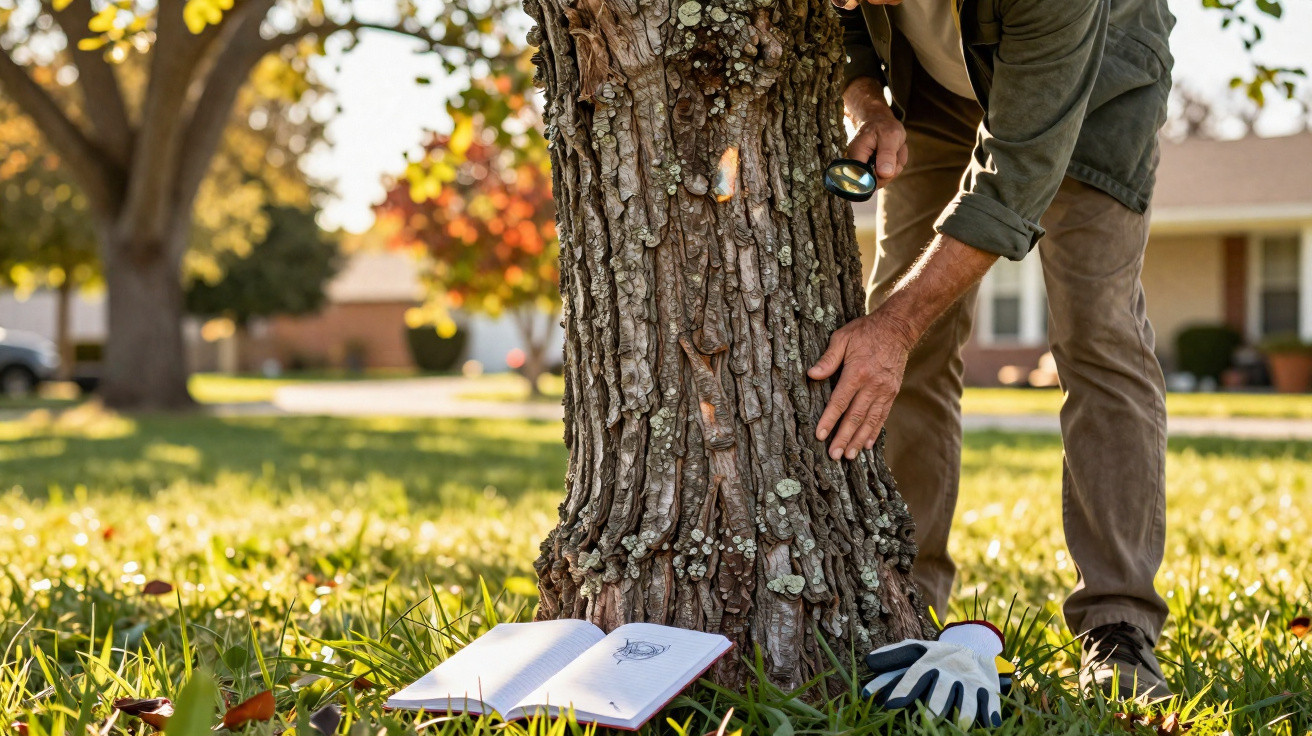
The tree trunk can show important signs before more obvious changes become visible in the leaves. Alterations to the bark, cracks, marks and damaged sections do not necessarily mean the plant is unwell, but they may suggest that its growing conditions and the development of the issue are worth monitoring more closely.
Why can the tree trunk reveal changes before the leaves?
Bark acts as a protective layer and can change as a result of growth, injuries, environmental exposure and other influences. Some changes occur naturally as part of a species’ development, whereas others may point to damage that should be monitored.
Checking the trunk regularly makes it easier to spot changes that might otherwise go unnoticed. For instance, a small injury that grows over time requires closer attention than an old mark that has remained unchanged for a long period.
Which bark detail requires the closest attention?
Cracks, sunken patches, unusual peeling, spreading marks and the presence of discharge are signs that warrant more careful observation. Context matters too: a tree that has been pruned recently, exposed to excessive moisture or damaged mechanically may show different changes from a plant with no history of injury.
It is also important not to jump to conclusions. Bark appearance differs greatly between species and according to the tree’s age. A rough or flaky texture may be a natural feature of a particular plant rather than a sign of a problem.
How to inspect the tree trunk without harming the tree
Start by visually checking the full accessible length of the trunk and the main branches. Look for recent changes, patches that appear to be expanding and areas with physical damage. Taking a photograph of the change can make it easier to compare its progress over time.
Avoid removing bark, scraping lesions or applying homemade products in an attempt to identify the cause. Such actions can worsen the injury and make a later assessment more difficult. Where a change is extensive or progressive, identifying the species and obtaining a professional assessment may be necessary.
Who should pay closer attention to these signs, and when?
Trees that have been pruned, suffered impacts, been exposed to extreme weather conditions or experienced recurring problems deserve closer monitoring. The same applies to plants showing changes to the trunk, branches and leaves at the same time.
If there are deep cracks, unstable sections, compromised large branches or signs of structural deterioration, greater care is needed, as the matter may concern safety as well as the plant’s health. Therefore, observing the tree trunk does not mean attempting to diagnose the issue alone; it means noticing changes and knowing when to seek specialist assessment.






Comments
No comments yet. Be the first to comment!
Leave a Comment