
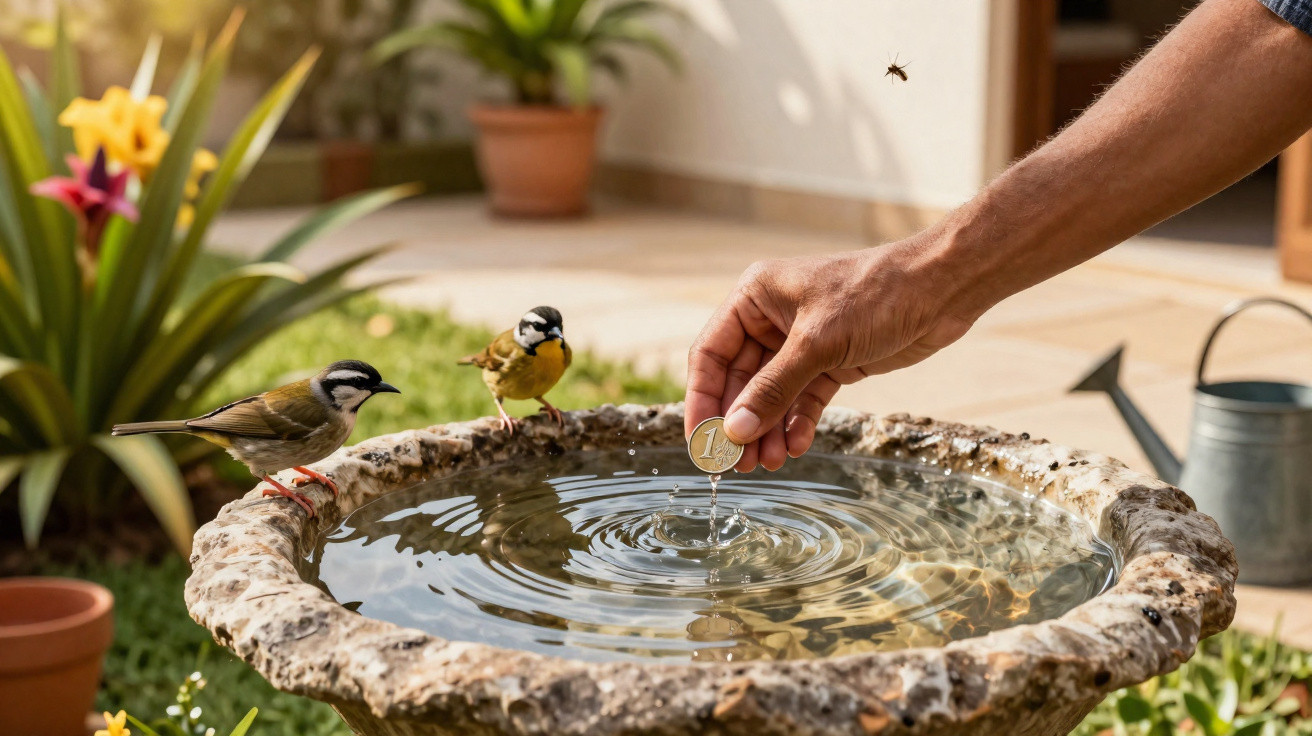
A tiny cent coin in the bird bath is currently prompting plenty of discussion: behind this curious tip lies a serious issue affecting many gardens.
Bird baths are a small luxury for blackbirds, tits and sparrows, as well as an attractive garden feature. Yet after the bowl has sat in the sunshine for just a few days, the water can turn, becoming green, slimy and unpleasant-smelling. This is where the advice to place a single 1-cent coin in the water dish comes in. It may sound like superstition, but there is a practical reason behind it.
Why bird bath water turns so quickly
Anyone with a bird bath in the garden or on a balcony will recognise the issue: before long, a slippery greenish film forms around the sides. The water becomes cloudy and can sometimes resemble a thin soup.
Garden experts point to a straightforward explanation: material from the surrounding area constantly ends up in the bowl.
- Fallen leaves and blossom
- Dust, pollen and soil
- Leftover food and seeds
- Bird droppings and feathers
- Warm weather and direct sunshine
All of this creates an ideal breeding ground for algae in stagnant water. In sunlight, they multiply rapidly. The water turns, the surface becomes slimy and the bowl discolours. While this is mainly unattractive to people, it can pose a health risk to birds.
“Dirty water in a bird bath increases the risk of pathogens and attracts mosquitoes.”
Animal welfare and conservation organisations have therefore been warning for some time that anyone wishing to help birds must change the water regularly. Particularly during summer, a neglected bird bath can do more harm than good.
The 1-cent coin in a bird bath: how it works
A seemingly simple suggestion is currently circulating in gardening forums and on social media: place one 1- or 2-cent coin in a clean water bowl. The idea is not new; it originated in English-speaking countries and is based on the effects of copper.
The small cent coins have a steel core but are coated with a thin layer of copper. In water, this metal reacts and releases copper ions in very small quantities. These ions can slow algae growth.
“Garden professionals describe it as mild algae protection – not a miracle cure, but a useful addition.”
Importantly, the coin is not a replacement for regular cleaning. It merely means new algae may spread somewhat more slowly. Anyone who believes that throwing a handful of loose change into the bowl will eliminate the need for cleaning is mistaken and, in extreme cases, risks causing problems for the animals.
How to use the 1-cent coin trick correctly
For this method to benefit the water without harming birds, a few simple rules are needed. Specialists recommend a clear routine.
Care routine for a clean bird bath
- Change the water frequently: Empty the bowl and refill it with fresh tap water at least every two days.
- Scrub it weekly: Once a week, clean the inside surfaces with a brush or sponge to remove deposits.
- Use only mild products: For heavier dirt, use a little vinegar or environmentally friendly washing-up liquid, then rinse thoroughly.
- Add 1 to 2 coins: Put one coin in small bowls and no more than two in large ones.
- Replace coins regularly: Change them roughly every three months, especially if they are badly corroded.
Experts specifically advise against chemical cleaners. Pond algae treatments, chlorine, bleach and salt have no place in a bird bath. They can damage feathers, irritate mucous membranes or even be toxic.
Too much copper can harm animals
The idea that more is better does not apply here. In small water bowls, the concentration of copper ions rises if too many coins are added and the water is changed infrequently. Smaller bird species are particularly sensitive.
Specialists therefore recommend:
- No more than two coins, even in large bowls
- Continuing to replace the water very frequently
- Removing the coins again if birds show unusual behaviour, such as avoiding the bowl
Anyone who wants to be especially cautious can use small plates or grids made from pure copper instead of coins. These often release the metal more evenly, but they cost more and are harder to find in shops than loose change in a wallet.
Making your bird bath genuinely appealing
The cent coin in the bowl is only one element. For birds to actually use a bird bath, location, depth and safety matter far more. Many baths remain empty because they simply appear unsuitable from a bird’s perspective.
The right location in the garden
A suitable spot meets several requirements:
- Partial shade rather than full sun: This keeps the water cooler and slows algae growth.
- A clear view: Birds want to spot threats such as cats from a distance.
- Places to retreat: A nearby shrub provides safe escape points.
- A stable position: The bowl must not wobble or tip over.
If the bird bath stands in blazing sunshine all day or directly beside dense shrubbery, many species will avoid it, either because of the heat or because they fear hidden predators.
Water depth, material and shape
The ideal water depth is three to five centimetres. Small songbirds feel unsafe in bowls that are too deep. Shallow steps or stones in the water help birds to gain a secure footing.
Rough materials such as natural stone or ceramic are popular because birds can grip them more easily. Glass and very smooth plastics are more slippery and heat up more quickly.
Why maintaining a bird bath is worthwhile
A well-maintained bird bath is more than a pleasant extra. Natural sources of water are scarce in many gardens, especially during dry summers. Puddles dry up, small streams carry very little water and water butts are covered. This can leave wild birds struggling.
With a simple bowl, you can provide several benefits at once:
- Drinking water for songbirds, hedgehogs and insects
- A place to bathe and maintain plumage
- A small resting area in a hot garden
Many garden owners notice regular visitors after only a few days. Sparrows and blackbirds usually arrive first, followed later by tits, robins or even starlings. Children can see first-hand how important water is for animals and, along the way, learn to show consideration for these small visitors.
Everyday tips for a bird bath
Anyone using the 1-cent coin trick should simply make it part of their daily routine. It is often enough to change the water briefly in the morning while already walking through the garden or stepping onto the balcony. Keeping a small brush and sponge close to the bowl makes cleaning easier.
If nobody is at home during the day, a second, smaller container can be put out and used alternately. While one bowl dries and is cleaned, the other remains available. This greatly reduces the burden from germs and algae, leaving the cent coin to provide background support only.
Ultimately, the 1-cent coin tip is a useful but limited aid. Clean water, a carefully chosen position and close attention to the health of feathered visitors are what matter most. Those who follow these principles can turn a simple garden accessory into a genuine lifeline for wild birds – and receive a daily nature programme right outside the patio door in return.
Comments
No comments yet. Be the first to comment!
Leave a Comment