
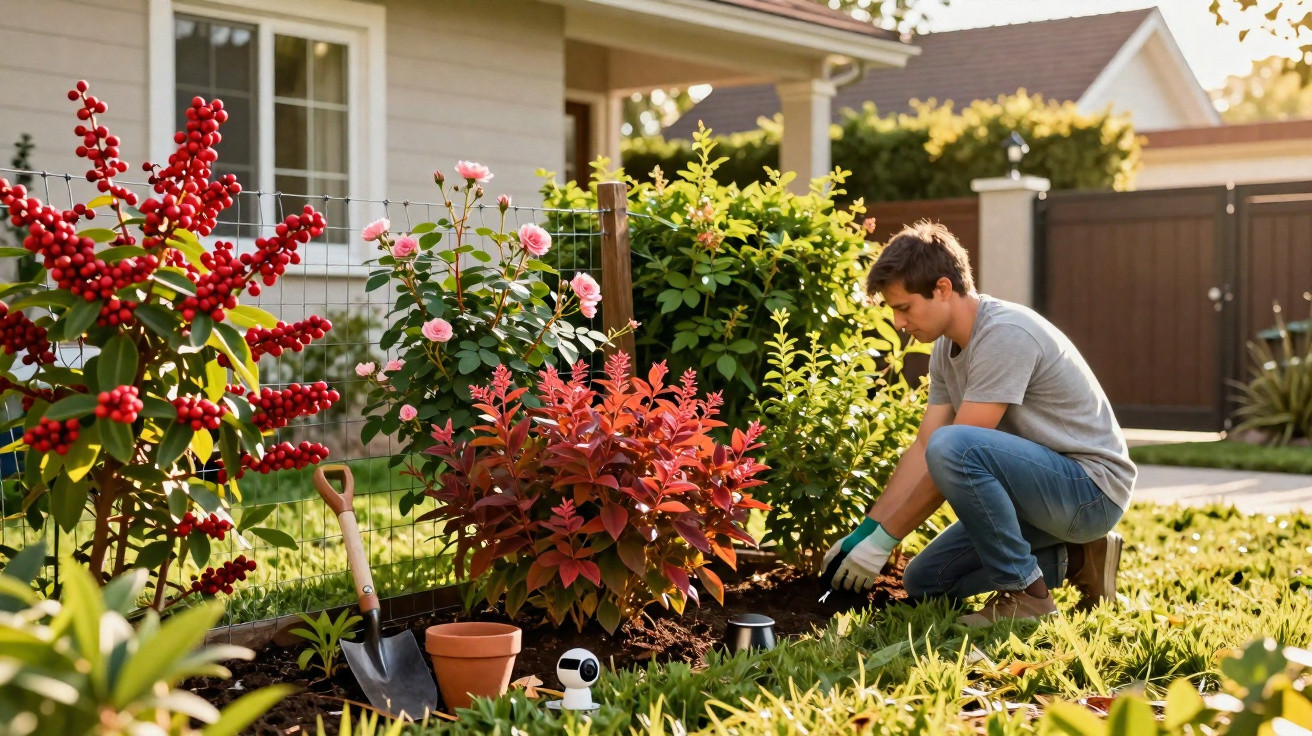
A simple trick may be closer than you think.
Empty homes attract opportunistic burglars. In France, the Ministry of the Interior recorded around 217,000 incidents or attempted incidents in 2023 – roughly one every three minutes. Alarm systems and secure doors provide protection, but the first obstacle is often outside: a garden that causes discomfort can make intruders anxious and slow them down.
Why thorny plants genuinely slow burglars down
Burglars want speed, privacy and cover. A thick, prickly hedge undermines all three. Thorns raise the chance of injury, tightly interwoven branches force a detour, and gravel underfoot gives away every movement.
“A heavily thorned hedge combined with crunching gravel increases effort, noise and risk – and noticeably reduces the appetite for taking that risk.”
Security advisers report that carefully positioned planting can significantly deter opportunistic attempts. Anyone who stops creates noise; anyone who crouches leaves evidence; anyone who gets pricked may give up. Plants are not a replacement for security technology, but they are an effective addition. Keep sightlines from the street clear, maintain the planting regularly and use motion-activated lighting.
These 4 plants create a natural defensive line
Pyracantha (firethorn): a prickly wall along the fence
Firethorn is extremely thorny, evergreen to semi-evergreen, and reaches 2–3 metres in height. It works well beside fences and beneath low windows. In autumn, its bushes produce bright berries that attract birds. Plant them 50–70 centimetres apart in an offset arrangement so the hedge fills in quickly. Pruning after flowering keeps it tidy. Gloves are essential. In households with young children, do not allow the berries to be eaten.
Berberis (barberry): compact, defensive and easy to shape
Barberries form dense, razor-sharp cushions and hedges. Depending on the variety, they may be deciduous or evergreen. They are ideal for blocking narrow side passages or preventing climbing routes beside walls. A planting distance of 40–60 centimetres is sufficient. Many varieties remain 1–1.5 metres tall. They tolerate both sun and partial shade, while providing nectar in spring. Take care with thorns at hand height beside paths – keep these trimmed back.
Rosa rugosa (Japanese rose or apple rose): an unfriendly barrier beneath windows
This hardy wild rose can form a thorny barricade within one season. It has fragrant flowers, abundant fruit, and tolerates both salt and wind. Planted as a strip below easily reached windows, it discourages entry. Space plants 50–80 centimetres apart; they usually grow to 1–1.8 metres. Thin them firmly after the main flowering period or they will spread vigorously. It can be considered invasive in coastal areas, so check local guidance before planting.
Cherry laurel: dense screening rather than thorns
Cherry laurel protects through its density rather than prickles. It is evergreen, fast-growing and reliably screens patios and full-height windows. It provides year-round privacy, although it can block light if allowed to grow too tall. Regular pruning prevents gaps from developing. Its leaves and seeds are poisonous, so keep children and pets away. For a more ecological option, choose holly or hornbeam instead.
| Plant | Height | Planting distance | Best position | Note |
|---|---|---|---|---|
| Firethorn | 2–3 m | 50–70 cm | Fences, below windows | Very thorny; wear gloves |
| Barberry | 1–1.5 m | 40–60 cm | Side passages, wall bases | Compact, shapeable and sharply prickly |
| Rosa rugosa | 1–1.8 m | 50–80 cm | Below easily reached windows | Vigorous; invasive in some regions |
| Cherry laurel | 2–3 m | 70–100 cm | In front of large glazed areas, facing the street | Poisonous, dense and not thorny |
How to position the plants without overwhelming the garden
A practical layout uses separate zones. At the front facing the street, create a dense screening strip, such as cherry laurel, with a line of gravel at its base. Along the sides, use firethorn or barberry as a long, continuous hedge. Immediately beneath vulnerable windows, plant Rosa rugosa in a band 80–120 centimetres deep. Keep the main approach open, but make the entire surface crunch underfoot.
“Clear visibility beats hiding places. Prune decisively once a year and never allow shrubs to conceal the front door itself.”
Allow for fire and emergency access too. Leave a 90-centimetre passage wherever people need to walk. Aim motion detectors so that they cover paths and run alongside hedges. Lighting that suddenly switches on stops many people in their tracks – and even more so when paired with thorns.
Maintenance, legal requirements and safety checks before planting
- Check neighbour and property rules: boundary distances and permitted hedge heights vary by local area.
- Protect children and animals: do not place thorns near play areas, and label or avoid poisonous species.
- Plan for maintenance: prune once a year and tidy path edges every 8–10 weeks.
- Time pruning properly: cut back after flowering, when birds are not nesting.
- Preserve emergency access: keep one gate clear, locks accessible and the house number visible.
The effective combination: plants plus discreet technology
The green barrier does much of the work, but a combination turns it into a system. Gravel paths reveal footsteps, motion detectors flood an area with light, timers create the impression that someone is home, and lockable window handles secure tilted windows. Ask someone to empty the letterbox.
“Small changes add up: a thief can see the effort at a glance – and moves on to the next, easier target.”
Costs and practicalities: a rough guide
For a 10-metre side boundary planted with barberry, you will need around 18–24 plants, depending on the spacing. Material costs often fall between €150 and €400, depending on the variety and plant size. For 10 square metres of gravel, in 8/16 or 16/32 grading, many gardeners allow roughly €50–100 for materials, plus weed-control fabric. The sound comes from the stones’ edges: the more angular they are, the more audible they will be.
Ecological alternatives and additions
If biodiversity is a greater priority, replace cherry laurel with native thorny species: holly (Ilex aquifolium) for shade, hawthorn (Crataegus) for sun, and Oregon grape (Mahonia aquifolium) for spring flowers. They provide less dense screening, but still offer effective prickles while supplying food for insects and birds.
One final holiday-season tip: pair hedges with clear signals. A motion detector above the side entrance, a “Private path” sign, a crunchy gravel strip and a freshly trimmed edge together act like a red light. Anyone looking for the easiest door will keep walking.
Comments
No comments yet. Be the first to comment!
Leave a Comment