
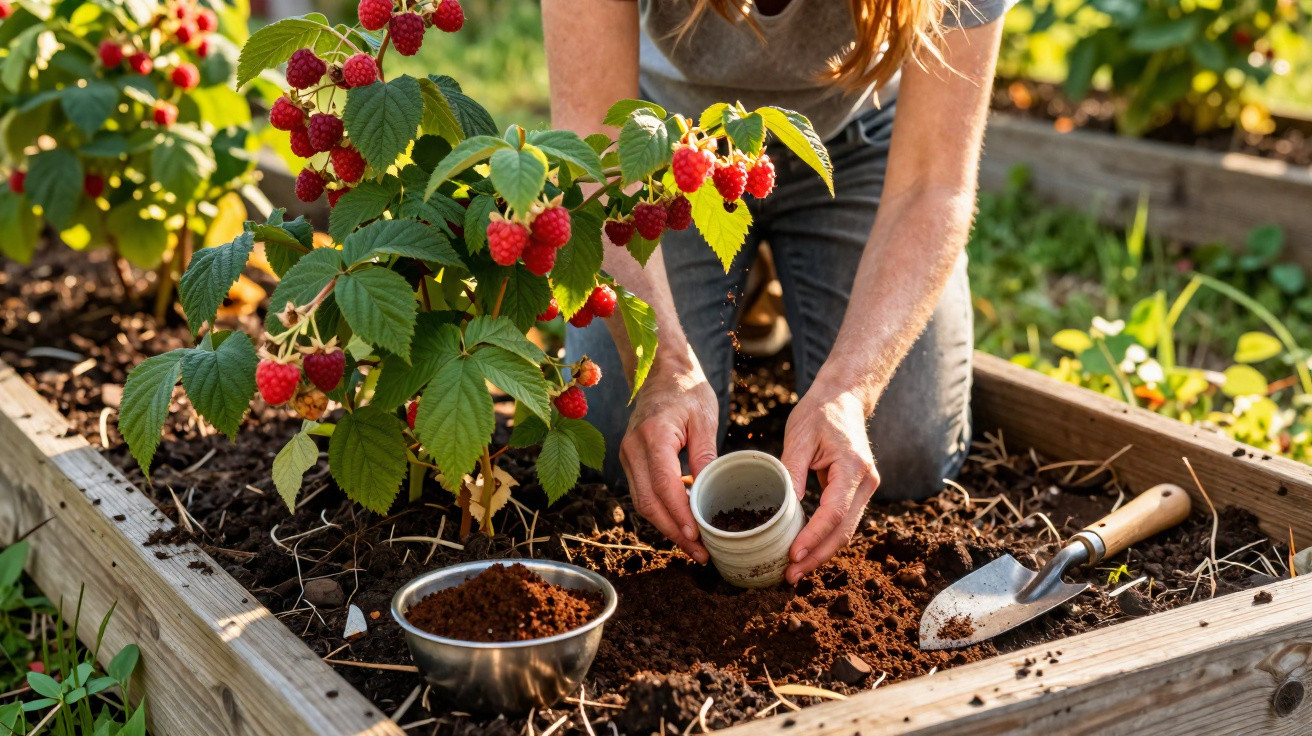
Many amateur gardeners make the same mistake in spring – and miss out on a huge number of raspberries their bush could otherwise produce.
Anyone who has tasted ripe, sun-warmed raspberries straight from the bush wants to enjoy that experience again every year. Yet harvests are often disappointingly small, even when the bush appears healthy. Professional gardeners therefore rely on a straightforward trick involving a cup and a kitchen leftover that would usually go in the bin – and report considerably more abundant yields.
Why raspberries react so sensitively to their growing position
Raspberries are considered fairly hardy berry bushes, but they are particular about their soil and care. Simply planting one anywhere in the garden can result in poor growth and meagre crops.
- Raspberries prefer slightly acidic soil.
- They need loose, well-aerated earth.
- The site should be bright, but not intensely hot.
- Their roots do not tolerate waterlogging at all.
This is exactly where the cup trick comes in: it uses an everyday coffee leftover to improve the soil and give the bush a real boost.
What the “cup trick” actually involves
The name may sound like a secret formula, but the principle is simple: instead of going into the bin, a cupful of dried coffee grounds is applied at the base of the raspberry bush.
Coffee grounds act as a gentle, natural fertiliser, making the soil slightly more acidic while providing valuable nutrients.
That particular combination is ideally suited to the needs of raspberries. Applying it regularly in spring creates much better growing conditions – often with a noticeable effect on the harvest.
Why raspberry bushes benefit from coffee grounds
Coffee grounds contain several substances that are useful for berry bushes:
- Nitrogen – promotes strong, rich green foliage.
- Potassium – strengthens the plant and supports fruit formation.
- Trace elements – encourage active soil life and healthy roots.
They also help the soil retain its structure, making it looser and easier for roots to grow through. At the same time, the soil holds moisture for longer without becoming a wet, heavy mass.
How to use the cup method step by step
For this method to work, it is not enough to tip damp coffee grounds onto the soil. A few simple steps will help you get the most from them.
Preparing coffee grounds correctly
- Allow the coffee grounds to cool completely after brewing, whether in a filter or sieve.
- Spread them over a tray, baking sheet or newspaper.
- Leave them to dry for one to two days in a dry, well-ventilated place.
Damp coffee grounds can quickly become mouldy. Drying them first makes them easier to measure out, store and spread around the garden.
Applying them in a bed or container
When spring begins and the first shoots appear, it is time for the cup:
- Measure out one normal cup of dried coffee grounds for each mature raspberry bush.
- Scatter the grounds loosely over the soil around the base.
- Work them gently into the top layer of soil, taking care not to damage the roots.
- Water thoroughly afterwards.
More than one cup per bush during the main season is generally unnecessary – the trick works through moderate but regular applications.
For raspberries grown in containers, use smaller amounts: half a cup is usually sufficient so that nutrient levels do not become too high in the limited volume of compost.
Coffee grounds and the cup: when and how often to fertilise
Timing also influences how effective this method can be. The following overview can help with planning:
| Stage | Recommended application |
|---|---|
| Early spring | 1 cup per bush as a starter feed |
| Bud stage / flowering | Optionally half a cup for support |
| Late summer | No more coffee grounds, so the shoots can mature |
Applying them too frequently brings no extra benefit and may even make the soil too acidic. It is better to use them purposefully than to keep “topping up”.
Bonus effect: coffee grounds deter pests
Alongside their role as a fertiliser, coffee grounds offer another potential benefit: many amateur gardeners report that slugs and certain other crawling pests dislike their smell and texture.
- Slugs avoid the coarse, dry ring around the bush.
- The strong scent can confuse some insect pests.
- The loose structure makes the soil less appealing to the larvae of certain pests.
This does not replace a proper slug barrier, but it can substantially reduce the problem – particularly when combined with other measures, such as a thick mulch ring made from straw or leaves.
Coffee grounds, mulch and compost – the ideal combination for raspberries
The cup trick has its strongest effect when it forms part of a considered soil-care approach. Three elements work particularly well together:
- Coffee grounds as a gentle, targeted fertiliser.
- Mulch (such as bark mulch, straw or grass clippings) as a protective layer.
- Mature compost as a long-term nutrient source.
You can also mix the dried coffee grounds directly with a little compost and spread this mixture thinly over the root area. Then add a layer of mulch on top. This keeps moisture in the soil for longer, supports active microorganisms and releases nutrients to the roots gradually.
Common mistakes when using coffee grounds – and how to avoid them
Because the trick sounds so simple, it is easy to overdo it. Three mistakes crop up repeatedly:
- Too many coffee grounds: overly thick layers can form a hard crust and repel water.
- Wet coffee grounds: these can cause mould and a musty smell, while harming the soil.
- The wrong timing: late applications in autumn delay the maturing of the shoots.
Keeping the quantities within reason and using only dried coffee grounds avoids these problems and makes the most of the positive effects.
Who benefits most from the cup trick
The coffee trick is especially effective where soil is naturally neutral or slightly alkaline. In heavy clay soils, it can also help to loosen the structure somewhat.
The method is ideal for:
- small urban gardens with limited bed space;
- balcony and patio container growing;
- amateur gardeners who want to use as little artificial fertiliser as possible.
Anyone who already has very acidic soil should use it sparingly, relying more on compost and a thin layer of coffee grounds rather than applying whole cups regularly.
What can really double the raspberry harvest
The cup trick alone will not create a berry-growing dream; it is just one part of the approach. Careful pruning of old canes is at least as important, because only young, vigorous shoots produce truly heavy crops.
Combining the following measures increases the chance of much better harvests:
- moderate quantities of coffee grounds in spring;
- consistent removal of dead and old canes;
- sufficient water during dry periods, without waterlogging;
- an airy, partly sunny position.
These measures make a noticeable difference particularly for remontant varieties, which fruit several times a year – often becoming apparent in the first year after the change.
Background: why coffee can work in soil at all
Many people wonder how an everyday product such as coffee grounds can make such a noticeable difference in the garden. The answer lies in the interaction between nutrients and soil life. Microorganisms in the soil use the grounds as food, gradually break them down and release nutrients that the raspberry can absorb.
This activity also changes the soil structure. It becomes more crumbly and free-draining, while water storage and air pockets achieve a better balance. For shallow-rooted berry bushes such as raspberries, this is a clear advantage – they often respond to such improvements with vigorous new growth and more flower buds.



Comments
No comments yet. Be the first to comment!
Leave a Comment