
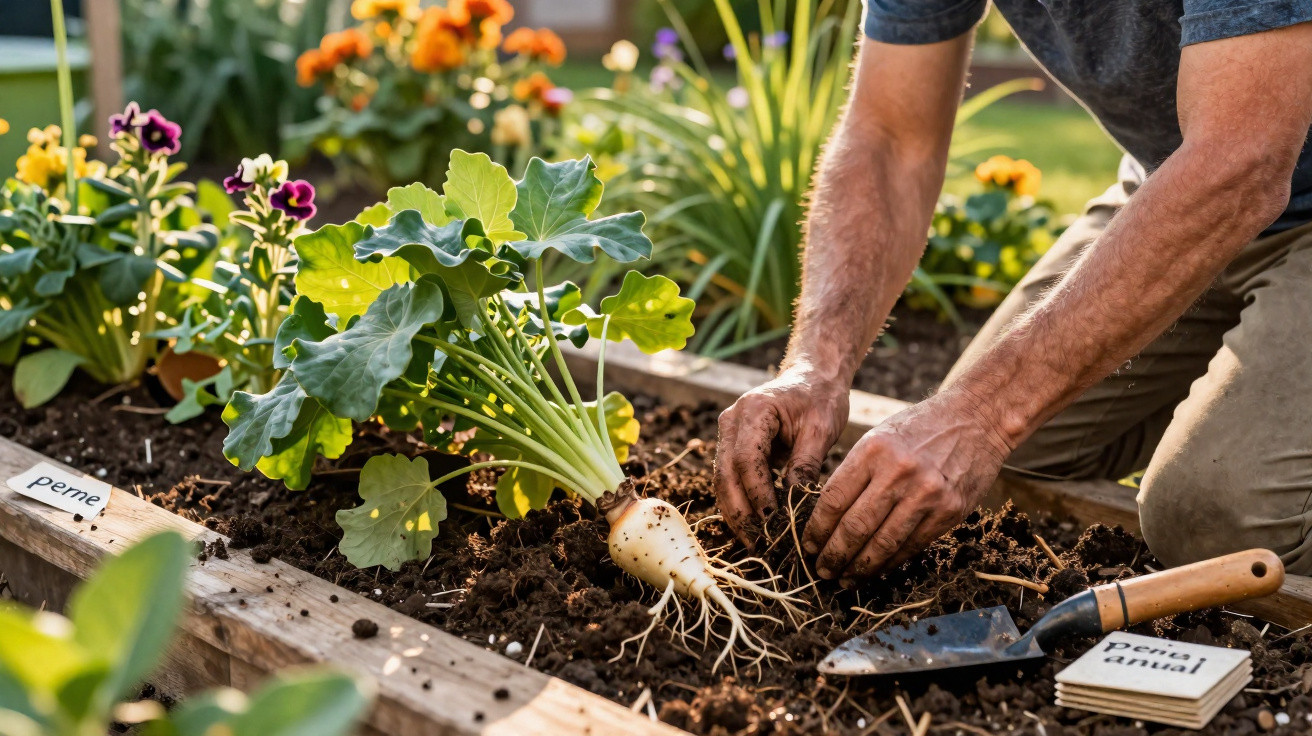
This is precisely where the appeal of perennials begins: plants that return year after year without needing to be planted again each time. But what exactly qualifies as a perennial, how do they differ from annual plants – and why do some supposed ‘long-flowering plants’ fail to return after all?
What perennials really are – and what they are not
In the broadest sense, any plant that lives for more than two years is a perennial plant. By that definition, every tree and shrub would also belong in this group. In the typical home garden, however, the term ‘perennial’ means something more specific.
In everyday gardening, perennials are plants whose above-ground parts die back in autumn and which send up new growth from roots, tubers or rhizomes in spring.
Typical examples include hostas, delphiniums, daylilies, coneflowers and peonies. During winter, they are usually out of sight – waiting beneath the soil for spring to begin.
Annual, biennial and perennial plants – the life cycle matters
To classify perennials correctly, it helps to consider the three basic types of garden plant:
- Annual plants: These germinate, grow, flower, set seed and die within a single season. Examples include calendula, zinnias and basil.
- Biennial plants: They mainly produce foliage in their first year, generally flower only in their second year, and then die. Examples include foxgloves and hollyhocks.
- Perennial plants (perennials in the wider sense): These survive for several years and often flower repeatedly.
Gardening practice makes this distinction less straightforward: many gardeners grow some perennial species as annuals because they become less attractive over time or are sensitive to frost.
Woody or herbaceous – a key distinction
Whether a plant is woody or not is central to deciding if it is a perennial.
Over the years, trees and shrubs build layers of dead, lignified tissue – the material we know as wood. Only the youngest layers beneath the bark carry water and nutrients. As producing wood requires a plant to persist for several years, the following applies:
Every woody plant is perennial – but not every perennial plant is woody.
This also includes very small woody plants. Blueberries and certain dwarf shrubs may grow only a few centimetres tall and can look much like perennials, but botanically they are woody plants.
Traditional garden perennials, by contrast, are herbaceous: their shoots do not become permanently woody. In autumn, they normally die back to just above ground level, while their underground parts survive.
Herbaceous perennials: hidden energy below ground
Many of the most popular garden plants belong to this very group. They die back in autumn, having first stored energy reserves in their roots, tubers or bulbs. They use these reserves to grow again in spring.
Bulbs, tubers and rhizomes – small storage marvels
Understanding how perennials build up their energy stores makes them easier to identify, particularly when there is still nothing visible above the ground.
- Bulbs: Layered storage organs, found in tulips, daffodils and ornamental alliums, for example. They hold nutrients for the following year’s growth.
- Tubers: Swollen root or stem sections, such as those produced by dahlias and potatoes.
- Rhizomes: Underground stems that spread sideways, as seen in irises and many grasses.
Where there is a substantial bulb, tuber or rhizome, there is almost always a perennial plant behind it.
Annual species, on the other hand, invest mainly in seed production: they must secure the next generation within a single season. Elaborate storage organs would not be worthwhile for them.
Garden grasses: a lasting lawn rather than a disposable crop
Grasses may be annual or perennial. For ornamental lawns and most decorative gardens, it is chiefly perennial varieties that are used – a lawn that disappeared after one year would be a nightmare for most homeowners.
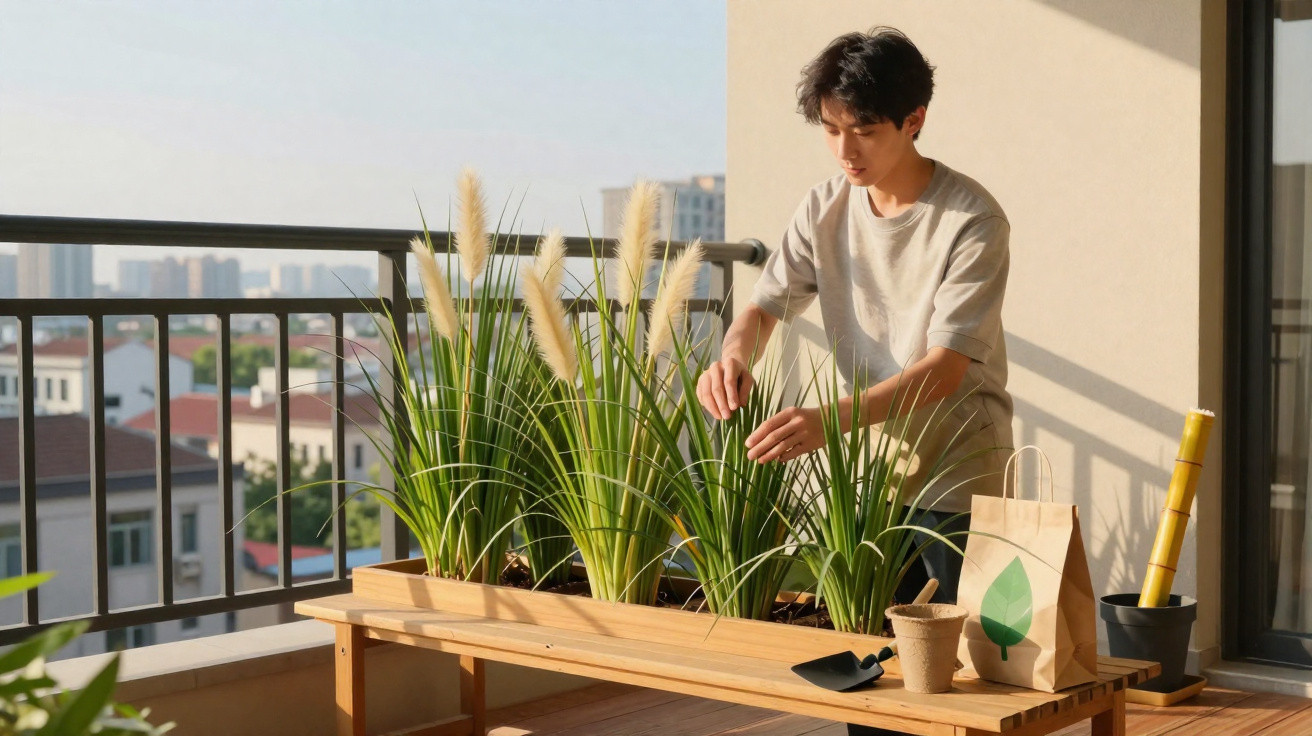
Some native prairie grasses, such as switchgrass and Mexican feather grass, are classic perennials that gradually form dense clumps. Many ornamental grasses can remain in borders throughout the year, with their dry stems providing structure in the winter garden.
When ‘perennials’ do not return – the most common misconceptions
Garden forums are full of questions such as, “My tulips have disappeared – weren’t they perennials?” The answer is often more complicated than expected.
| Problem | Possible cause |
|---|---|
| Perennial produces no new growth at all | Waterlogging, rot, voles or exceptionally severe frost |
| Leaves appear but there are no flowers | Bulb or root exhausted, insufficient nutrients or an unsuitable location |
| Plant becomes weaker each year | Persistent overfeeding, overcrowding or unsuitable care |
Tulips in particular are often sold as perennials, yet in the garden they tend to behave more like annuals. Many modern varieties use so much energy producing large, spectacular flowers in their first year that they have scarcely any reserves left for strong flowering in the second.
Anyone wishing to keep tulips for many years needs free-draining soil, restrained watering after flowering and plenty of dormant time.
Another classic case is the pansy. Botanically, pansies are perennials. By their second year, though, they usually look less appealing, flower less freely and become partly woody. For this reason, most gardeners treat them as annuals and replace them regularly.
Hidden perennials: naturally long-lived, but grown as annuals in the garden
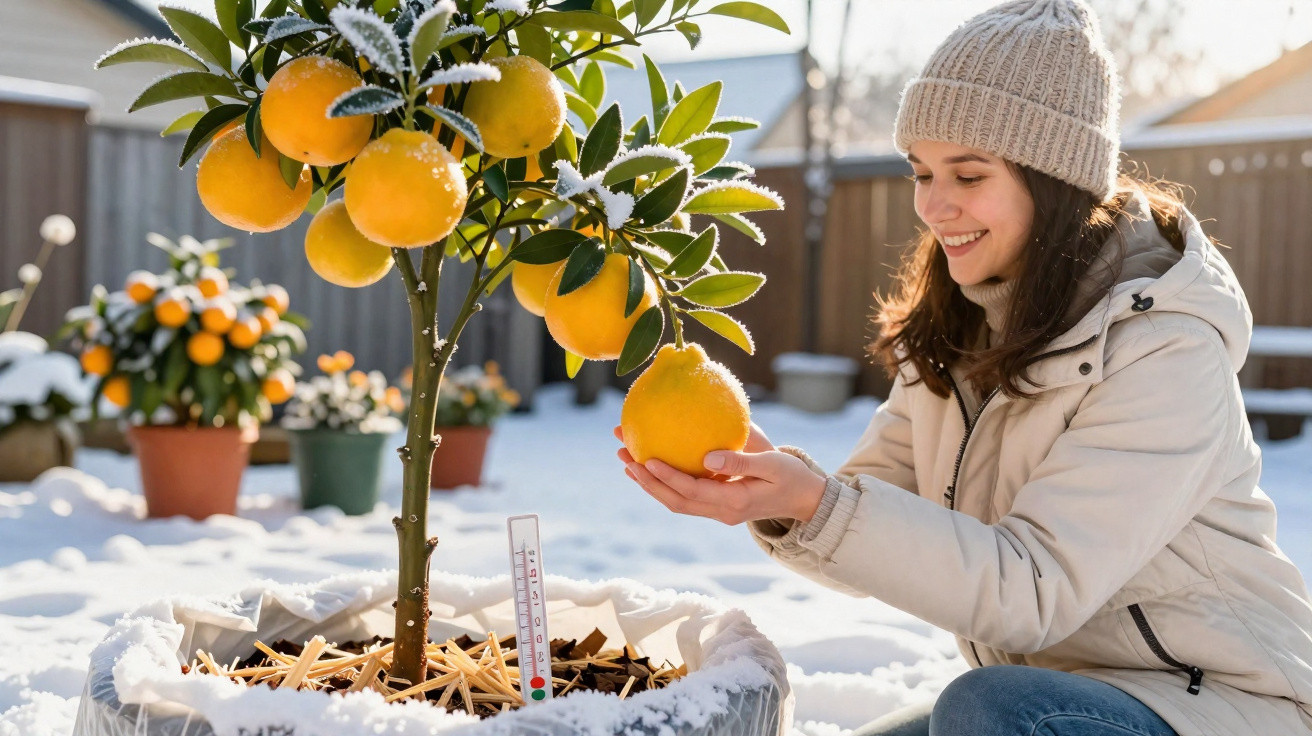
Some familiar food crops surprise many home gardeners: in their natural habitat they are perennial, but in the UK they are generally grown for only one season.
- Tomatoes: In their tropical origins, they are perennial plants, but they cannot survive winter outdoors in the UK.
- Peppers and chillies: Also perennial, and they can be kept growing in protected winter quarters.
- Potatoes: They form tubers from which they could grow again, but in agriculture they are replanted annually.
In a greenhouse or indoors, committed gardeners can genuinely keep tomato plants for several years. Their yields often decline, but they can continue producing fruit for a long time.
‘Volunteer’ plants: reliable returners or simply chance seedlings?
Anyone who has gardened for a while will know them: a tomato suddenly appears among the carrots, or a sunflower pops up in the middle of a border. These plants grow from seeds that fell into the soil the previous year and germinate once conditions are favourable.
Such ‘volunteers’ may look like perennials, but they are actually new plants grown from fresh seed.
Common examples of these self-seeding plants include:
- Tomatoes
- Pumpkins and courgettes
- Melons
- Beans
- Sunflowers
In the vegetable patch, this can be a welcome bonus – who would not enjoy an extra tomato at no cost? In an ornamental garden, however, these visitors should be kept under control, otherwise they can crowd out planned planting.
A practical guide: identifying perennials in your own garden
Beginners often look at bare beds in spring and feel unsure what is still alive. A few rules of thumb can help with identification:
- Mark their position in autumn: Use small sticks to show where perennials are growing if their foliage dies back completely.
- Check the texture: If a shoot feels woody, it is more likely to belong to a shrub or sub-shrub, such as lavender or rosemary.
- Look below the surface: If careful digging reveals bulbs, tubers or thick root sections, this strongly suggests a perennial.
- Keep plant labels: Rather than throwing away labels from the garden centre, save them as a useful reference.
A small tip for impatient gardeners: many perennials emerge late. Coneflowers, cranesbills and certain grasses in particular are in no hurry to put on new growth. Removing them too early in a panic often means losing established plants.
Getting more from perennials: medicinal plants and lasting flavours
Many plants commonly described as ‘herbs’ are actually perennial plants or sub-shrubs. Position them well once, and they can be enjoyed for years.
- Echinacea (coneflower): Popular as a medicinal plant and a magnet for bees.
- Yarrow: A robust wild perennial with many uses as a tea and cut flower.
- Mint: A vigorous perennial that readily takes over an entire bed unless it is regularly contained.
Mint especially demonstrates how powerful perennials can be: planted directly into a border, it can quickly create a veritable carpet. A large pot or a buried root barrier is the better option.
For newcomers, a combination of tough, dependable perennials – such as daylilies, lady’s mantle and purple coneflowers – with a few more experimental choices is worthwhile. Over the years, not only will the border grow, but so too will your knowledge of the garden’s quiet, long-term residents.
Comments
No comments yet. Be the first to comment!
Leave a Comment