
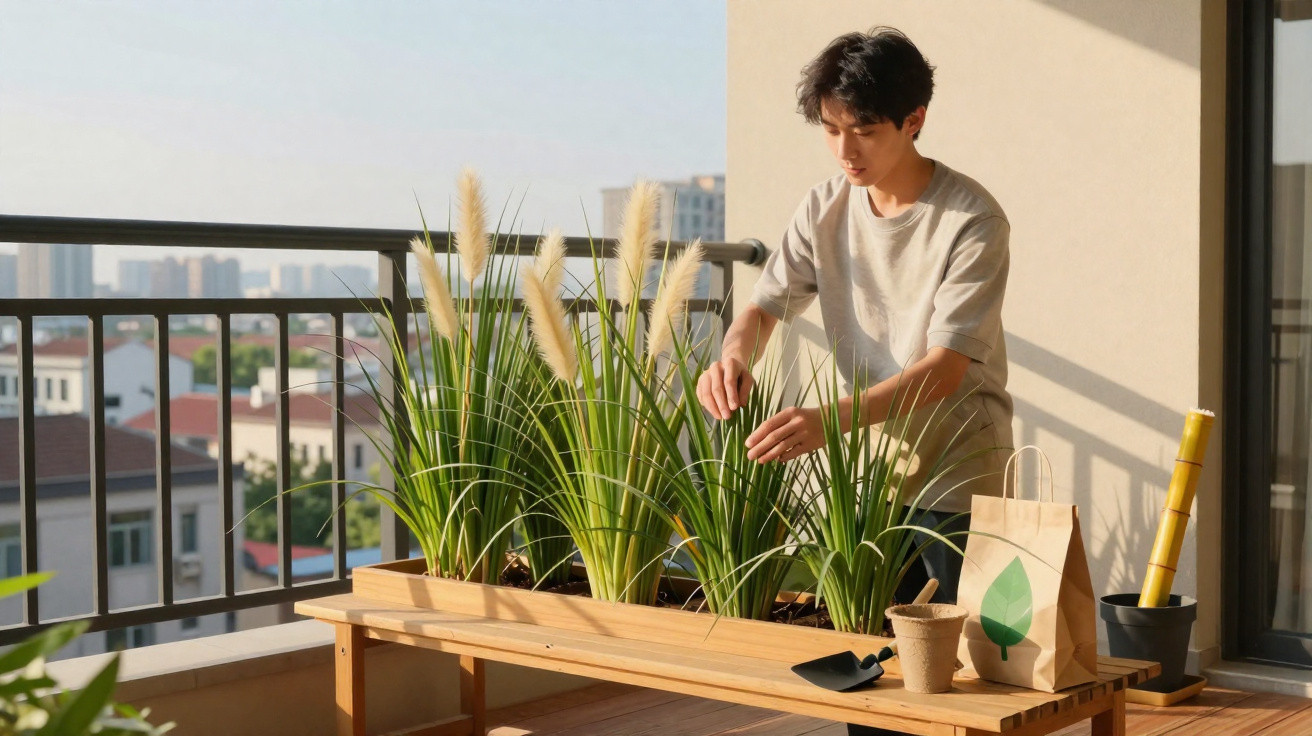
A quiet shift is currently taking place on city balconies: an unassuming Asian plant is edging out the long-celebrated bamboo.
Anyone wanting to create a “stylish” balcony over recent years would almost automatically have chosen bamboo. Fast-growing, exotic and offering a touch of Zen, it seemed the simple route to an urban oasis. Now, however, another Asian beauty is moving into the spotlight. It is tougher, needs less care and is better suited to the harsh Central European climate. Many amateur gardeners are now asking themselves: do I need bamboo at all any more?
Why the balcony has become a trend laboratory
The balcony has long since become more than somewhere to put a clothes airer. It serves as a private retreat, an extension of the home office, a miniature garden and a design space all at once. It is precisely here that city dwellers try out plants from distant regions. Whatever survives in a container and copes with heat, wind and late frost has a good chance of becoming a lasting favourite.
Over recent seasons, one particular Asian alternative to bamboo has appeared increasingly often in garden centres and online shops. It produces dense greenery, looks equally exotic, yet requires far less attention. Many buyers initially choose it out of curiosity, only to realise later that it makes their existing bamboo plants virtually unnecessary.
The new Asian plant scores highly as a balcony choice: hardy, economical with water, requiring little pruning and delivering plenty of impact.
The unexpected alternative: hardy, undemanding and practical
What makes this new balcony plant so appealing? Several qualities come together in a way that perfectly suits modern urban life: little time, limited space, but high expectations for appearance and sustainability.
- Strong resilience: It withstands gusts of wind, spells of heat and brief cold snaps considerably better than many bamboo varieties grown in pots.
- Low maintenance needs: Anyone who does not want to water and feed plants every day is on much safer ground with this option.
- No “escape” from the container: Unlike vigorously spreading bamboos, it poses no risk of expanding uncontrollably in the garden.
- Visual appeal: Dense, rich green foliage, with narrow or slightly broader leaves depending on the variety, immediately creates a Far Eastern atmosphere.
Many amateur gardeners say that, after a one-year trial, they have consistently given away or disposed of their old bamboo pots. Their reasoning is simple: why struggle with more delicate canes when there is an easier option?
Bamboo loses its exclusive cult status
For a long time, bamboo was synonymous with an Asian atmosphere in a small space. Yet its image suffers once people encounter its drawbacks: dried-out canes after a hot weekend, overcrowded containers, or yellow leaves following a cold spring. Anyone without green fingers can quickly become frustrated.
The new competition from Asia is changing expectations. It is suddenly clear that exotic does not automatically have to mean delicate. Modern balcony plants can be rugged and even forgive care mistakes without sacrificing their appearance.
Balcony owners want exotic style, but without the stress: this is exactly why the new Asian plant strikes a chord today.
Environmental advantages over traditional bamboo
Environmental awareness provides another reason for this shift in trend. Many urban residents are paying closer attention to how much water their plants consume, what fertiliser they need and whether they attract pests.
The new Asian plant performs better in several respects:
- Lower water consumption: It withstands short dry periods without immediately shedding leaves.
- Good adaptation to the local climate: It can adapt to temperature fluctuations in temperate zones.
- Less pest pressure: Native pests find it harder to attack than some more delicate bamboo plants.
Anyone aiming to make their balcony sustainable needs plants that do not demand a full watering can of tap water every other day. This trait can be crucial during hot summers with watering restrictions.
A new generation of balcony owners: practical, curious and climate-aware
Attitudes among balcony owners are evolving alongside plant choices. Younger people value design, but they also value function. A green privacy screen should not simply look attractive: it should reduce heat, provide food for insects and involve as little work as possible.
Many deliberately opt for exotic species that can still be kept neatly contained in pots. The new Asian alternative signals that it is possible to experiment with unusual plants without taking on maintenance problems. Balcony planters are becoming small testing grounds, where traditional choices such as geraniums and evergreen bamboo screens are facing competition.
| Feature | Bamboo in a container | New Asian plant |
|---|---|---|
| Maintenance effort | high to medium | medium to low |
| Water requirement | fairly high | considerably lower |
| Growth habit | can spread vigorously; the container quickly becomes too cramped | compact, easy to manage |
| Climate tolerance | sensitive in extreme weather | robust in the face of fluctuations |
How balcony owners incorporate the new Asian plant into their design
The interesting question is how city residents use this exotic alternative in practice. In many cases, it does not replace bamboo on a like-for-like basis, but is positioned strategically instead.
Practical ways to use it every day
- Privacy-screen strip: Several containers placed side by side create a green wall against prying eyes.
- Mixed with flowering species: Its understated leaf structure combines well with colourful summer flowers.
- Shade provider: Taller specimens protect seating areas from direct sunlight.
- Urban jungle corner: Combined with palms, ferns or grasses, it creates a dense miniature jungle.
Many balcony owners report that the new plant is especially suitable for people who dislike routine. Those who are often away do not have to fear returning each weekend to find nothing but dried-out canes.
What beginners should consider when buying
Anyone now tempted by the Asian alternative should not simply choose the first offer they see. A few factors determine whether the plant will provide lasting enjoyment:
- Origin of young plants: Choose stock from regional nurseries rather than cheap imports that cope poorly with the climate.
- Suitable pot size: Containers that are too small dry out faster and restrict growth unnecessarily.
- Drainage: Waterlogging harms even robust species. A layer of expanded clay or gravel at the bottom of the pot can work wonders.
- Choosing the location: Most varieties love bright light, but do not tolerate permanent, intense midday sun on exposed south-facing balconies without shade.
Those who follow these basics can generally enjoy dense, healthy balcony planting for several years, without having to start again from scratch every spring.
Benefits for the climate, your nerves and your wallet
The growing popularity of the new Asian plant shows just how much expectations around urban gardening are changing. Today, exotic flair needs to go hand in hand with sustainability and everyday practicality. Plants must withstand hot summers as well as late cold snaps, while also keeping water use within limits.
Anyone planning a new balcony or considering a redesign can take several lessons from this development. Rather than automatically reaching for bamboo, it is worth considering alternatives with a similar effect but better adaptability. In many cases, one large container holding the new Asian trend plant is enough to transform a balcony’s character completely.
For stressed city dwellers, this brings a welcome side benefit: fewer worries about delicate exotics and more relaxed summer evenings among hardy, evergreen foliage. This combination of appearance, convenience and environmental common sense is exactly what makes the lesser-known Asian plant a serious rival to bamboo, the former star of the balcony.
Comments
No comments yet. Be the first to comment!
Leave a Comment