
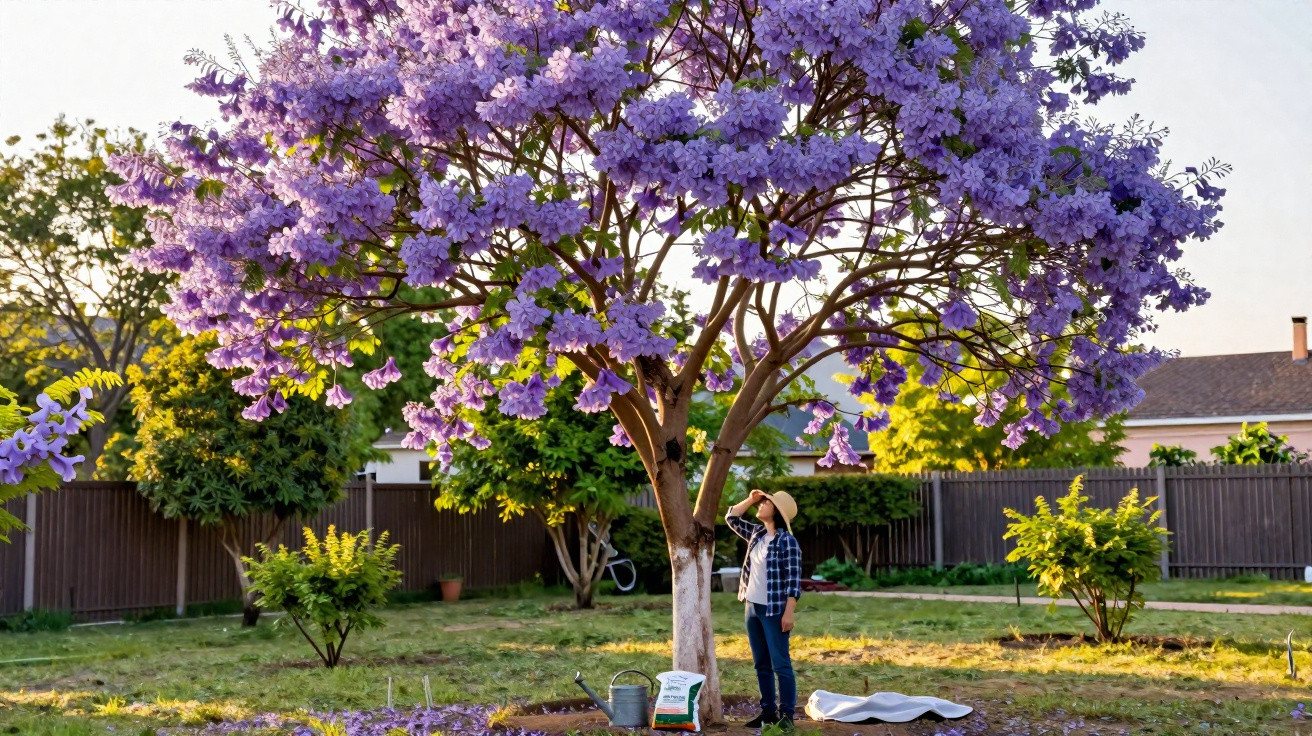
Many amateur gardeners want rapid shade and dramatic flowers without introducing a spreading bamboo problem. This is where a tree that remains surprisingly little known in Germany comes into its own: Paulownia, often called the empress tree or foxglove tree. It combines exceptionally fast growth with an abundance of blossom that can transform the entire garden in April or May.
A tree that becomes a focal point within a few years
Paulownia is among the fastest-growing trees for gardens. Given favourable conditions, a young specimen can grow by around 1.5 to 2.5 metres each year. It may reach 5 to 7 metres after just three years, and will usually grow to 10 to 12 metres later on. That is an impressive rate for a home garden.
It is characterised by a straight trunk and a broad, fairly open crown. Its leaves are large and heart-shaped; on vigorous plants, they can grow almost as large as a child’s arm. They quickly create a dense, pleasant area of shade, making the tree ideal beside a patio, seating area or children’s play space.
Paulownia delivers the speed of bamboo without spreading uncontrollably – a clear advantage for small plots.
Unlike many bamboo varieties, the empress tree does not produce aggressive runners. There are no invasive rhizomes quietly travelling beneath the fence into a neighbour’s garden. The tree remains where it is planted and can be kept under control with ordinary pruning.
Why Paulownia flowers turn gardens into a sea of purple clouds
Its grand display begins in spring. Before the first leaves emerge, the tree opens vast numbers of bell-shaped flowers. These form lavish panicles and appear in shades ranging from soft lilac and violet to lightly bluish tones, depending on the variety.
Viewed from a distance, its crown resembles a pastel cloud floating above the trunk. As there is no foliage at this stage, the flowers are particularly visible. The effect is more reminiscent of exotic ornamental trees in southern parks than of a conventional home-garden tree.
There is also a delicate fragrance, which many people describe as vanilla-like or slightly sweet. Bees and other pollinators flock to the flowers, making the tree a valuable food source for insects.
Anyone who values an insect-friendly garden will find Paulownia a fast supplier of nectar, pollen and structure.
Choosing a site: where the empress tree reaches its full potential
The right position in the garden
Paulownia thrives on warmth and light. A position in full sun is best, while partial shade noticeably slows its growth. Sheltered sites are particularly suitable, especially in places where cold easterly winds are common in spring.
The tree has particular soil preferences, although it is not overly demanding:
- deep, loose garden soil
- plenty of organic matter, such as compost or leaf mould
- good drainage, with no persistent waterlogging
- a moderate pH, ranging from slightly acidic to mildly alkaline
Heavy, permanently damp clay soils, or areas where puddles remain after rain, are far less suitable. In such places, loosen the soil before planting and improve it with coarse sand and plenty of compost.
How to plant it properly
A young tree benefits from a thorough start. As a guide, dig a planting hole measuring around 60 x 60 x 60 centimetres. The excavated soil can be blended with 10 to 20 litres of well-rotted compost. This mixture provides nutrients while keeping the soil structure open.
Gently loosen the roots before placing the tree in the hole. Then backfill with the soil mixture, firm it lightly and water generously – around 20 litres of water will help remove air pockets and settle the root ball securely. A mulch layer 5 to 8 centimetres deep protects against drying out and keeps the soil moist for longer.
The first few years: care makes the difference
Watering, feeding and pruning
During its first two to three summers, Paulownia needs regular watering while it has not yet formed a deep root system. In dry spells, 10 to 20 litres per week is a useful guide, divided between one or two watering sessions.
The tree also appreciates an annual nutrient boost, ideally in early spring. Spread around 10 litres of compost loosely across the root area. Mineral fertiliser is unnecessary and may even make growth too soft and susceptible.
There are two main pruning approaches:
- Tree form: Prune only lightly after flowering, removing dead or crossing wood. The aim is a strong, well-shaped crown with plenty of flowering shoots.
- Giant-leaf option: Cut back hard in late winter to just a few buds. The tree will then produce fewer but extremely vigorous shoots with enormous leaves, although flowering will be limited.
For the spectacular spring flower cloud, prune sparingly and concentrate any work on the period after flowering.
Protection from frost and cold
Paulownias are regarded as reasonably frost hardy, but young trees can still be sensitive to severe sub-zero temperatures. In exposed areas, wrap the trunk with horticultural fleece and add a thicker mulch layer of 10 to 15 centimetres. The roots tolerate cold better than the shoots and buds.
Late spring frosts are the main concern. Flower clusters develop early and can be damaged by frost overnight. If this happens, the crown may initially look bare or uneven in early summer. Once temperatures rise, frost-damaged shoots can be removed, and the tree will generally produce vigorous new growth – though with fewer flowers that year.
Risks, limitations and legal considerations
Self-seeding and spread
The empress tree produces many very light seeds, which the wind can carry over some distance. In warm regions, they can sometimes germinate spontaneously in paving gaps, on wasteland or beside paths.
To prevent this, remove the fruit clusters before the capsules split open. Seedlings appearing on your own plot are easy to pull out or lift with a hand fork while still small.
Regional restrictions may apply
In some countries and particularly sensitive ecosystems, the species is monitored critically because it can spread more strongly in certain conditions. In central Europe, this is currently more of a local issue, for example near protected natural areas.
Before undertaking larger-scale planting – such as several trees close to river floodplains – it is worth making a quick check with local authorities or conservation groups. This can prevent conflicts if special rules already apply in your area.
Paulownia varieties and uses in the garden
Several species and varieties are sold under the names Paulownia and empress tree, with Paulownia tomentosa and Paulownia fortunei being the most common. They differ slightly in flower shape, colour and growth vigour, but both are suitable for an ordinary home garden.
- Specimen planting: Leave 6 to 8 metres of clear space around the tree so that its crown can develop freely.
- Avenue or row planting: A planting distance of at least 6 metres between trunks provides sufficient light and air.
- Fast shade: In young gardens without established trees, it can quickly create a sense of a ‘finished’ garden.
As well as serving as an ornamental and shade tree, the empress tree produces timber. It is very light, relatively strong and dries quickly. In some countries, it is used for furniture, lightweight construction or musical instruments. This is usually of secondary importance in private gardens, but it demonstrates how versatile the plant is.
Practical tips for everyday gardening and design
As Paulownia requires plenty of light, it is especially suited to modern, relatively open gardens with lawns, perennial borders and few tall woody plants. Many gardeners plant spring bulbs such as tulips or daffodils beneath its crown: they benefit from the early sunshine before the tree’s leaves cast shade.
To support insects, combine the empress tree with flowering shrubs such as cornelian cherry, serviceberry or butterfly bush. This creates a continuous food supply for pollinators from March through to late summer.
One consideration to include when planning is that large leaves and plentiful flowers also mean more organic material in autumn. If you do not want to clear the leaves constantly, simply leave them beneath the tree. They will decompose there and gradually improve soil quality, creating a natural nutrient cycle.
For children, the tree is often a highlight: its huge leaves invite touching, its flowers look almost fairy-tale-like, and its rapid increase in height makes changes in the garden clearly visible. At the same time, once the tree is sufficiently sturdy, its trunk usually remains smooth and suitable for climbing – an added attraction for family gardens.


Comments
No comments yet. Be the first to comment!
Leave a Comment