
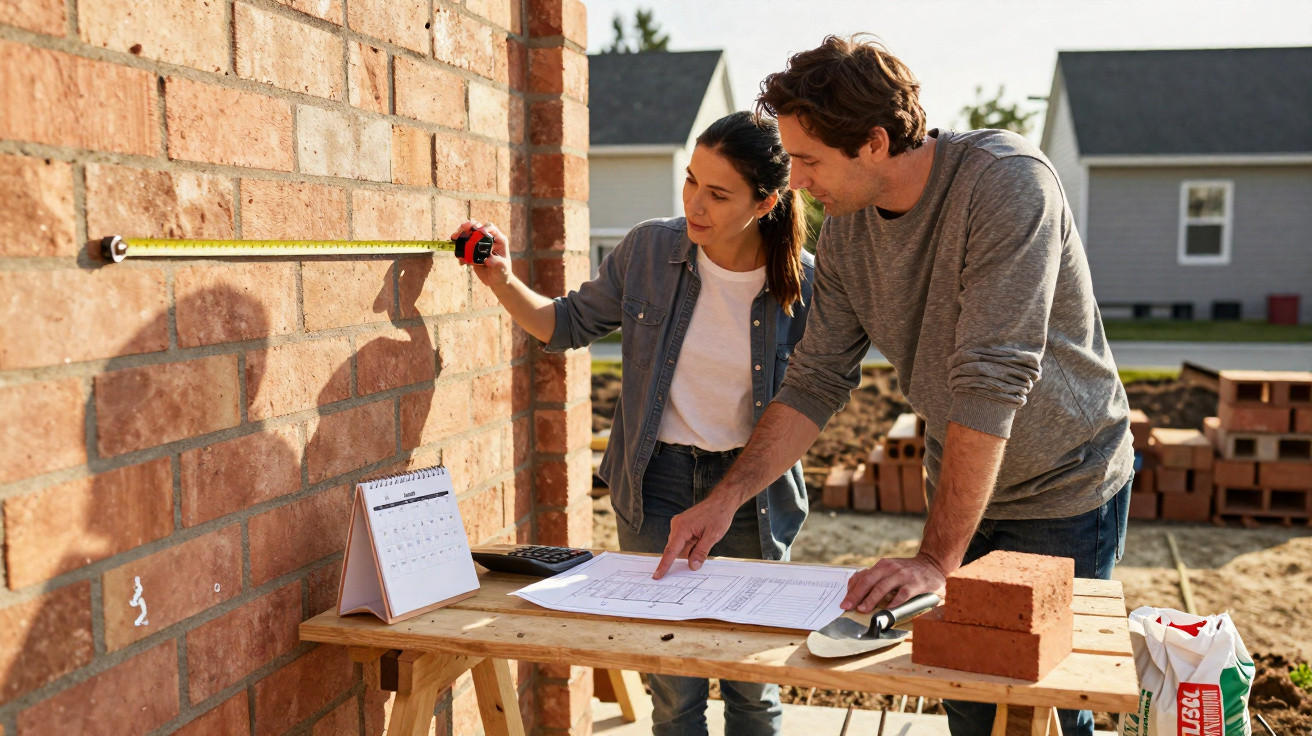
Building a 20-metre boundary wall in June 2026 is likely to cost, on average, between R$ 9,000 and R$ 18,000 for a straightforward residential version around 2 metres high. The final figure will depend on the foundations, block type, steel reinforcement, rendering, finished height and local labour rates. A wall measuring 20 metres by 2 metres has roughly 40 m² of masonry.
How much does a 20-metre wall cost from scratch?
A basic residential wall without premium finishes is normally priced by square metre of masonry. In 2026, labour for building walls and boundary walls can differ widely, although an usual urban rate ranges from R$ 80 to R$ 150 per m².
For a 40 m² wall, labour therefore comes to between R$ 3,200 and R$ 6,000. Materials may add a further R$ 5,800 to R$ 12,000, according to the foundation specification, reinforcement, blocks, sand, cement, lime, waterproofing, scratch coat and render.
Which materials are included in a boundary wall quotation?
A boundary wall quotation involves more than blocks alone. Foundations can represent a substantial part of the cost, especially where the ground is uneven, damp, made-up or requires bored foundations, pad footings or a stronger tying beam.
The most frequent items included in a quote are:
- Clay blocks or concrete blocks.
- Cement, sand, lime and bedding mortar.
- Reinforcing bars, stirrups, tying wire and steel lattice reinforcement.
- Concrete for bored foundations, pad footings, ground beams and tying beams.
- Scratch coat, render and waterproofing at the base.
- Skip hire, delivery, timber boards, nails and small supporting tools.
Which boundary wall type offers the best value for money?
A clay-block wall is generally cheaper in many areas and is suitable for residential boundaries without special structural loads. It needs sound rendering and moisture protection, as the material absorbs water easily when left exposed.
Concrete blocks are usually more expensive, but provide greater strength and allow for a more robust build on sites exposed to impact, wind or increased wall height. A precast wall can be installed quickly, although it depends on local suppliers, transport and the site conditions for installation.
How can unexpected quotation costs be avoided?
Before appointing a contractor, the height, thickness, foundation type and finish need to be defined. A quote based solely on “20 metres of wall” is incomplete, because a 1.80 m wall without render costs far less than a 2.20 m wall with a tying beam, columns, scratch coat, render and paint.
The agreed specification should state the following in writing:
- The overall wall height and the exact length of the boundary.
- The block type and wall thickness.
- The number of columns and their spacing.
- The foundation type proposed for the site.
- Whether the price includes rendering on one or both sides.
- Who pays for delivery, skip hire, water, electricity and rubble removal.
What amount should be set aside in June 2026?
For a simple 20-metre by 2-metre wall, a realistic budget in June 2026 is between R$ 9,000 and R$ 18,000. The lower end assumes simple masonry, easy ground and basic finishing; the upper end includes more careful foundations, rendering, reinforcement and higher labour costs.
The most reliable approach is to obtain at least three quotes using the same technical specification. Once every contractor has allowed for the same height, blocks, foundations and finish, it becomes easier to compare prices without choosing a low quote that later rises because of reinforcement, concrete, rendering and unlisted work.




Comments
No comments yet. Be the first to comment!
Leave a Comment