
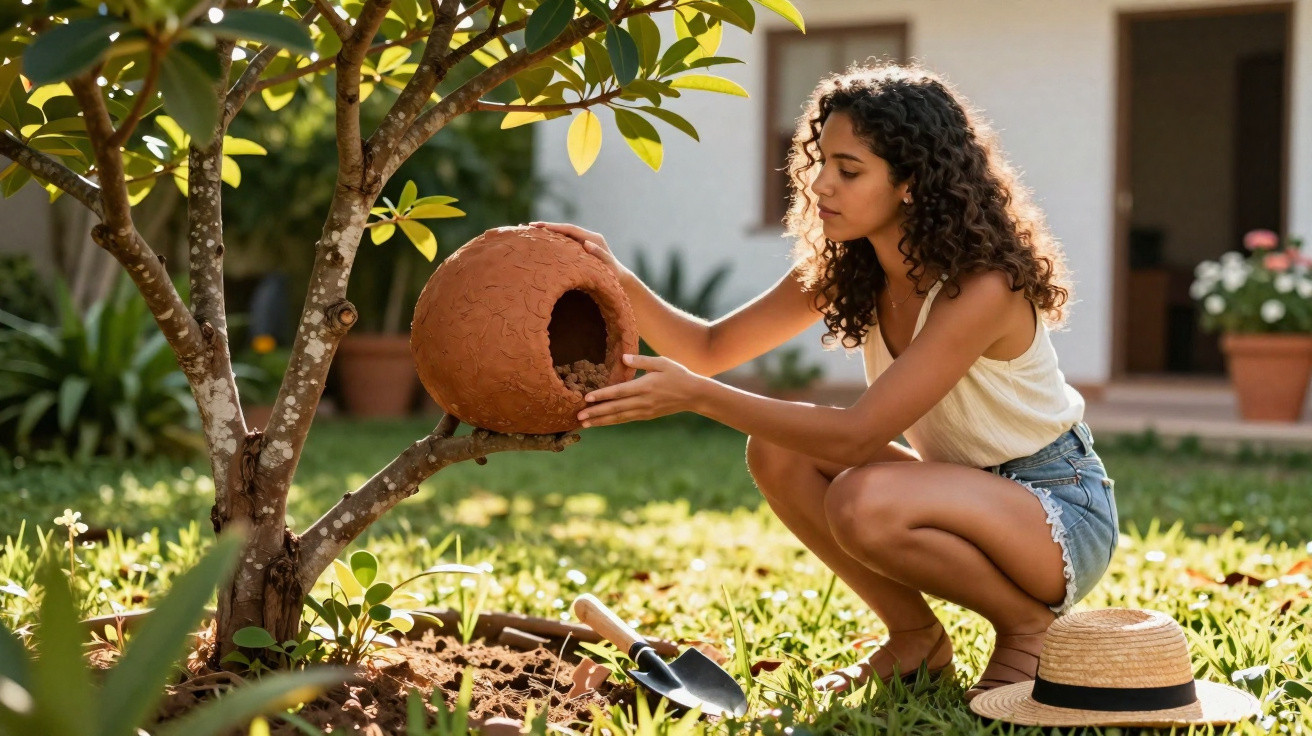
Finding a rufous hornero mud nest at your home or in the garden is usually a positive sign: the bird has identified the spot as safe, with mud available, food nearby and a solid structure on which to build. The rufous hornero uses mud, straw and small pieces of plant material to create a sturdy home, most often in trees, on posts, beneath eaves or on walls. Far from being merely a curiosity, the nest shows that the environment supports life, insects and favourable conditions for urban birds.
What does finding a rufous hornero nest mean?
A rufous hornero nest indicates that the site provides stability, peace and the resources required by the species. The bird does not settle just anywhere: it needs a secure base, damp mud and access to food in the surrounding area.
In popular culture, the nest is regarded as a symbol of hard work, togetherness and protection. From a nature-based perspective, its meaning is more straightforward: the yard or garden contains enough of the right features for a pair to invest time and energy in building.
Why is this mud nest considered a good thing?
The rufous hornero feeds on insects, larvae and small invertebrates, helping to maintain balance in the garden. When it visits a house, it will usually search lawns, flowerbeds and open areas for food.
Its presence also suggests that the space is not entirely sterile. Gardens with fallen leaves, bare soil, limited chemical use and some moisture attract more wildlife, and the nest shows that the bird has found a viable routine there.
How can you identify a genuine rufous hornero mud nest?
A rufous hornero nest resembles a small, rounded oven made from hardened mud, with a side or front entrance. Inside, it has a partition that shelters eggs and chicks from direct wind, rain and predators.
The following features can help you identify it:
- A rounded shape, like a miniature clay oven.
- Thick walls that become hard once dry.
- A narrow entrance, generally facing one side.
- Built in a high, stable and open position.
- The pair may be singing or moving around close to the site.
What should you do if you find the nest in the garden?
The best approach is to leave it alone. Getting too close, touching the entrance or attempting to open the nest can distress the birds and put eggs or chicks at risk, particularly during the breeding season.
To safeguard the nest without disturbing it, follow these simple steps:
- Keep your distance and watch only from afar.
- Avoid heavy pruning of the branch or structure supporting the nest.
- Do not use insecticides near the birds’ feeding area.
- Keep dogs and cats away from the nesting site.
- Do not attempt to move the nest, even if it appears empty.
What does this visitor reveal about your home?
A rufous hornero nest shows that the house or garden has the conditions to support a small chain of life: mud, insects, perching areas, shelter and relative safety. These are precisely the elements many birds seek before establishing themselves in a territory.
When a rufous hornero builds close to a home, it makes the yard part of its daily routine. A mud nest is neither mess nor a threat; it is visible evidence that the space still provides the conditions for song, feeding, breeding and the everyday presence of Brazilian wildlife.




Comments
No comments yet. Be the first to comment!
Leave a Comment