
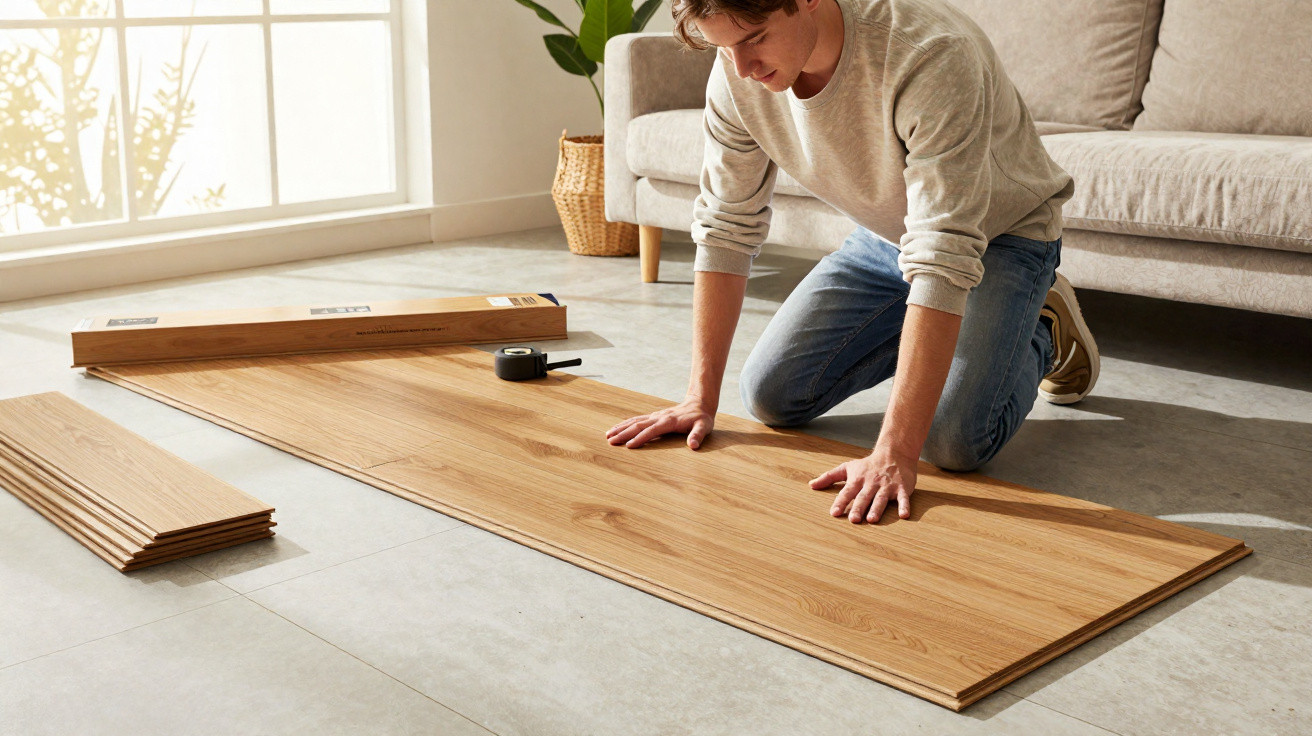
In recent years, traditional ceramic flooring has been appearing less often in high-end residential schemes and compact flat refurbishments alike. In 2026, architects and interior designers are placing their biggest bet on vinyl flooring in planks or sheets with nearly imperceptible joins, often paired with high skirting boards. It stands out for its ability to withstand everyday footfall, its straightforward cleaning routine and its reduced number of areas where dirt can build up along edges and in visible grout lines.
What is the vinyl flooring replacing standard ceramic tiles?
Vinyl flooring is mainly made from PVC and additives, and is manufactured as planks, tiles or sheets. Unlike standard ceramic tiles, which require adhesive mortar and wide grout lines, vinyl can be glued down or click-fitted to create a continuous finish with minimal joins.
The latest technologies incorporate protective layers against scratches, stains and moderate moisture, extending their use into kitchens and cloakrooms. More rigid SPC and WPC options combine vinyl with other materials, providing dimensional stability and finishes that reproduce wood, polished concrete and natural stone.
Why is vinyl flooring more durable, practical and hygienic?
The durability of vinyl flooring for 2026 comes from its layered construction, including a wear layer designed to cope with scratches, heavy foot traffic and furniture movement. In many situations, it withstands impacts more effectively than standard ceramic tiles, which may chip or crack, while also delivering better thermal and acoustic comfort.
In hygiene terms, its key benefit is the reduction of visible grout lines. Since the planks meet with very small gaps, there are fewer places for dust and grease to collect. Daily cleaning can therefore be carried out quickly with a damp cloth and neutral detergent, making it suitable for homes with children, pets or allergy sufferers.
- Fewer dirt-trapping edges due to nearly imperceptible joins
- An even surface that makes everyday cleaning easier
- Greater thermal comfort than standard ceramic flooring
- Less footstep noise than rigid floor coverings
How is modern flooring installed?
Installing modern vinyl flooring requires a level, clean and dry subfloor. It can often be laid over existing ceramic tiles, provided they are securely bonded and have no significant unevenness. This appeals to those looking to refurbish with less demolition and a shorter construction period.
To understand the process, it is useful to know the basic professional steps. They help ensure durability, prevent lifting and improve the final finish around doorways, skirting boards and transitions between rooms.
- Inspect the subfloor or old ceramic tiles, repairing defects and cracks.
- Level the surface with a smoothing compound where needed.
- Lightly sand and thoroughly clean the area, removing dust and residue.
- Mark out the room to establish the direction of the planks or tiles.
- Apply the specified adhesive or click the pieces together, maintaining minimal joins.
- Fit skirting boards, finishing profiles and room-to-room transition pieces.
How much does vinyl flooring cost in 2026, and how does it transform interiors?
In 2026, the average price of vinyl flooring varies according to thickness, wear layer and brand, ranging from affordable lines for bedrooms and hallways to premium choices for large living rooms and open-plan spaces. In addition to the material itself, costs include subfloor preparation, professional installation, new skirting boards and, where applicable, extra acoustic underlay.
Visually, vinyl flooring provides a continuous foundation without the pronounced grout-line pattern of ceramic tiles, helping small rooms feel larger and connecting kitchens, living rooms and hallways. Wood-effect finishes make spaces feel warmer, concrete-like grey tones introduce a contemporary character, and this combination of current styling, comfort and easy maintenance explains why vinyl is becoming increasingly common in residential projects of varied styles.





Comments
No comments yet. Be the first to comment!
Leave a Comment