
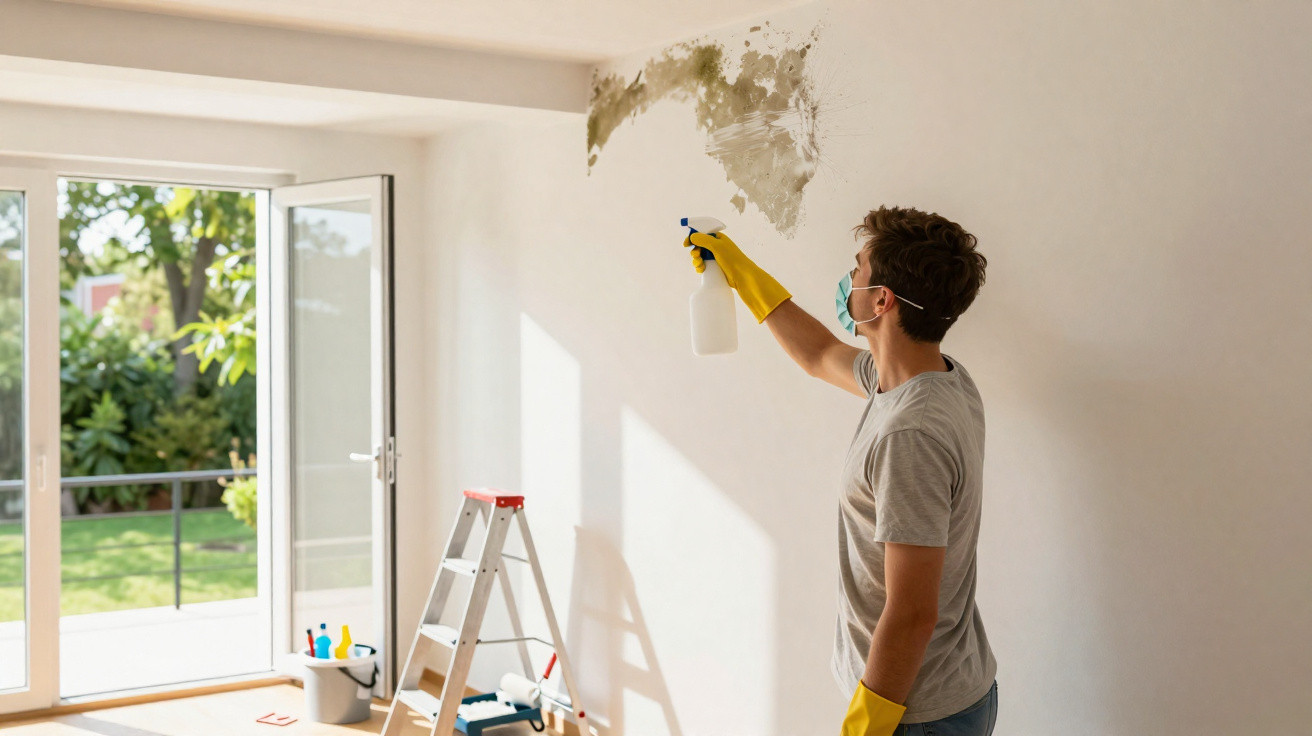
Removing mould from walls and ceilings is more than a cosmetic concern. Dark marks can signal damp, poor ventilation or water ingress, while also worsening allergies and respiratory conditions. Professional decorators usually tackle the issue in two ways: they remove the visible fungus and take steps to stop it returning quickly, using straightforward products, ventilation improvements and, where required, suitable repainting.
How can you identify the cause of mould on walls?
Before any cleaning begins, professionals determine the source of the moisture, as this establishes whether cleaning alone is enough or structural repairs are needed. Bulging plaster, paint peeling away in sheets, or marks that spread rapidly are signs of water ingress and call for a plumber or a waterproofing specialist.
If the damp is only on the surface, usually because of limited airflow or steam from showers and cooking, careful cleaning and minor repairs will often resolve it. However, keeping an eye on the wall for several days is still useful for confirming that the issue has genuinely been brought under control.
Watch a video on the Painter's Club YouTube channel about effective homemade mixtures for removing damp marks and preventing mould from returning:
https://www.youtube.com/watch?v=qMiwKIn0N7w
How do you clean mould from walls step by step?
The most widely used way to remove mould from a wall is to combine equal parts water and bleach, then apply the mixture directly to the marks with a sponge, cloth or spray bottle, always keeping the windows open. Some decorators add a small amount of washing-up liquid to lift grease and built-up dirt, allowing it to work for a few minutes before gently scrubbing the area.
Another common alternative, particularly for small bedrooms or people sensitive to the smell of chlorine, is undiluted distilled white vinegar. Apply it to the mould, leave it for 20 to 30 minutes, then wipe it away with a dry cloth. For larger areas or more advanced mould, specialist anti-mould products can support the initial cleaning process.
How should you prepare a mouldy wall for repainting?
Once the visible mould has been removed, leave the affected area to dry fully for several hours or for up to a whole day; never paint while the wall remains damp. When the surface is dry, many decorators lightly sand it with fine-grit sandpaper to smooth it and remove loose residue, fill small holes with wall filler, and then sand lightly again.
An acrylic sealer or stabilising primer should then be used, as it improves paint adhesion and can help block minor dampness. For the finish, washable acrylic paints or products labelled as anti-mould are preferable. In kitchens, bathrooms and utility rooms, paints formulated for damp environments provide greater resistance to steam and condensation.
What measures help prevent mould from returning?
Getting rid of mould is only one part of the answer. Everyday habits limit trapped moisture and maintain airflow, making marks less likely to reappear. In cold or rainy locations, a quick visual check whenever the season changes can reveal early mould spots, which are much easier to deal with.
Some straightforward measures recommended by decorators and home maintenance specialists can be followed routinely:
- Open doors and windows each day for a few minutes to replace stale air.
- Avoid drying clothes in bedrooms or living rooms; use outdoor washing lines or well-ventilated spaces instead.
- Use extractor fans, fans or dehumidifiers in naturally damp rooms.
- Check gutters, roofs and pipework regularly for signs of water ingress.
- Position large furniture a few centimetres away from walls to reduce condensation.
When small marks appear, prompt cleaning with the methods above and improved ventilation will usually prevent major renovation work. This keeps the room visibly cleaner, reduces unpleasant odours and lowers the risk linked to fungal growth indoors.



Comments
No comments yet. Be the first to comment!
Leave a Comment