
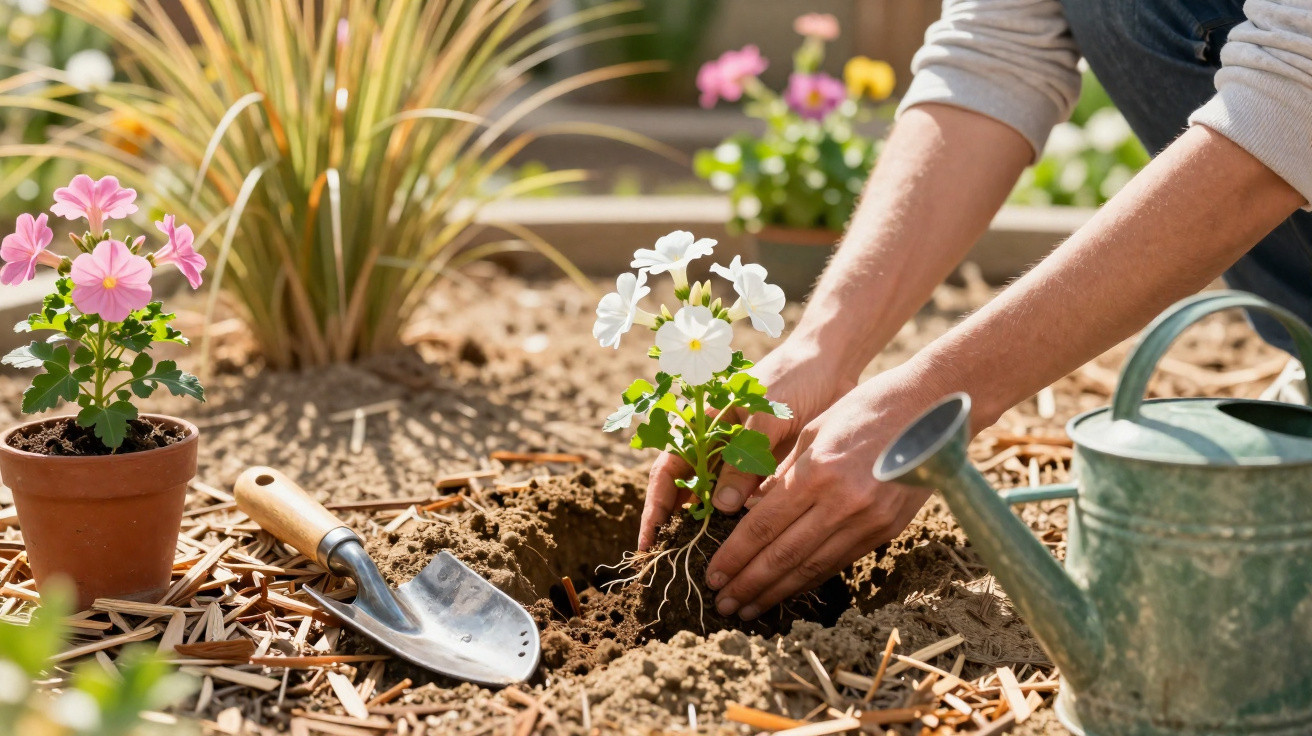
An unassuming springtime task determines whether your dry garden withers in summer – or blooms for weeks thanks to one particular perennial.
Many amateur gardeners reach breaking point in high summer: the lawn turns yellow, borders droop and the watering can is in constant use. Yet some of this pressure can be avoided by taking action in April, with a perennial seemingly designed for dry, sunny spots: Gaura, also known as the Prachtkerze. Plant or divide it correctly now, and it can get through summer with hardly any watering.
Why April is the key month for the Prachtkerze
During April, the soil begins to warm up, nights become milder and rainfall is usually still regular. Gaura uses precisely this period to establish a deep root system. Its taproots reach far down into the ground, accessing reserves of water that shallow-rooted plants cannot reach at all.
“Planting or dividing in April gives Gaura several weeks’ head start to root deeply – the best insurance against summer heatwaves.”
The work involved is modest: provide a sunny position and loose soil, water thoroughly once, then allow the perennial to learn to find water for itself. This really does create a kind of “near-immortality” in a dry garden: the plant appears able to cope effortlessly with heat and dry spells.
Ideal conditions for Gaura: sun, light soil and, above all, no constant wetness
Gaura originally comes from relatively barren, hot parts of North America. That is exactly why it suits modern gardens so well, where water scarcity is increasingly becoming an issue.
- Light: A site in full sun, with at least six hours of direct sunshine daily
- Soil: As free-draining and mineral-based as possible; slightly low in nutrients rather than overly rich
- Water: Avoid waterlogging at all costs; short dry periods are not a problem
Heavy, clay-rich soil can easily cause rot if water remains around the roots. The only solution is to loosen it thoroughly, work in sand or grit, and ensure dependable drainage.
Planting Gaura in April – step by step to a dry-garden star
Choosing the site and preparing the soil
Pick a location that can become genuinely hot in summer: beside a south-facing patio, in a gravel bed, in front of a house wall or in a sun-drenched front garden. The more light it receives, the sturdier its stems will remain and the more profusely it will flower.
Proceed as follows:
- Dig a planting hole around twice as wide as the root ball.
- Make it deep enough for the root ball to finish level with the surrounding soil surface.
- In heavy soil:
- Add about 1 litre of gravel or coarse grit to the base of the hole.
- Mix the excavated soil with around 2 litres of light planting compost or sand.
- Do not plant too deeply – the upper root area needs access to air.
Spacing plants 40 to 60 centimetres apart prevents the perennials from crowding one another. When planted in groups, their delicate haze of flowers is especially striking.
Watering in correctly – one generous soak, then leave it alone
Once the plant is in place, backfill the hole with the loose soil and firm it only lightly. Next comes the crucial part: one single, very thorough watering.
“Around 2 litres of water per plant after planting is enough to settle the soil closely around the roots – after that, Gaura can become independent.”
Continuing to reach for the watering can afterwards effectively spoils the perennial: its roots stay near the surface, increasing drought stress in summer. Instead, provide extra water only during exceptionally prolonged drought in its first year, and water deeply rather than giving it a little every day.
Dividing older clumps: renewed vigour instead of a tired centre
Over time, Gaura forms dense clumps that can sometimes become bare in the middle. April is an excellent time to rejuvenate these perennials.
How to divide them successfully:
- Lift the entire clump with a spade and remove it from the ground.
- Split the root mass into three to four sections – every section should have its own roots and young shoots.
- Replant the sections promptly, without leaving them exposed for long.
- Water each section in well with 1 to 2 litres of water, then return to more sparing watering.
Following division, the clumps generally produce stronger new growth and flower more densely. It is also an inexpensive way to expand your garden planting.
The summer cut: a bold move for months of flowers
In June or July, once the first flush of blooms has finished and the plant looks tired, Gaura needs a decisive trim. Many gardeners hesitate to do this, but it is exactly this intervention that pays off.
“Cutting back about half the stems cleanly triggers vigorous new growth and delivers a second, long flowering period lasting into autumn.”
Cut on a dry day, using clean, sharp secateurs, and trim weak or bent stems back a little harder. There is no need for fertiliser – too many nutrients simply make Gaura soft and prone to breaking.
Common mistakes the Prachtkerze will not forgive
For this perennial to fulfil its potential as a “drought hero”, a few familiar mistakes must be avoided:
- Too much water: Permanently damp soil quickly leads to root rot.
- The wrong position: In shade, the plant becomes leggy, flops over easily and flowers far less vigorously.
- No pruning routine: Without cutting back, the clump ages more quickly and flowering becomes patchy.
Treating it like a typical bedding perennial with regular watering and nutrient boosts effectively takes away its greatest advantage: its ability to thrive with extremely little.
Winter care and perfect companions for a dry bed
Gaura is considered reasonably robust as long as the soil does not become waterlogged in winter. A light layer of winter protection is useful in areas with harder frosts.
Practical measures:
- In autumn, shorten the stems to about 10 to 15 centimetres if the clump looks untidy.
- In exposed areas, lay a protective layer of leaves or fine twiggy brushwood over the plant.
- Where soil is very wet, plant slightly higher up or create a small gravel bed.
Visually, Gaura works particularly well with Mediterranean herbs such as lavender, sage and thyme, as well as delicate ornamental grasses. Together, they create a light, flowing display that needs very little watering while remaining lively throughout the summer.
What makes Gaura so valuable in a climate-ready garden
As dry periods become longer and more frequent, water-saving gardening is moving further into focus. Gaura is perfectly suited to this moment: it is a long-lived, undemanding perennial that provides flowers dancing in the breeze for many months.
Particularly in front gardens or hard-to-reach places, it acts like a natural defence against watering stress: while other plants are already wilting, it stands quietly and continues to flutter its butterfly-like flowers without concern. Anyone who tries this approach once often plans the next bed along the same lines.
For beginners, a small trial area in the garden is worthwhile: a sunny strip with free-draining soil, planted with two or three Gauras, some lavender and a low ornamental grass. If the watering can can largely stay put there during summer, this corner gives a very tangible impression of what a future climate-adapted garden can look like – light, airy and remarkably low-maintenance.





Comments
No comments yet. Be the first to comment!
Leave a Comment