
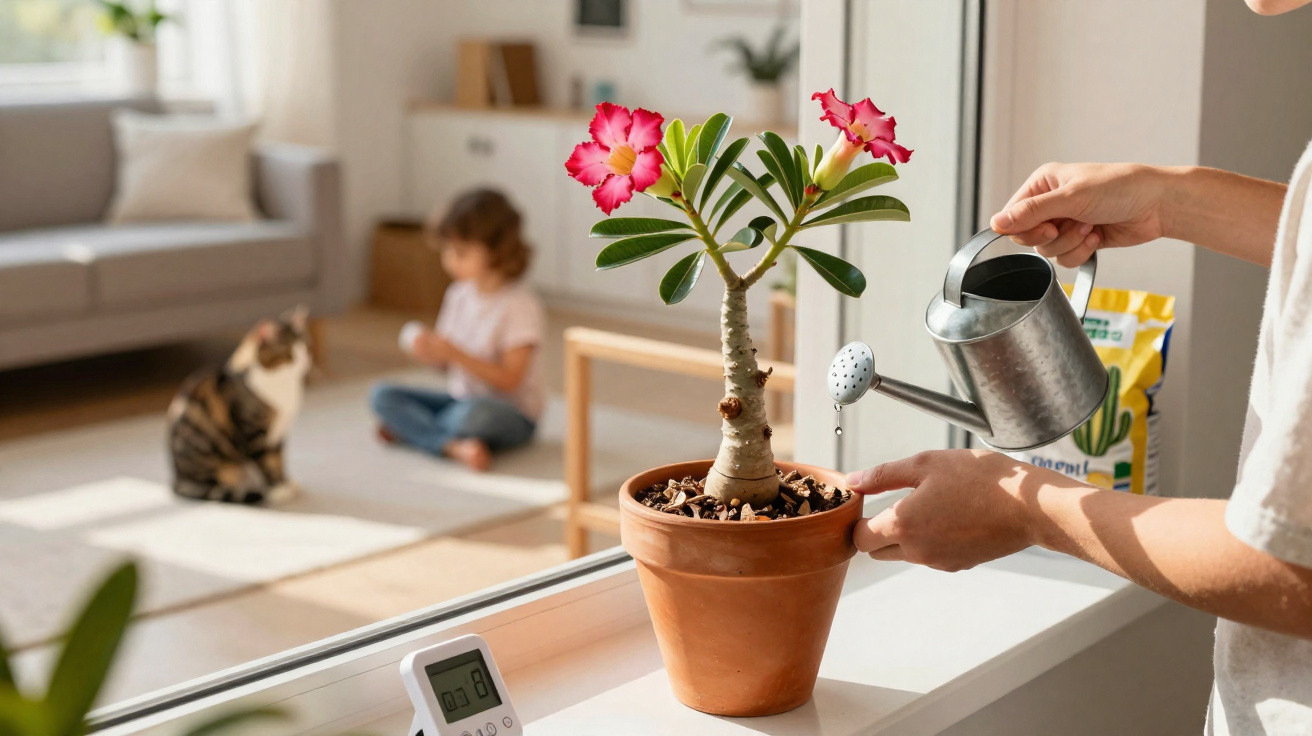
The desert rose stands out for its sculptural caudex, colourful flowers and heat tolerance, yet it needs particular care when grown indoors. Direct sunlight, free-draining compost, careful watering and awareness of its toxic sap are all essential to keeping the plant healthy in homes with children and pets.
Where should a desert rose be kept at home?
A desert rose requires direct sun to grow strongly and produce flower buds. Ideally, place the pot on an open balcony, in a yard, in the garden or close to a very sunny window, where it receives at least six hours of light each day.
In constant shade, it develops stretched shoots, becomes weaker and flowers less. In flats, a well-ventilated balcony or a window receiving strong morning sunlight is usually the best position.
How should you water it without rotting the caudex?
Watering is the aspect of cultivation most likely to go wrong. Because the desert rose stores water in its swollen stem and roots, too much moisture can rot the caudex and cause leaf drop.
- Water only once the compost feels dry to the touch.
- Do not leave a saucer of standing water beneath the pot.
- Reduce watering on cold, rainy or poorly lit days.
- Use less water in large pots, as they take longer to dry out.
Which compost supports healthy roots in a desert rose?
The growing medium must dry out quickly. Mixes containing coarse sand, fine gravel, pine bark, perlite or compost designed for cacti and succulents help keep oxygen around the roots and lower the risk of waterlogging.
Heavy topsoil, pure humus and pots without drainage holes all impair drainage. Clay or ceramic pots can help because moisture escapes through their sides, but any container will work provided its drainage holes remain clear and it contains a light mix.
Which precautions are important around children and pets?
Keep the desert rose beyond the reach of young children, dogs and cats. Its sap is toxic, and eating parts of the plant, including its leaves, flowers, stem or roots, can cause health problems.
- Wear gloves when pruning, repotting or handling cut roots.
- Wash your hands after any contact with the sap.
- Do not leave fallen leaves where curious animals can reach them.
- Position the pot on sturdy worktops, high shelves or in protected areas.
- Avoid pruning near children, as the sap may splash.
How to keep the plant strong and flowering for longer
The desert rose thrives with a straightforward routine: strong sunshine, infrequent watering, a well-drained pot and light pruning to balance its branches. Fertiliser should be used sparingly and only on a healthy plant, as too much can burn the roots and cannot make up for insufficient light.
For families, the best approach combines beauty with safety. By keeping the pot in a sunny spot, allowing the compost to dry between waterings and keeping it away from children and pets, the plant retains a firm caudex, produces new leaves and flowers more regularly during warmer periods.

Comments
No comments yet. Be the first to comment!
Leave a Comment