
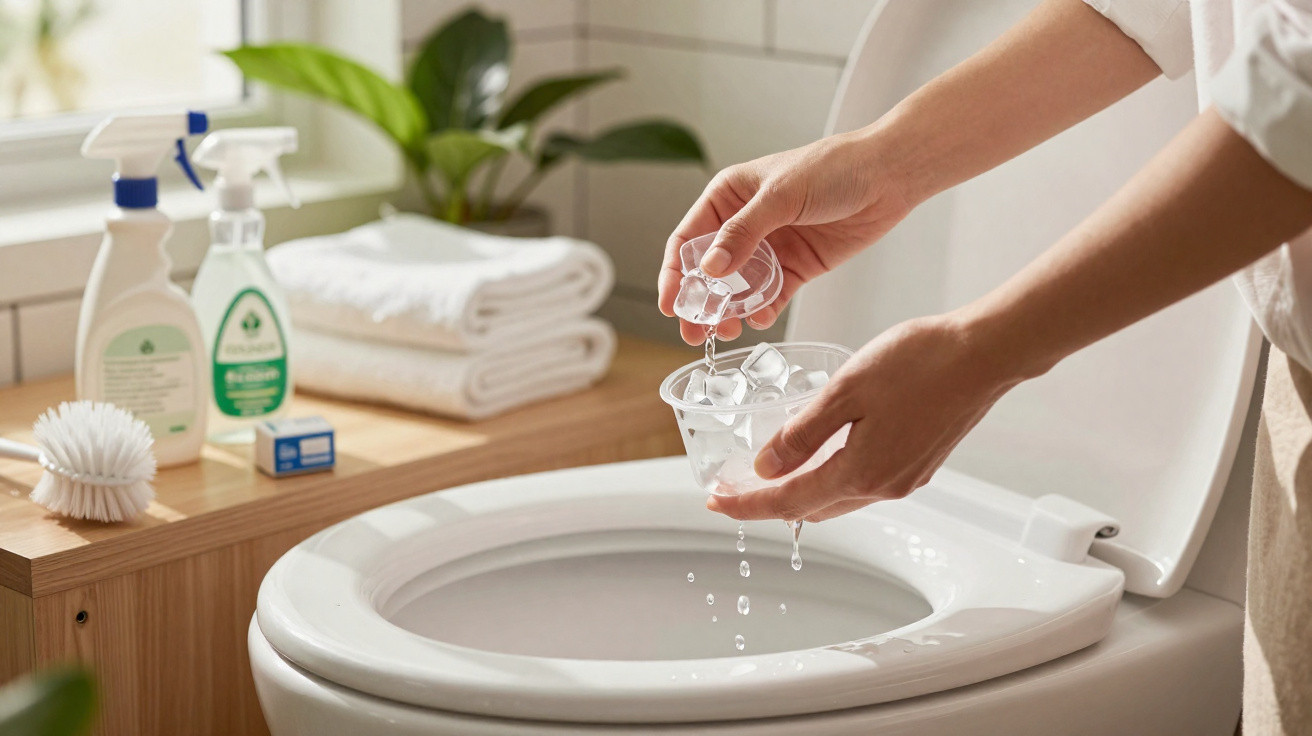
Among the many household tips shared on social media, using ice to clean the toilet bowl has attracted attention because it initially seems rather pointless. The idea claims to make bathroom upkeep easier with a simple, inexpensive item already found in most homes: ice cubes from the freezer, used as an addition to-not a replacement for-normal cleaning.
How does the ice trick in the toilet bowl work?
The so-called ice trick in the toilet involves tipping a quantity of ice cubes directly into the bowl before flushing. As the water rushes away, the cubes are carried along and knock against the inside surfaces, producing mild mechanical friction that can help loosen recent dirt.
The principle is straightforward: the force of the water combined with the impact of the ice produces a subtle “scrubbing” action that can reach spots a toilet brush does not always touch. Because the ice melts quickly, it leaves no solid residue and does not affect the flush mechanism. It should only be used as support between more thorough cleans.
Watch a video on the Radar Caseiro YouTube channel explaining why the trick of putting ice in the toilet bowl before flushing is surprising for mechanical cleaning and unblocking pipes:
https://www.youtube.com/watch?v=9jD8XbclF1A
Does the ice trick in the toilet really help with cleaning?
Although the ice trick in the toilet bowl has become popular in viral videos, its effect is limited to light maintenance. It may delay the appearance of visible marks in toilets that are already well maintained, but it will not remove old, ingrained grime or thick limescale deposits.
Some versions add ingredients such as bicarbonate of soda or white vinegar, which provide mild chemical action. In these cases, the ice serves only as extra mechanical support. However, dangerous combinations must be avoided, especially those involving chlorine-based products, as they can release toxic gases.
When can ice in the toilet bowl actually be useful?
This method is generally most useful as part of a maintenance cleaning routine, when there is no large build-up of dirt. In busy households, it can be used as a quick measure to improve the bowl’s appearance without much effort.
In these circumstances, ice is usually used strategically in specific situations that can help the results of the main clean last longer:
- Between weekly cleans: helps reduce fresh splashes and marks on the porcelain.
- After heavier bathroom use: provides a simple extra step in homes with many occupants or visitors.
- Alongside light cleaning: complements the action of washing-up liquid or a dedicated product.
What are the main precautions for cleaning a toilet bowl properly?
Despite the attention it receives for its simplicity, ice does not replace a structured bathroom hygiene routine. Effective, safe cleaning relies on regular habits, the correct use of products, and awareness of warning signs such as blockages or persistent unpleasant odours.
Keeping to a weekly cleaning schedule, using disinfectants suitable for sanitary porcelain, avoiding hazardous mixtures-such as chlorine with vinegar or ammonia-using sturdy brushes and gloves, and ensuring good ventilation are all essential measures. Ice should be regarded only as a practical, economical detail that may be useful on some occasions, but it cannot independently solve more serious cleaning issues or plumbing maintenance problems.


Comments
No comments yet. Be the first to comment!
Leave a Comment