
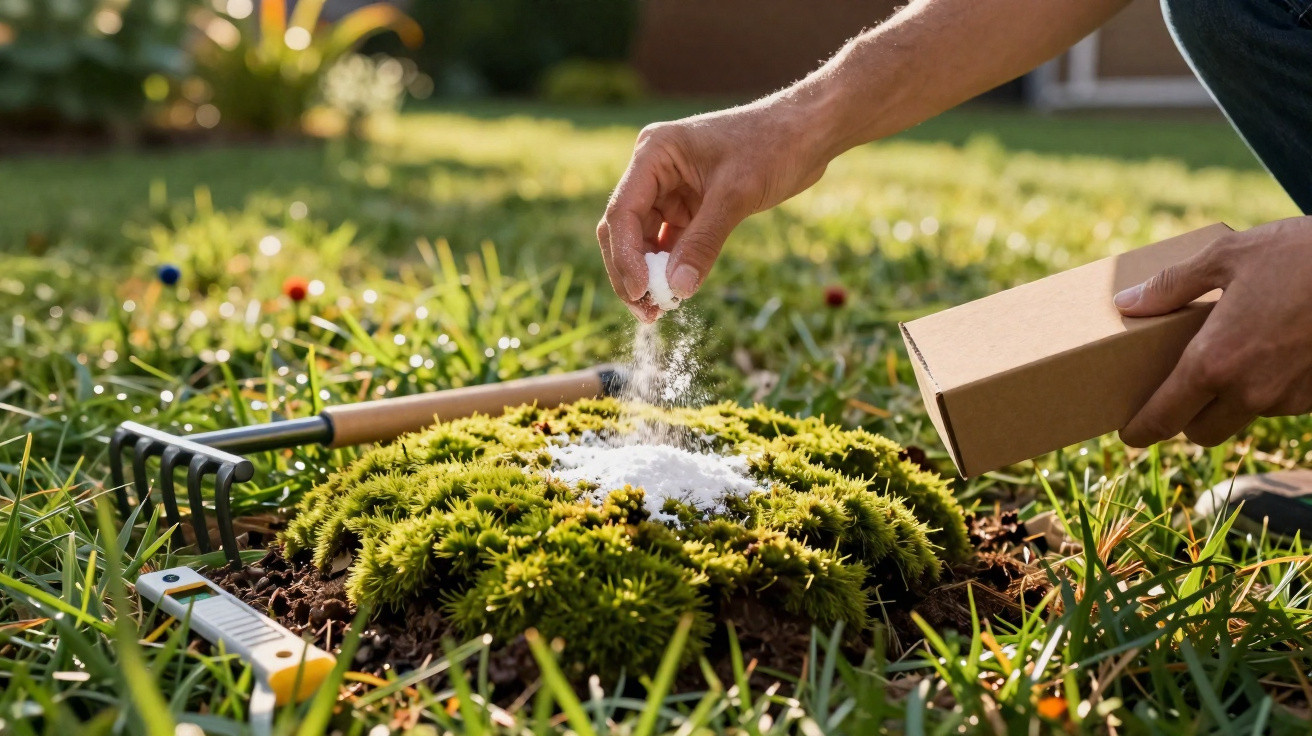
A trip into the garden in spring can often bring an unwelcome surprise: rather than a rich green lawn, there is a soft, dark layer of moss. The ground looks wet, yields underfoot and is far from inviting. For many people, harsh chemicals or digging up the entire lawn are not an option. This is where a straightforward trick currently attracting attention from the UK comes in.
When the lawn turns into a blanket of moss
Moss in a lawn is not a sign of neglect; it indicates that the soil is under stress. It ruthlessly exploits every weakness in the grass. There are several common causes:
- ground that remains wet and dries poorly
- compaction caused by frequent foot traffic or heavy equipment
- deep shade from trees, hedges or buildings
- mowing the lawn extremely short
- acidic soil with a low pH level
During wet winters, grass has very little vigour for growth. Moss, meanwhile, thrives in precisely these conditions: limited light, plenty of water and hardly any competition. By spring, a substantial cushion of moss may have spread unnoticed for months.
If left alone, some of the moss will die off during summer, but unattractive bare patches are left behind. Many amateur gardeners therefore want an answer that reliably halts moss without causing lasting damage to the lawn or placing an unnecessary burden on the soil.
The 75p kitchen-powder solution
A tip currently being shared in British gardening forums and media sounds remarkably simple: baking soda, or ordinary bicarbonate, the product commonly used for baking and cleaning. A tub can cost less than £1 in discount shops and bargain stores.
The approach is as follows: add a few tablespoons of the powder to water in a pressure sprayer. Spray the mixture directly onto mossy patches, choosing a warm, dry day so the lawn is not put under additional stress.
“An inexpensive everyday kitchen ingredient is enough to visibly dry out cushions of moss in the lawn – with no vinegar or chlorine cleaner required.”
Gardeners who have tested this method report that the moss dries out and turns brown within a few days. After a brief shock, the surrounding turf usually recovers. The important point is not to spray indiscriminately over a wide area, but to treat only the places where moss is actually growing.
Step by step: using bicarbonate against moss
Anyone wishing to try this method should take a methodical approach and start with a small test area. Here is the process in detail:
- Wait for dry weather: A warm day without rain is ideal, allowing the solution to remain on the foliage.
- Prepare the mixture: Put two to three tablespoons of bicarbonate into a standard garden sprayer filled with water, then shake it thoroughly.
- Treat only the moss: Spray the affected patches precisely. Avoid flower beds and ornamental plants.
- Monitor the results: Within two to three days, the moss should turn yellowish to brown and dry out.
- Rake it away: Remove the dead material with a rake and dispose of it with garden waste.
- Repair the gaps: Lightly loosen barer areas, overseed if required and water them in.
Applying too much product, or spraying in intense sunshine, can scorch the grass. When in doubt, it is better to start with a weaker dose and increase it gradually. Always test one small corner before moving on to the whole garden.
Why does bicarbonate work on moss?
The precise effect depends on the concentration and the site, but the overall principle is clear: the salt changes the conditions on the leaf surface. Moss is more sensitive to this than most grasses. The cells in the moss plant dry out and the growth collapses. Grass roots sit deeper and are more resilient, provided the solution is not severely overapplied.
Unlike aggressive chlorine cleaners or highly concentrated acids, this method uses a substance already widely found in the home. That does not mean it should be used carelessly, however: even supposedly gentle products can damage plants at high doses.
Treating the symptom only: preventing fresh moss growth
The powder removes visible moss but does not address the underlying cause. If the condition of the lawn remains unchanged, the same problem is likely to return in the next wet winter. Specialists therefore recommend a yearly plan designed to strengthen the grass.
Relieving and aerating the soil
Compacted ground is ideal for moss. A few simple measures can loosen the soil:
- lightly scarify the lawn in spring to clear thatch and old plant debris
- use a garden fork or dedicated aeration equipment to make holes in heavily trodden areas
- work sand into these holes so rainwater can drain away more effectively
This effort is especially worthwhile in heavy clay soils. The ground dries more quickly, grass roots receive more air and the likelihood of moss is reduced.
Mowing correctly and checking the pH level
Another familiar issue is mowing the lawn too short. Trying to achieve a golf-course appearance in summer severely weakens the grass. It develops shallower roots and has less strength to defend itself.
A useful rule of thumb is to mow a little higher, at around 4 to 5 centimetres, while cutting regularly. This allows the grass to shade the soil slightly itself and leaves less room for moss.
The pH level also matters. Many lawns become more acidic over time, for instance because of acid rain or fallen leaves. A simple soil test from a garden centre will show the current level. If it is too low, a targeted application of lime in late winter or early spring can help. More neutral soil supports grass growth, while moss finds the conditions less favourable.
Fertiliser, overseeding and care: strengthening the lawn rather than feeding moss
A thick, healthy lawn provides the best protection against moss. Thin, patchy turf is almost automatically colonised by moss and weeds. A nutrient programme should therefore form part of an anti-moss plan:
- apply a suitable lawn fertiliser in spring
- overseed bare areas after removing moss
- avoid mowing in heat at the height of summer; mow on cooler days instead
- during dry spells, water less often but thoroughly
Following these steps gradually improves the lawn’s ability to compete. Moss then has far fewer opportunities to spread.
Where baking soda has limits and what gardeners should consider
Not every area is suitable for bicarbonate treatment. On very young lawns, freshly seeded ground or near sensitive perennials and ground-cover plants, there is a greater risk of harming desirable plants as well.
The method is most useful where dense pockets of moss have formed, such as shady corners beneath trees or permanently damp areas alongside the house. Anyone planning to treat larger spaces should use a much lower concentration and be prepared to proceed patiently.
There is another important consideration: bicarbonate is not a substitute for long-term planning. Without improved drainage, an appropriate mowing height and sufficient nutrients, the green carpet of moss will return sooner or later. The powder is therefore one tool in the kit, not a complete solution on its own.
Additional advice for difficult garden areas
In particularly shaded places, it can sometimes be worth considering a more fundamental question: does conventional lawn really need to grow there? Shade-tolerant ground cover, bark-mulch paths or seating areas can permanently ease troublesome spaces. This avoids a continual battle with moss and brown patches.
Those wanting to tackle the issue in greater depth can explore topics such as “soil structure”, “drainage” and “right plant, right place”. Many local councils and gardening clubs offer advice sessions where amateur gardeners can learn how to understand their soil. This knowledge makes it easier to use simple household remedies such as bicarbonate sensibly and responsibly, while turning a lawn into a robust, hard-wearing green space over the long term.



Comments
No comments yet. Be the first to comment!
Leave a Comment