
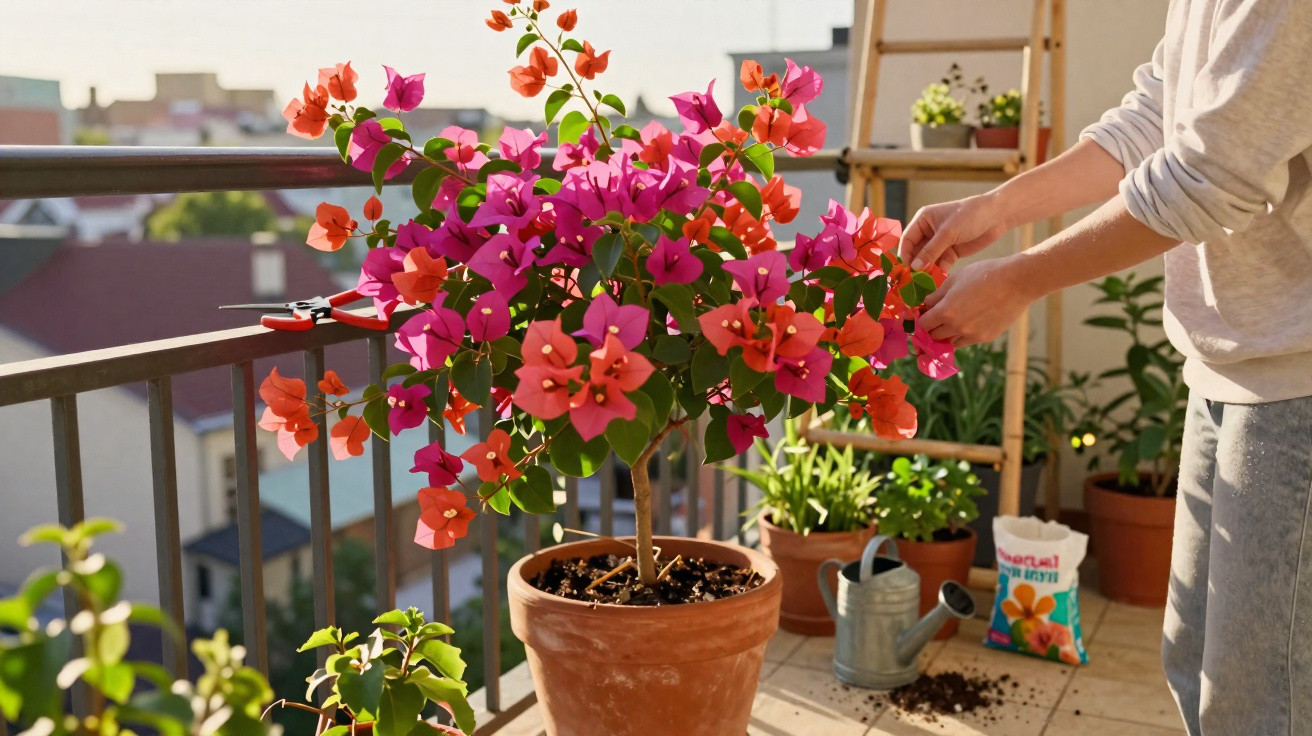
Creating a green space in a sunny flat may seem like a complicated task for many city residents. Yet choosing the right species can completely change this bare setting. A beautiful flowering bougainvillea on the balcony brings vivid colour throughout the year.
How does bougainvillea adapt to full sun?
This spectacular climbing plant needs consistent direct light to grow with full health and vigour. The key to achieving lavish flowering is directly related to how much sun the structure receives each day in this outdoor environment.
Young plants raised in protected greenhouses should undergo a gradual acclimatisation process before being placed in full exposure. This straightforward technique prevents serious scorching of the delicate leaves, allowing the plant to become highly resistant to city heat and strong winds.
Discover the leading features of this wonderful hardy species:
- Botanical name: Commonly known as Bougainvillea spectabilis or three marias.
- Colourful bracts: Modified leaves that surround and protect the small pale flowers.
- Full sun: A vital requirement for direct sunlight in order to flower profusely.
- High hardiness: A plant that is exceptionally resistant to heat and strong urban winds.
- Strategic pruning: It can be trained into a range of landscape forms through cutting.
What are the secrets to planting it in a pot?
When planting in restricted areas such as balconies, selecting the right container makes all the difference to healthy growth. Proper development of its strong roots requires a large pot that provides enough room for the continuous nourishment of this spectacular ornamental species.
In addition, preparing the soil should focus on excellent drainage to prevent root rot. The mix needs a sandy, free-draining substrate, preventing excessive water from collecting after each watering session carried out by the resident.
Learn further practical tips by watching the exclusive video on the Minhas Plantas YouTube channel:
How can the plant flower all year round?
Encouraging the continual appearance of its beautiful coloured bracts depends directly on specific nutrients in the soil. Applying a phosphorus-rich fertiliser activates the plant’s metabolism, ensuring vigorous new buds emerge on this beautiful plant grown at home.
Abundant flowering
High-performance nutrition
Regular use of fertilisers high in phosphorus boosts the metabolism of the bougainvillea climber.
This simple care routine encourages coloured bracts to develop along the full length of the branches.
Another crucial measure for refreshing the appearance of the foliage and encouraging fresh shoots is ongoing maintenance. Removing dry branches reshapes the climber’s structure, directing sap towards a spectacular pruning routine that strengthens healthy growth.
See the essential elements for this daily care routine below:
- Apply organic fertilisers rich in phosphorus.
- Carefully remove dry or damaged stems.
- Keep moisture balanced without waterlogging the soil.
Why is regular pruning important?
Regular pruning acts as a real driver of continuous flowering in this hardy variety. Cutting back older stems encourages the plant to produce fresh shoots, where the attractive modified leaves that create the desired colourful appearance on this climber will emerge.
As well as keeping it at a suitable size for the balcony, this strategic care strengthens the plant’s structure. Using the correct clean tools ensures precise cuts, preventing the spread of disease and keeping the specimen fully healthy throughout the year.
The main benefits of regular flowering pruning include:
- Encouraging the production of young flowering shoots.
- Effectively controlling the size of branches on the balcony.
- Significantly improving light circulation between the leaves.
How can you train bougainvillea growth with supports?
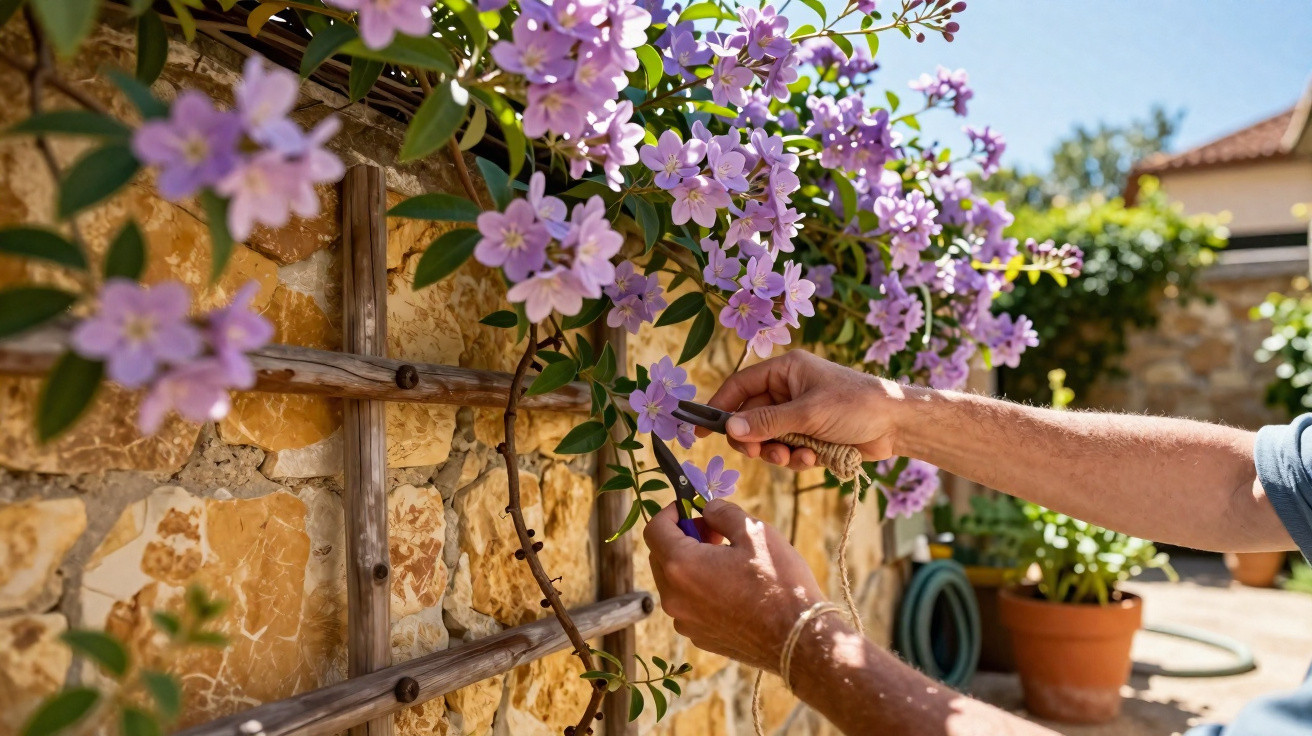
Because it has long, flexible stems, this species needs suitable supports to grow vertically with elegance. Fitting sturdy trellises or firm stakes helps guide the branches, creating a beautiful colourful wall that completely transforms the decoration of any outdoor environment.
For anyone looking for other hardy options, an excellent alternative is to learn about growing old plants in pots with very little care. This choice diversifies your botanical collection, ensuring a harmonious, elegant space filled with green life for much longer time.
Comments
No comments yet. Be the first to comment!
Leave a Comment