
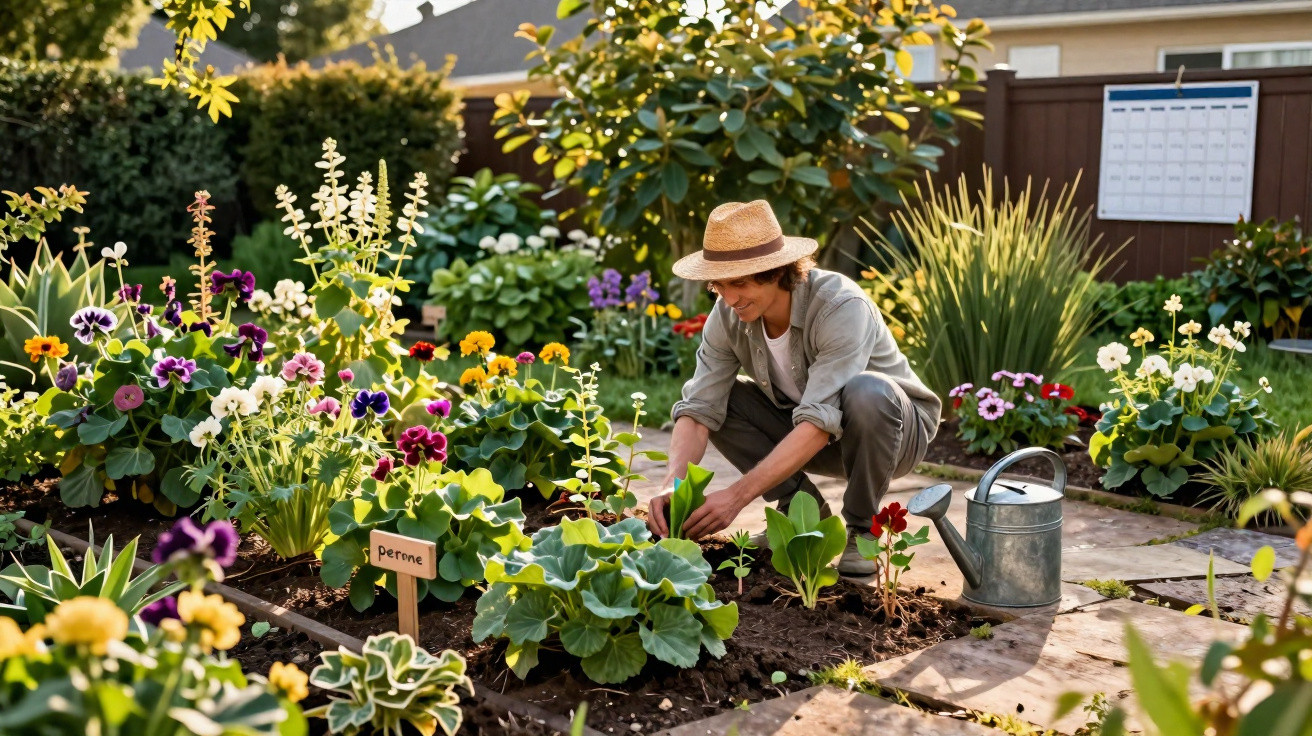
For anyone who wants an attractive garden that will look good for years, perennial plants are a practical, hardy choice. These plants can remain in the same bed for decades, needing little attention over time and flowering again each season. They also draw bees, butterflies and other pollinators, helping to increase biodiversity in the garden.
What are perennial plants and why do they last so long?
Perennial plants do not complete their life cycle within a single year. Although they go through periods of growth, flowering and dormancy, their roots and other living structures remain in the soil through several cycles. They may stay in the same position for 20 or 30 years without needing to be replanted.
Their long life is largely due to deep, strong root systems that create dense clumps or underground rhizomes. These structures store water and nutrients, allowing the plants to withstand drought, cold weather and intense heat. Once conditions improve, they resume growing and flowering, which reduces the maintenance required in a home garden.
Watch a video on the Spagnhol Plantas YouTube channel about highly durable ornamental plant species and perennial flowers for a low-maintenance garden:
https://www.youtube.com/watch?v=pYq7M_eS1p0
Which perennial plants need little garden maintenance?
Among plants for a low-maintenance garden, the most notable are resilient, adaptable varieties that cope with full sun or partial shade and only require more attentive watering during their first year. Once their roots are established, they become more self-sufficient and dependable throughout the seasons.
Some groups are especially popular with people who have limited time for garden care, as they combine toughness with abundant flowering:
- Clump-forming flowers, which produce dense mounds and spread slowly.
- Deep-rooted species, which tolerate dry summers and less frequently watered soil.
- Hardy temperate-climate plants, which can withstand cold winters and hot summers.
Which 5 perennial plants can last for decades?
Several species regularly feature in gardening guides because they can remain in one spot for decades. Given suitable soil and the right light levels, they retain regular flowering and an appealing appearance, requiring only occasional light intervention.
Baptisia-type plants
These develop into rounded shrubs with spring flower spikes and deep roots that cope well with dry summers. Once established, they rarely need replanting or frequent division.Herbaceous peonies
Traditional in temperate climates, they can be left undisturbed for decades while producing large flowers year after year. They favour fertile, well-drained soil and a distinct winter period to encourage flowering.Perennial irises
They form rhizomes that spread gradually and produce flowers in spring or early summer. Over time, the rhizomes only need dividing when the clump becomes too crowded.Hostas for partial shade
Suitable for borders and damp, partially shaded places, hostas offer broad, long-lasting foliage. In soil rich in organic matter, they require regular watering and occasional light feeding.Daylilies
Each flower lasts for one day, but the stems carry numerous buds, extending their ornamental display. They adapt to different soil types and remain productive for years when they receive direct sunlight for part of the day.
How should perennial plants be cared for so they last up to 30 years?
For long-lasting perennial plants to reach their full potential, choosing the right site is essential, taking account of whether they need full sun, partial shade or shade. Preparing the soil properly at the outset is equally important, ensuring adequate drainage and a good supply of nutrients.
The most useful care measures include watering regularly only while plants are becoming established, applying a light feed once or twice a year, removing spent flowers where appropriate, and dividing clumps that lose vigour at the centre. With this simple, consistent care, the bed can remain stable, colourful and appealing for many years, combining beauty, convenience and benefits for local wildlife.
Comments
No comments yet. Be the first to comment!
Leave a Comment