
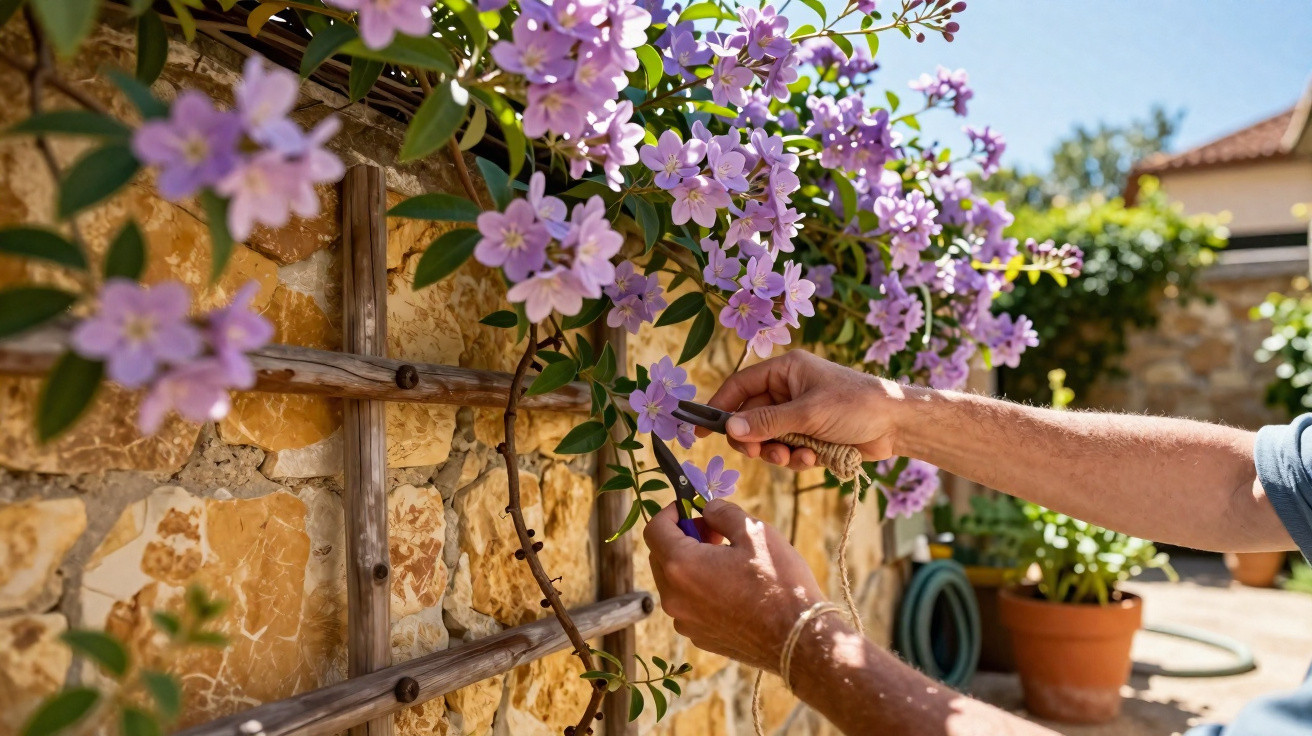
Turning plain walls into fragrant vertical gardens is becoming increasingly popular in residential and commercial schemes. One of the most sought-after species is the climber recognised for its vanilla fragrance and plentiful purple blooms. It can quickly cover walls, railings and pergolas, which is particularly valued in urban settings, where greenery must suit compact spaces without requiring major building work.
What makes the vanilla-scented climber ideal for walls?
The vanilla-scented climber stands out through its blend of powerful perfume, striking flowering and rapid growth. When light and soil conditions are favourable, its stems spread swiftly and can cover extensive surfaces within a few months, producing highly visible clusters of purple flowers.
Its adaptability to a range of supports is another benefit, including brick walls, fences, railings, timber trellises and steel cables. In many designs, it can replace artificial cladding by adding colour, shade and a cooler feel, while also creating a gentle, welcoming visual screen.
Watch a video on the YouTube channel Pomar e Horta em Vasos about fast-growing climbers that are perfect for covering tall walls and forming a fragrant green barrier:
https://www.youtube.com/watch?v=F0B6bUjscb4
How to grow the purple-flowered climber with a vanilla fragrance
To help the climber reach its full potential, plant it where it receives plenty of light, ideally with direct sunshine for several hours each day. Good light encourages flowering and strengthens its scent, which is generally more noticeable during warm, dry periods.
The soil should drain freely and contain plenty of organic matter, supporting root establishment and the development of new shoots. The following straightforward steps can help organise the essential care for growing this plant on walls and fences:
- Select a position with strong sunlight and good airflow;
- Improve the soil with organic compost or worm castings, while ensuring effective drainage;
- Water moderately and regularly, without allowing prolonged waterlogging;
- Fit a nearby support from the outset to direct its growth.
How to train stems and prune without damaging the wall
To safeguard the wall structure, use wires, coated cables or trellises installed a few centimetres away from the surface. This spreads the weight and moisture more effectively, allowing the plant to be trained without relying directly on cracks or mortar joints in the finish.
During the first few months, tie the main stems gently to their supports using fabric ties or garden-specific fastening strips. Light pruning throughout the year removes dry growth, keeps the climber under control and maintains air circulation, lowering the likelihood of pests and excessive shade.
What benefits does a fragrant vertical garden bring to the space?
With simple planning, this climber can turn ordinary surfaces into green panels filled with flowers and fragrance. Its fast growth makes it possible to provide shade, lessen the feeling of heat beside a wall and improve thermal comfort in small areas such as balconies and passageways.
Beyond its decorative effect and perfume, the vegetation supports the urban microclimate by reducing heat reflections and trapping dust particles. In many projects, thoughtful use of this plant on walls, pergolas and fences creates the impression of a spacious garden without complex construction, combining visual wellbeing, practicality and a touch of botanical curiosity in everyday life.

Comments
No comments yet. Be the first to comment!
Leave a Comment