
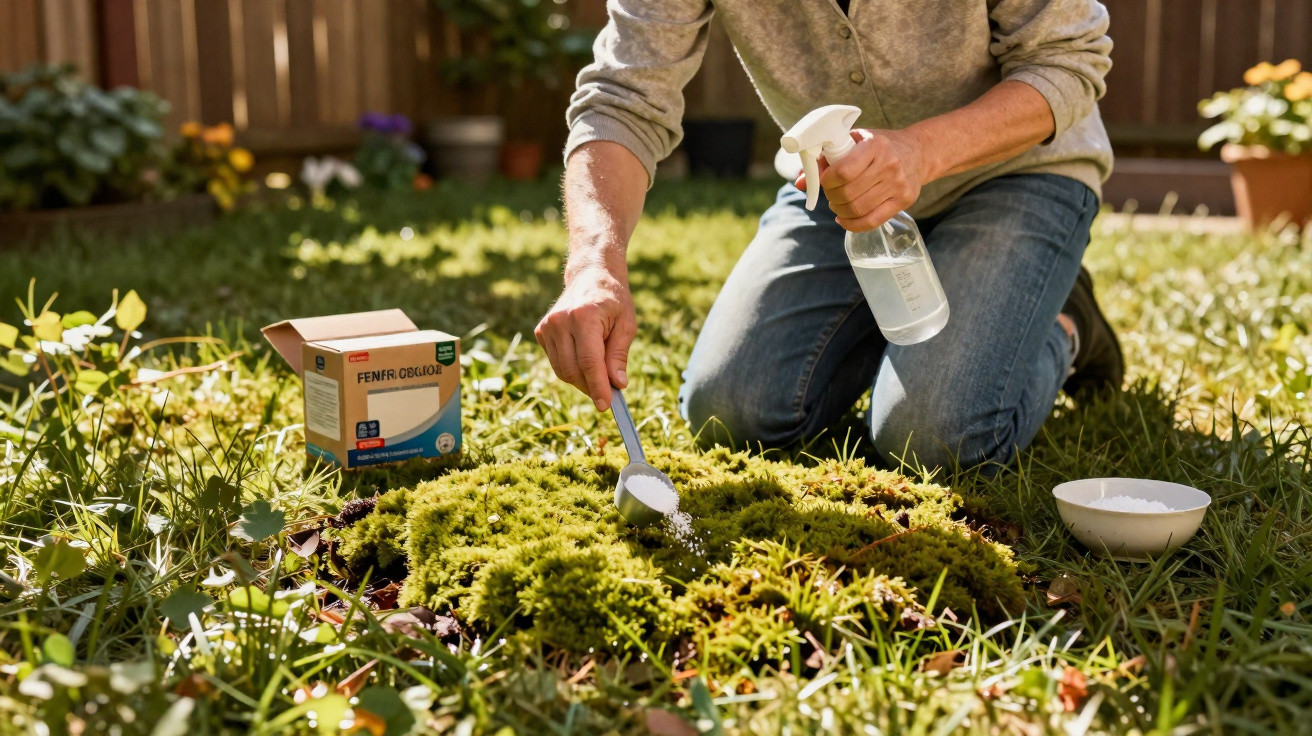
Many amateur gardeners know the sinking feeling that arrives in spring: instead of lush green grass, they find a slippery, dark surface. Children no longer want to play on it, the mower struggles, and every step feels as though it is landing in a bog. Before reaching for costly specialist products from the DIY shop, more and more garden enthusiasts are relying on a straightforward powder trick costing less than £1.
Why moss spreads so readily through lawns
Moss does not mean you are a “bad gardener”; it points to unfavourable conditions. It takes full advantage of every weakness in a lawn.
- Damp soil: waterlogging after rain or poor drainage.
- Compacted ground: heavily used areas that are rarely loosened.
- Too much shade: trees, walls and hedges deprive the lawn of light.
- Very close mowing: cutting too low weakens the grass.
- Acidic soil: a low pH level favours moss over grass.
The issue becomes worse over winter. Grass barely grows, remains vulnerable, and moisture stays in the soil for a long time. Moss seizes this opportunity, moving into the spaces between weakened blades. If nothing changes, the moss cushions may partly die back later on, but unattractive bare patches will remain.
“Anyone who simply ‘removes’ moss without changing the causes will see it return year after year.”
The surprising 75p kitchen solution
A method from Great Britain is currently being widely discussed on gardening forums: ordinary sodium bicarbonate, better known as bicarbonate of soda or simply baking soda. A tub generally costs less than £1 at a supermarket or discount retailer, and is often already in the kitchen cupboard.
The principle is that bicarbonate of soda changes conditions directly on the mossy area, making it difficult for the plants to cope. Grass usually tolerates the treatment considerably better, particularly when it is applied precisely.
How to prepare the bicarbonate of soda mixture
Only a small amount is needed for a simple spray solution:
- use a standard garden sprayer or an old, clean spray bottle
- fill it with tap water
- mix in two to three tablespoons of bicarbonate of soda until most of the powder has dissolved
This does not create a corrosive mixture, but a mildly alkaline solution. Use it immediately after mixing so that the powder does not settle back at the bottom.
Application: the step-by-step method gardeners use
A methodical approach gives this trick the best chance of working:
- Wait for dry weather: a warm, dry day with no rain forecast for the next 24 hours is ideal.
- Choose a small test area: treat only a limited patch of moss first, so you can monitor how the lawn responds.
- Spray accurately: apply the solution solely to mossy patches, avoiding flower beds and sensitive ornamental plants.
- Allow it to work: check the result over the following two to three days.
- Remove discoloured moss: once the cushions look dry and brownish, lightly rake them away.
In suitable conditions, the moss cushions dry out and turn yellowish to brown. The grass beneath may initially appear slightly stressed, but in many cases it recovers as growth continues.
“Many amateur gardeners report that mossy areas visibly shrink after applying bicarbonate of soda, without affecting the entire garden.”
The limits of this household remedy
Bicarbonate of soda mainly works on visible moss cushions. In other words, it tackles the result rather than the underlying causes. Anyone who sprays alone and changes nothing else is very likely to face a green mat again after the next damp winter.
There is another consideration: in strong winds or when spraying imprecisely, droplets can easily land on other plants. Delicate ground-cover plants and young plants may react sensitively. Pets should also not walk directly over freshly treated areas or lick them.
How to stop moss returning to your lawn
For a resilient lawn over the long term, combine the bicarbonate of soda trick with targeted care. Garden experts recommend several measures throughout the year.
Loosen and aerate the soil
Compacted soil is one of moss’s greatest allies. Regular aeration carries oxygen deeper into the ground and helps water drain away.
- in spring, lightly scarify the lawn using a rake or scarifier
- on heavy soils, also make holes with a lawn aerator
- work in fine sand to keep the pores open
This improves drainage and makes waterlogging less likely to develop, removing one of moss’s biggest advantages.
Adjust the cutting height and mow correctly
Although a very closely cut lawn may initially look “tidy”, it drains the plants’ strength. Short blades dry out more quickly, roots remain shallower, and light reaches the soil directly – all of which moss spores welcome.
For many domestic gardens, a cutting height of around four centimetres is a sensible compromise. Avoiding drastic cuts encourages stronger blades and a denser root system. The soil receives more shade, leaving moss with fewer opportunities.
Check soil conditions: keep an eye on pH
Moss prefers relatively acidic soil, whereas lawn grasses grow best in a slightly acidic to neutral range. A simple soil test from a garden centre can show whether the pH level is suitable.
| pH level | Effect on the lawn |
|---|---|
| below 5.5 | Lawn grasses are weakened, while moss has a clear advantage |
| 5.5 to 6.5 | Acceptable for many lawn seed mixtures |
| above 6.5 | Moss is often less dominant and nutrients are readily available |
Where soil is highly acidic, a lime-based fertiliser can help raise the level gradually. It should be applied in carefully measured amounts rather than as a guess, so testing beforehand is worthwhile.
Fertilise, overseed and fill bare patches
Removing moss almost always leaves bare areas behind. Leaving these spots unattended practically invites the green cushions to return.
- scatter fresh lawn seed across the exposed areas
- cover lightly with soil or sand
- keep evenly moist during the first few weeks
- use a lawn-specific fertiliser in spring and autumn
A thick, well-fed covering of grass blades lets very little light reach the soil. This puts moss under far greater pressure than any single trick can.
Why many gardeners prefer bicarbonate of soda to vinegar or chemicals
Numerous online tips recommend vinegar or even harsh cleaning products. Although these can produce visible results quickly, they often severely affect soil life, earthworms and surrounding plants as well. Vinegar in larger quantities can particularly disrupt the soil microbiome.
Bicarbonate of soda is much gentler and can be applied in small, accurately targeted doses. It is not entirely harmless, but its effect remains more confined to the treated area. Many gardeners regard it as a compromise between effectiveness and consideration for garden soil.
Those who also maintain their lawn regularly – from aeration and suitable mowing to focused fertilising – will generally need neither chemical moss killers nor aggressive household cleaners. The 75p tub of bicarbonate of soda then becomes one part of a broader plan: less moss, a stronger grass sward and the pleasure of walking barefoot across your own lawn again.
Comments
No comments yet. Be the first to comment!
Leave a Comment