
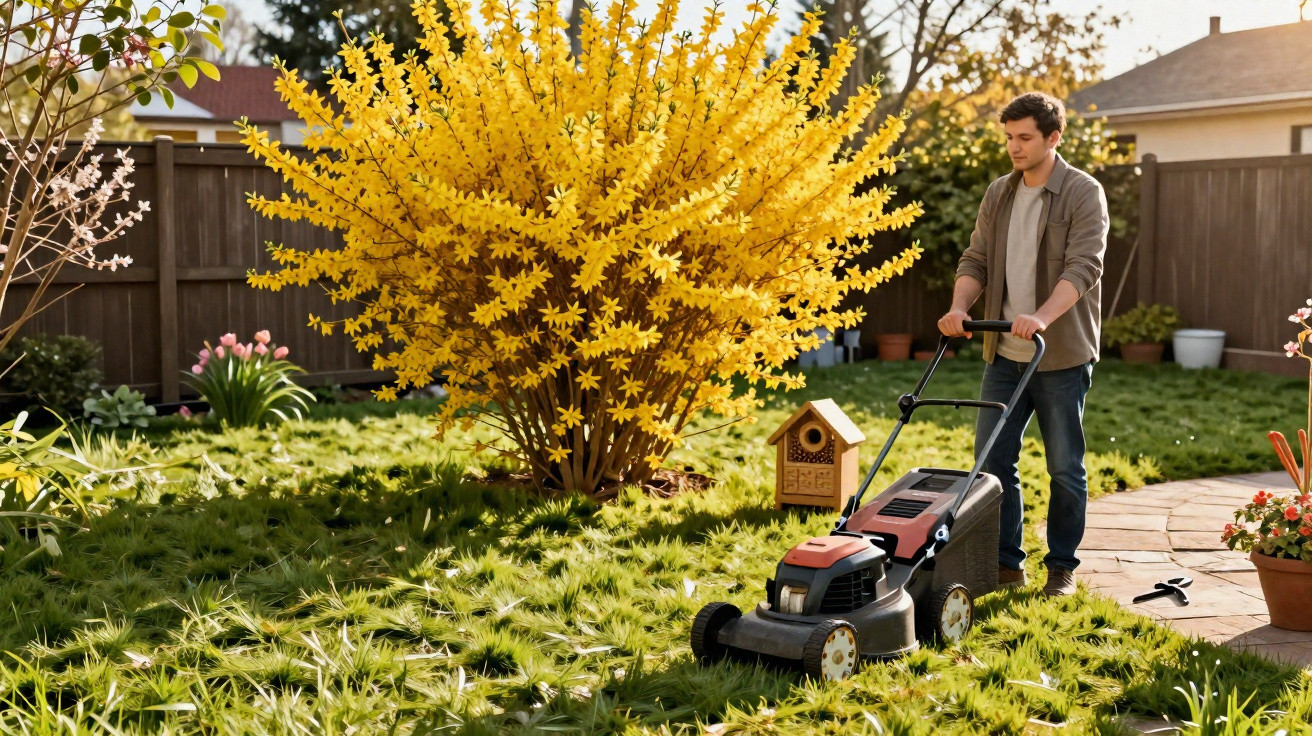
Moss is spreading, the lawn looks dull, and the urge to “finally get the garden in order” is growing. Yet early spring brings a common trap: mowing the lawn too soon damages the grass blades and can quietly undermine the foundations of a thick, rich green sward. Nature does, however, provide a clear indication of the right time – and it shines bright yellow.
Why the right spring timing affects the entire summer
After winter, the most important changes in a lawn initially happen unseen beneath the soil. Roots rebuild their strength, develop new fine roots and create a denser root network. This stage determines how well the turf will later cope with heat, foot traffic and disease.
Anyone who reaches for the mower too soon forces the lawn to use its reserves in the wrong way. Rather than strengthening its roots, the grass has to produce new leaves immediately. The result is shallower growth, less root mass and a much greater susceptibility to dry spells and fungal diseases.
The first mow after winter determines whether a lawn becomes a hard-wearing play surface or a patchy problem area.
When deciding when to begin, lawn experts pay less attention to the calendar than to temperatures and soil conditions. The following are useful rules of thumb:
- Night-time temperatures have remained above roughly 4°C for several nights in a row.
- Noticeable blade growth begins once the soil reaches around 6°C.
- The ground is no longer muddy, but has dried slightly and is firm enough to walk on.
Below these thresholds, the lawn is effectively still in energy-saving mode. Every cut uses energy without proper growth having started. A few days of patience can pay off for months.
The garden’s yellow signal light: when forsythia flowers
Rather than relying on a thermometer, many experienced gardeners look to a shrub found in countless front gardens: forsythia. This woody plant usually opens its vivid yellow flowers before its own leaves appear. That is precisely what makes it such a useful natural timekeeper.
Once forsythia is in full flower in your garden or nearby, the growing season has gathered momentum. It is then worth inspecting the lawn closely. If it looks freshly green and soft, with clearly visible new growth, the first mow can be planned – provided the weather also cooperates.
The key criteria for getting started at a glance:
- Forsythia in the surrounding area is flowering clearly and abundantly.
- No spells of night frost are forecast.
- The lawn has visibly grown and looks deep green and springy.
- The soil is no longer waterlogged, with no puddles or muddy patches.
- The grass is completely dry, with no moisture remaining on the blades.
Before the first cut, lightly rake over the lawn with a leaf rake. This lifts old leaves, dead grass and cushions of moss, allowing more air and light to reach the base of the blades. Afterwards, deliberately set the mower to a high cutting height.
First lawn mow: a gentle start instead of drastic treatment
At the beginning of the season, the aim is not to cut the lawn down to golf-course length. The objective is a careful trim that encourages growth without removing too much leaf material from the plants.
For the first pass, follow the one-third rule: never remove more than one third of the blade length.
In practice, this means:
- Set the lawnmower to a high setting, usually a cutting height of 5 to 7 cm.
- Sharpen the mower blade beforehand, or have it checked.
- Mow slowly rather than rushing over uneven areas.
- Avoid spring bulbs such as daffodils, crocuses and tulips.
A sharp blade produces a clean cut rather than tearing the grass. Blunt blades fray the tips, causing the ends of the grass to turn yellow and making it easier for pathogens to enter through these wounds. Cutting too low straight away places additional stress on the plants and creates gaps for moss and weeds.
How often should you mow in spring?
After its first cut, a healthy lawn responds with fresh new shoots. The question then becomes how often to mow. A broad spring guideline is one or two cuts each week, depending on growth, grass variety and location.
There are several reasons for this:
- more frequent but smaller trims keep the turf dense;
- the blades branch more strongly and form additional side shoots;
- moss and weeds find it harder to spread.
Mowing only occasionally but cutting extremely short often has the opposite effect: the lawn may look short, but it becomes patchy and uneven.
No Mow May: why mowing less helps save insects
Alongside the question of the ideal mowing date, another issue is becoming increasingly important: how much lawn really needs to be kept closely cut? The UK initiative “No Mow May” encourages people to mow as little as possible during May and deliberately give the lawn more freedom.
The principle is simple: mow only paths and seating areas, leave other parts to grow longer, and give any flowers that appear naturally the chance to bloom. Many amateur gardeners say that this not only saves time but also brings noticeably more life into the garden.
When part of the lawn becomes a flowering area, a uniform green space turns into a vibrant habitat for bees, bumblebees and butterflies.
Dandelions, daisies and other wildflowers in particular provide valuable early-season nectar when little else is in bloom. Gardening organisations point out that countless insect species depend on these first flowers. Without them, bees and other pollinators have too little food at the start of the season.
How to incorporate a “wild” area into the garden
Anyone who does not want to let the entire lawn grow wild can still create structure with a few straightforward approaches:
- create clearly mown paths to frame taller sections;
- designate one side of the garden as a flowering strip;
- mow only every four to six weeks and leave some of the cuttings in place;
- keep children’s play areas short and firm enough for regular use.
The contrast between precisely cut strips and loosely growing flowering islands can often look more interesting than a completely uniform short lawn. Many local authorities are setting a good example by allowing verges along paths and areas of public land to grow longer.
Tips for a long-lasting, resilient lawn
As well as choosing the right time to start in spring, year-round care also matters. A few basic principles can help you enjoy your green space for the long term:
- Fertilise in moderation: In spring, an organic or organic-mineral fertiliser supports the development of the turf. A second application in summer helps the lawn remain stable when it is frequently used for play or entertaining.
- Water properly: Water deeply but less often instead of applying a small amount every day. This encourages roots to grow further into the soil and cope better with periods of heat.
- Scarify only when needed: Heavy moss growth can indicate waterlogging, compaction or a lack of nutrients. Gentle scarifying once a year is usually sufficient – and only if the turf appears strong enough.
- Adapt use of the lawn: Football goals, trampolines and paddling pools put substantial strain on grass. Change their position, move heavily used areas from time to time and reseed worn patches specifically.
Those who work with the natural rhythm of the soil and plants will have less to repair later. The yellow blossom of forsythia is not merely an attractive splash of colour, but a dependable signal that is easy to read. Combined with a considered approach to mowing, it gradually creates a garden that looks cared for while continuing to provide a habitat for countless small residents.



Comments
No comments yet. Be the first to comment!
Leave a Comment