
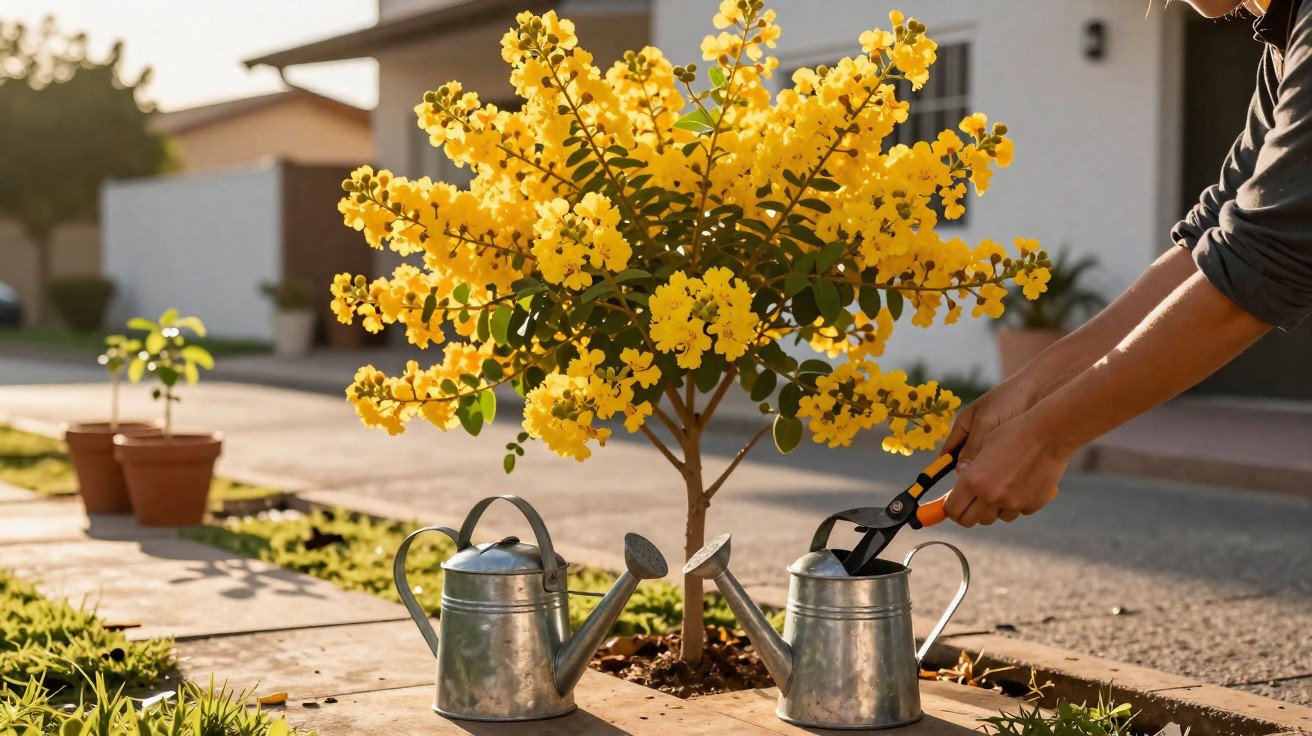
Finding the right vegetation for small residential spaces means balancing beauty with practical functionality. The charming yellow crape myrtle stands out as an excellent decorative choice for anyone seeking quick shade without compromising pavement structures or dealing with frequent, complex day-to-day maintenance.
How does the crape myrtle adapt to small gardens?
This native species has a shrubby growth habit that is ideal for compact pavements and narrow side passages. Its controlled upright growth prevents urban structural issues, allowing residents to enjoy a pleasant setting with cool shade without the risk of cracking expensive paving.
As well as enhancing the front of a home, the plant shows impressive climatic resilience in prolonged full sun. This balanced botanical behaviour makes the shrub a practical option for those wishing to refresh their home landscaping while ensuring unrivalled daily practicality in ornamental care.
Below are the main benefits of growing this species in the garden:
- Shallow roots: Its non-aggressive root system helps prevent cracks and damage to paving and pavements.
- Full sun: The plant requires strong light and thrives in intense heat to develop well.
- Fast growth: It quickly reaches its ideal size, creating shaded areas in very little time.
- Wildlife attraction: Its attractive yellow flowers act as a powerful natural draw for beautiful butterflies.
- Simple pruning: It responds very well to tidying cuts, which help encourage abundant new flowering.
What care ensures the shrub flowers fully?
Appropriate watering is essential for successful planting, as the growing medium needs consistent, moderate moisture. Preventing the soil from drying out completely protects the foliage from severe dehydration caused by extended direct exposure to intense heat from the sun.
In addition, applying good-quality bone meal enriches the soil with essential organic matter to strengthen plant nutrition. This regular supplement encourages branches to produce renewed, lush flower clusters that visually enhance any landscaping project with long-lasting vibrant flowers.
How should maintenance pruning be carried out correctly?
Making precise cuts immediately after the end of each flowering cycle supports healthy structural renewal in the shrub. Removing dry tips encourages the prompt emergence of vigorous new shoots laden with magnificent ornamental buds, with extreme ease of cultivation.
Special Pruning Tip
Encouraging flowering
As flowers appear mainly at the ends of new branches, regular pruning is essential to keep the plant full of life.
Carrying out this straightforward task ensures that the shrub renews its shoots and flowers intensely during the warmer times of year.
The flexibility of this plant allows its height to be controlled precisely according to the space available in the planned outdoor area. Gardeners can shape hedges or maintain compact crowns perfectly through strategic periodic work, preserving harmony with complete safety.
See the essential steps for pruning the plant below:
- Use sharp pruning shears so that thin branches are not crushed.
- Always cut back the tips of branches just after old flowers have fallen.
- Remove dry or poorly formed branches to improve internal air circulation.
Why is yellow crape myrtle ideal for residential pavements?
The lack of an aggressive root system makes this shrub an ideal choice for narrow residential public pavements. Its unobtrusive roots grow without applying destructive pressure beneath urban surfaces, avoiding structural repair costs caused by invasive aggressive roots.
Alongside the physical protection it provides for concrete surfaces, its small size makes it easier to accommodate overhead electrical wiring in residential neighbourhoods. Homeowners can combine striking colourful landscaping with current local authority urban planting rules without creating unwanted urban conflicts.
Here are the reasons that make it an ideal choice for public pavements:
- Its compact size does not interfere with the street's high-voltage cables.
- The flowers do not create excessive mess or stain the surrounding ground.
- The species is extremely resistant to pollution in modern cities.
How can you start growing it in pots or flower beds?
Buying healthy young plants produced by qualified growers provides a promising start to home cultivation. Checking the condition of the root system ensures the shrub can absorb water and nutrients efficiently, speeding up fast growth in its final location.
Choosing spacious containers with suitable drainage holes at the bottom prevents harmful moisture build-up around the delicate roots. Careful preparation of the flower bed makes it possible to establish a beautiful tree that will not crack the pavement, creating a long-lasting landscaping effect that enhances the entire residential property.

Comments
No comments yet. Be the first to comment!
Leave a Comment