
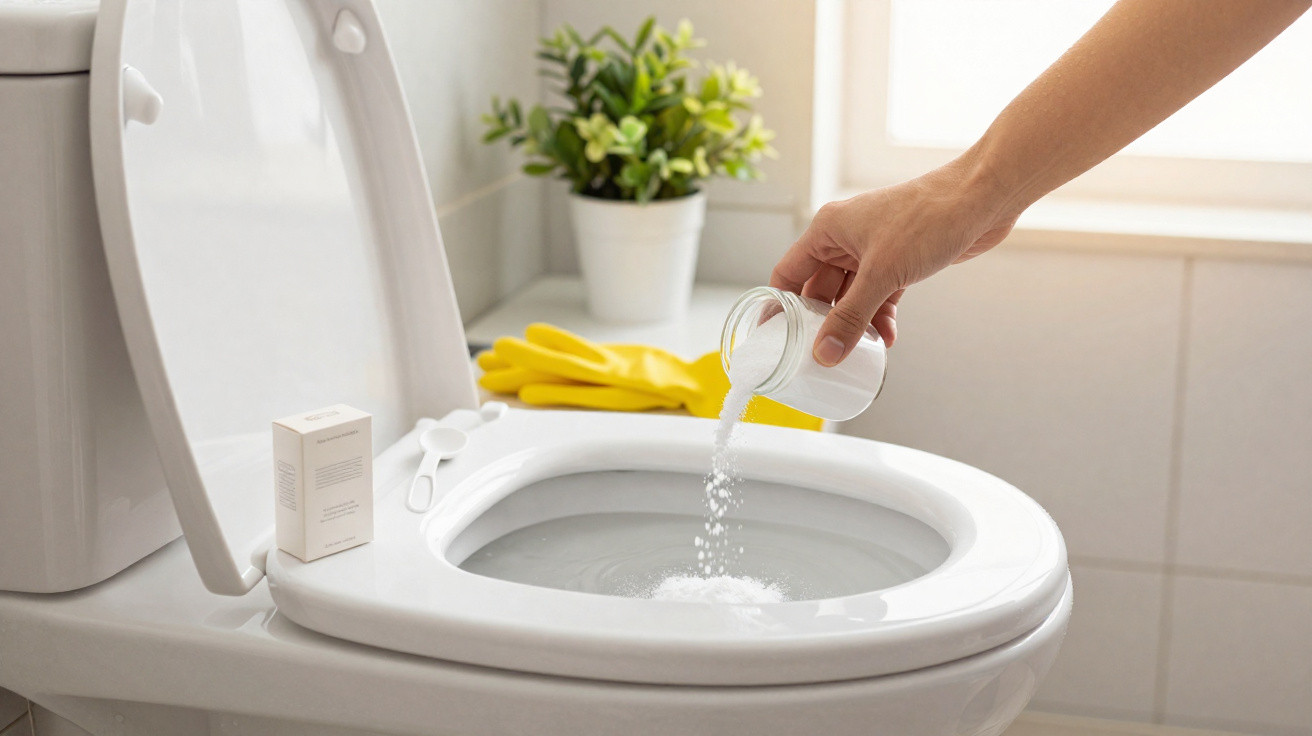
Putting bicarbonate of soda in the toilet cistern can help to cut down odours, loosen light grime and limit the early build-up of minerals on the tank’s internal surfaces. This practice is not a replacement for thorough cleaning and will not fix leaks, but it is an easy maintenance step that can prevent issues from becoming apparent only once flushing starts to smell unpleasant or loses effectiveness.
What does bicarbonate of soda deal with inside the toilet cistern?
A toilet cistern is enclosed, damp and holds standing water between flushes. Over time, it may develop slime, biofilm, rust marks, mineral residue and unpleasant smells, especially in seldom-used bathrooms or properties with harder water.
Bicarbonate of soda is mildly alkaline and gently abrasive. As a result, it can neutralise odours and lift surface dirt without the harshness of leaving chlorine-based products in the cistern permanently. Household cleaning sources recommend it as a natural maintenance option, while noting that it is not a powerful disinfectant.
Why should you not neglect the toilet cistern?
Many people clean only the visible parts of the toilet and overlook the cistern. However, water from the tank flows through the flush, around the inner rim and into the toilet bowl; if the cistern is dirty, some of that build-up can reappear in the bowl as staining, odours or dark lines.
- Helps reduce the smell of stagnant water.
- Limits light accumulations of slime and dirt.
- Supports maintenance against recent mineral deposits.
- Reduces reliance on strong tablets inside the cistern.
- Makes manual cleaning easier when carried out regularly.
What is the right amount of bicarbonate of soda?
For a standard toilet cistern, use around half a cup to one cup of bicarbonate of soda. Using more offers no benefit: excess powder can settle on the bottom, turn into a paste and interfere with the mechanism if it is not properly dissolved and rinsed away afterwards.
The safest approach is to use bicarbonate of soda as part of cleaning rather than pouring it in unchecked every day. Cleaning guides advise using no more than one cup per application and flushing the system thoroughly after its contact time.
How should it be applied correctly?
The most effective method begins when the cistern is nearly empty, as this allows the bicarbonate of soda to reach the tank’s sides and base more effectively. Before starting, turn off the toilet’s water supply and flush to lower the water level.
- Turn off the water supply to the toilet cistern.
- Flush the toilet to empty the tank as much as possible.
- Scatter half a cup to one cup of bicarbonate of soda over the inner walls and bottom.
- Leave it to work for around 30 minutes.
- Scrub with a long-handled brush, without putting pressure on rubber or plastic parts.
- Turn the water supply back on and flush two or three times to rinse thoroughly.
How often should you repeat the process?
In normally used bathrooms, cleaning the cistern every one or two months is generally enough. In damp settings, homes with hard water, rarely used guest bathrooms or where odours occur often, monthly maintenance may be appropriate.
A more thorough cistern clean, including checking components, removing slime and washing the inside walls, can be done a few times each year. Real Simple also advises cleaning the tank periodically to prevent build-up and corrosion, using bicarbonate of soda and, when needed, vinegar carefully.
What should not be mixed in the toilet cistern?
Do not combine bicarbonate of soda with bleach, chlorine tablets or unknown chemical products. Improvised mixtures can produce irritating fumes, damage rubber parts and affect the internal flushing components.
It is also best not to leave strong tablets in the cistern on a permanent basis. Maintenance specialists warn that chlorine-containing products can dry out rubber components, flappers and seals, eventually causing leaks and weak flushing.
Bicarbonate of soda helps, but it does not fix mechanical faults
If the cistern is leaking, continually refilling, flushing weakly or making constant noise, the issue is likely to involve the float, flapper, inlet valve or seal. Bicarbonate of soda will not solve this; the component must be adjusted or replaced.
The same applies to old rust marks and thick limescale deposits. Bicarbonate of soda works best for light maintenance, while established deposits may require a specific product and care to avoid damaging the components.
A simple habit that keeps the bathroom cleaner for longer
Using bicarbonate of soda in the toilet cistern is useful because it addresses a part of the bathroom that is almost always forgotten. It can control odours, loosen light dirt and keep the cistern in better condition between deep cleans.
The key is the amount and frequency: half a cup to one cup, a short contact time, gentle brushing and a complete rinse. When done without overusing it or making hazardous mixtures, this straightforward routine reduces smells, improves cistern hygiene and extends the life of internal flushing parts.

Comments
No comments yet. Be the first to comment!
Leave a Comment