
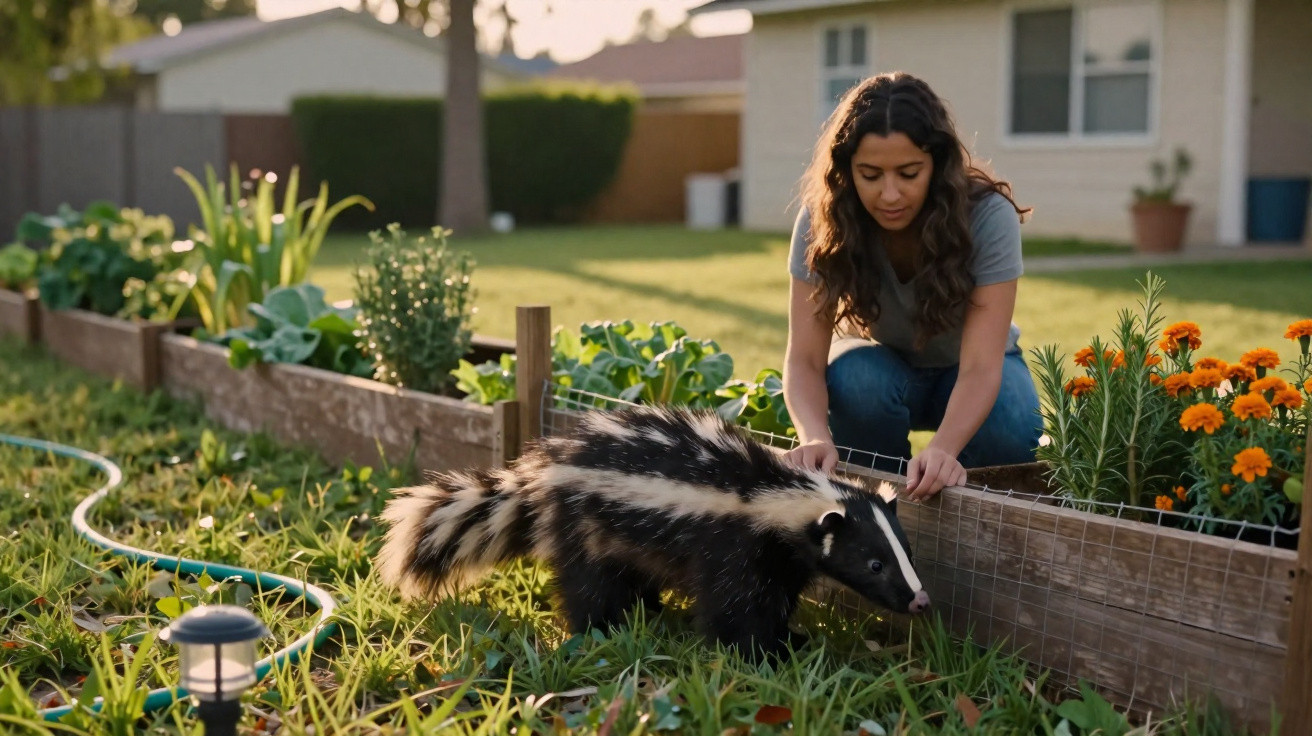
People who live in or travel to North America and have a house with a garden often encounter them sooner than they would like: skunks, more precisely striped skunks. These black-and-white nocturnal visitors look for shelter beneath verandas, sheds or decks, and besides their infamous smell, they can also damage lawns. However, the problem can be reduced considerably with the right measures, without immediately resorting to traps or poison.
Why skunks come into your garden
Skunks are thoroughly practical animals. They settle where food and shelter are readily available. Understanding this makes it possible to deter them effectively.
“Any garden offering easily accessible food and secure hiding places is practically an invitation for skunks to move in.”
Common attractions around the house
Striped skunks are omnivores. They feed on insects, grubs, small rodents, fallen fruit and unsecured rubbish bags. Sheltered spots for a den are equally appealing. The following are particularly problematic:
- unsecured wheelie bins or rubbish bags
- compost heaps without lids
- fruit trees with lots of fallen fruit left on the ground
- dense ground cover and overgrown beds teeming with insects
- woodpiles, gaps beneath sheds, verandas or decks
- open crawl spaces and poorly sealed foundation areas
In spring - between February and March in many regions - these animals seek quiet, sheltered places in which to raise their young. The space below a timber deck or a gap under a garden shed often provides ideal conditions.
Signs that a skunk has moved in
Skunks are generally active after nightfall, so they are seldom seen during the day. Their presence is instead revealed by other signs:
- small, round holes in the lawn made while searching for grubs
- a lingering, sweet yet pungent musky odour
- tracks with five toes and clear claw marks
- droppings containing visible insect remains or seeds
- repeated routes running along fences or walls
Recognising these clues early allows you to act before a mother and her young establish themselves permanently, which makes the situation far more difficult.
Securing your property with simple barriers
The most effective approach to skunks is preventing them from getting beneath the house, deck or shed in the first place. Physical barriers provide a durable, long-term solution.
How to build an effective skunk barrier
Skunks can squeeze through surprisingly small gaps - often just four centimetres is enough. Inspecting the area around the house thoroughly is therefore essential. A typical barrier is installed as follows:
- Dig a trench around the foundation or affected structure.
- Bury close-mesh wire or fencing, such as aviary mesh, to a depth of at least 60–90 centimetres.
- Bend the bottom edge outwards beneath the soil to create an L-shape that prevents digging underneath.
- Extend the mesh at least 30 centimetres above ground level.
- Secure the edges with soil or stones, and seal gaps around pipes, vents and cracks.
When blocking off the space beneath a deck, make sure that an inspection opening remains available afterwards. Otherwise, you may not notice if another animal settles underneath.
“A tightly fitted foundation mesh is like a seat belt for the garden: once properly installed, it works for years.”
Choose the right time and do not trap young animals
Many skunks rear their young between May and August. Completely sealing every entrance during this period risks leaving young animals to starve inside the den. The resulting smell is even worse, and there may also be legal consequences.
During these periods, one-way doors are a suitable option. These specialist flaps open from the inside out but prevent re-entry. The animals can leave, yet cannot regain access to the shelter.
Natural ways to keep skunks away
Anyone who does not want to begin with traps or costly construction work can try gentler methods. Many rely on the animals’ sensitive sense of smell or on unexpected disturbances at night.
Light, water and noise: chemical-free deterrents
Motion sensors are especially effective when combined with:
- floodlights or powerful LED spotlights
- sprinklers that activate briefly
- ultrasonic or noise-making devices
The sudden disturbance makes the garden less appealing. Careful positioning is important: place them on known routes, close to suspected dens and at vulnerable areas, such as beneath decks or beside shed walls.
Scents that skunks dislike
A range of scent barriers can be used without poison, although they must be renewed regularly. Common options include:
| Deterrent method | Application | Effective period | Where to use it |
|---|---|---|---|
| Predator urine (fox, coyote) | Apply as a spray or granules | approx. 2–4 weeks | Property boundaries, fence lines |
| Chilli or capsaicin spray | Spray selectively onto soil or around borders | 1–2 weeks | Beds, potential entry points |
| Ammonia-soaked cloths | Place beneath in tins or jars | 3–7 days | Under decks, ramps, sheds |
| Motion-activated sprinkler | Install and adjust sensitivity | Entire season | Lawns, vegetable garden |
If children or pets live in the household, ensure that they cannot come into direct contact with strongly scented products or hot sprays. Although many products are officially described as “animal-friendly”, they can irritate mucous membranes.
Using planting to deter skunks
Plant selection can also make a difference. Strongly scented herbs such as thyme, oregano, sage, lavender and mint create natural scent barriers. Used well, they can look attractive while also discouraging certain animal species.
Those wishing to make their garden appealing to pollinators such as bees and butterflies can combine early-flowering bulbs and insect-friendly perennials with herb borders. This creates a lively but controlled ecosystem where insects are present, without attracting large numbers of grubs to the lawn.
When it is time to call professionals
Some situations exceed what amateur gardeners can reasonably deal with, such as when a skunk is living directly beside the house, has already had young, or regularly sprays people and pets.
What specialist services do
Professional wildlife control companies do more than bring traps. Reputable providers:
- inspect the entire property for possible entry points
- identify why the animals are being attracted in the first place
- catch skunks in live traps and relocate them within the legal framework
- dispose of dead animals correctly
- install permanent barriers and advise on prevention
Strict wildlife legislation applies depending on the state or region. Anyone setting their own traps or transporting animals can quickly face a fine. Specialist companies understand these requirements and act accordingly.
Prevention is an ongoing task
Once skunks have visited, the issue should not be forgotten. Seasonal checks are worthwhile:
- Autumn: tidy beds, collect fallen fruit and secure the compost
- Late autumn: check house foundations and sheds for new gaps
- Spring: inspect all potential hiding places before the breeding season
- Summer: monitor lawn care and insect infestations
Just as a fruit tree can be protected from pests by carefully chosen companion plants, deterring skunks also requires a plan and some patience.
Practical advice for everyday life with skunks
Anyone who already has one of these animals in the garden should not panic. A few basic rules reduce the risk of being sprayed:
- Use a torch at dusk before stepping into dark corners.
- Keep dogs on a lead at night whenever possible.
- Do not walk directly towards the animal; instead, retreat slowly.
- Take warning signs seriously: puffed-up fur, a raised tail and stamping with the front paws.
If you do get a “direct hit”, mixtures of water, mild washing-up liquid and bicarbonate of soda, or specialist odour removers from retailers, work considerably better than the traditional remedy of tomato juice.
Over the long term, it is worth looking at the entire garden system: How many insects live in the soil? Where does food accumulate? Which areas are so quiet and dark that they seem made for a den? Those who answer these questions honestly and adapt the space accordingly will usually encounter skunks far less often - and can enjoy their garden more peacefully again.






Comments
No comments yet. Be the first to comment!
Leave a Comment