
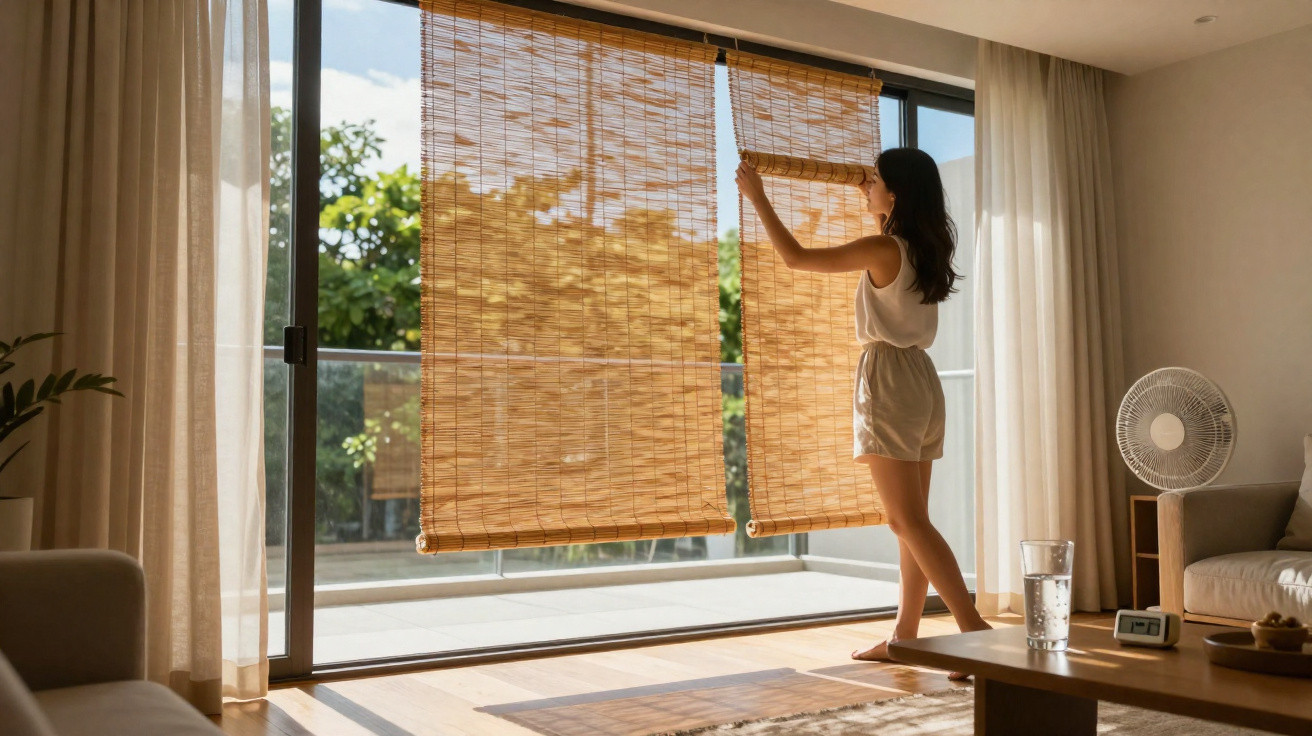
Keeping your home cool without air conditioning can be easier with an old Japanese approach: bamboo screens known as sudare, which shade the sun while still allowing air to pass through. This method relies on shade, natural ventilation and limiting direct heat at windows, making living rooms, bedrooms and balconies more comfortable during summer.
How does the Japanese bamboo technique work?
A sudare is a type of blind or screen made from thin strips of bamboo, reed or another natural material. In Japan, these screens are commonly fitted to balconies, windows and other openings during warmer months to filter sunlight, retain privacy and let air circulate.
Unlike a heavy curtain, it has an open structure. The bamboo provides shade, cuts glare and allows breezes through, whereas thick fabrics restrict ventilation more and may retain heat inside the room.
Why does bamboo help with temperature control?
Bamboo does not cool the air in the way an electric appliance does, but it prevents some heat from entering directly through the window. By stopping solar radiation before it warms the glass, flooring and furniture, the screen limits the build-up of indoor heat, particularly on elevations exposed to afternoon sunshine.
This effect is improved when the screen is placed outside, or very close to, the window. Heat is stopped before it passes through the glass, rather than becoming trapped between the curtain and the interior.
How to use this method in living rooms and bedrooms
For living rooms and bedrooms, the most effective approach is to fit the bamboo screen at the window receiving the strongest sun, while leaving an opening for air movement. Where there are two windows on opposite or adjoining walls, cross-ventilation helps push warm air outside.
- Position the bamboo screen on the outside face of the window whenever possible.
- Leave gaps open to allow air to enter and exit.
- Use the screen mainly during periods of direct sunshine.
- Pair it with a lightweight internal curtain to reduce glare without stopping the breeze.
- Open windows on opposite sides early in the morning and late in the afternoon to refresh the air.
Adapting bamboo screens for flats and modern homes
People living in flats can use roll-up versions, panels resting on the balcony, or screens attached with removable hooks, without drilling into walls. In houses, bamboo can be used on balconies, sliding doors, outdoor dining areas, external corridors and west-facing windows.
For an adaptation that does not require renovation, lightweight removable options are useful:
- Roll-up bamboo blinds for windows and balconies.
- A bamboo panel propped on a balcony with strong sunshine.
- An openwork room divider to shield a glass door.
- A bamboo mat fixed to a pergola, railing or balustrade.
- Plant pots beside the screen to add shade and local humidity.
Does this method replace air conditioning?
Bamboo does not replace air conditioning during intense heatwaves, but it limits solar gain, improves thermal comfort and reduces the need to run appliances for as many hours. The result is more noticeable when the home already has good airflow, limited direct sun on the glass and well-positioned windows.
For the sudare to work most effectively, it should be combined with simple habits: lower the screen during the hottest hours, ventilate when outside air is cooler, and avoid lamps or household appliances producing unnecessary heat. This keeps the home cooler through natural shade, airflow and less reliance on electricity.


Comments
No comments yet. Be the first to comment!
Leave a Comment