
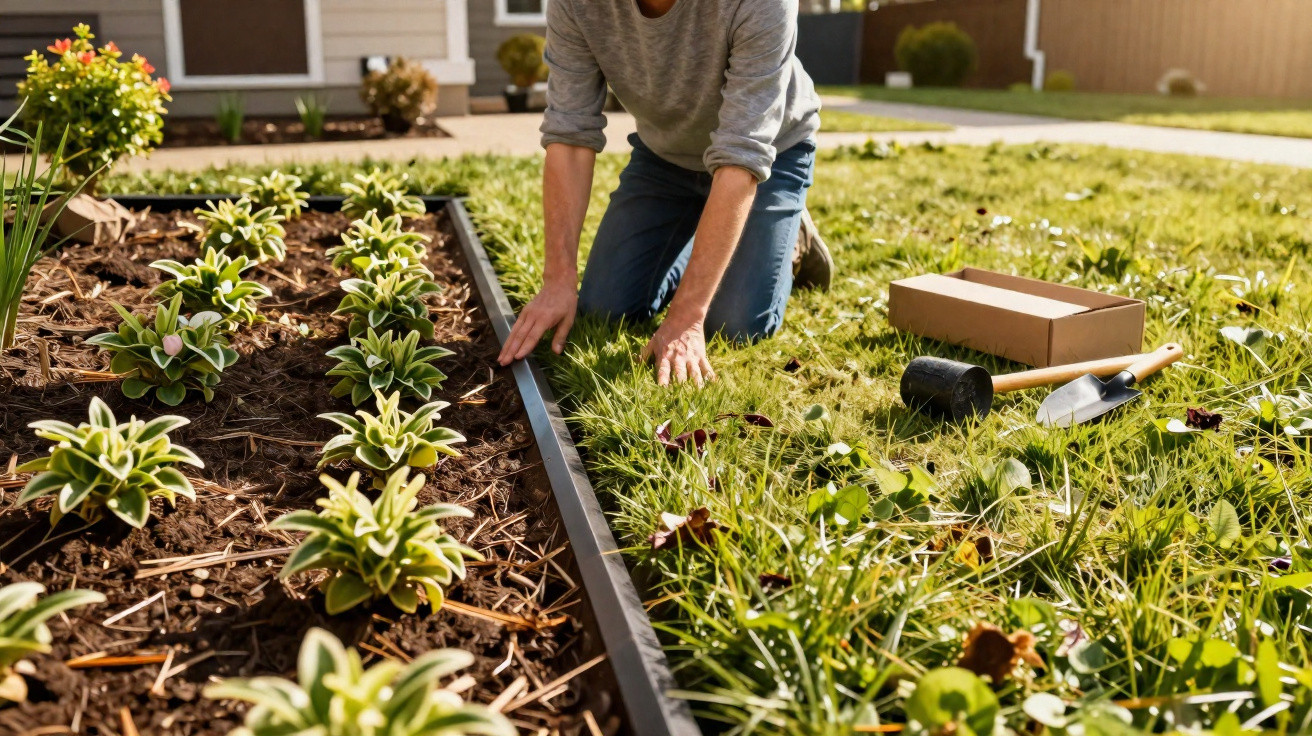
A small front garden, a limited amount of time after work – and suddenly everything looks as though it belongs in a glossy catalogue. An inconspicuous Lidl garden accessory, available online for under £6, can make it happen while delivering the effect of professional landscaping.
A low-cost online product gives the front garden a professional look
It begins with a neighbour stopping in amazement outside a newly tidied garden. The beds are neatly separated, the lines sharply defined and the lawn appears newly arranged. Their first question is: “Which gardener did you hire?” The reply comes as a surprise: nobody had visited, no company or professional had been involved. It took only one evening of work and one small accessory.
The garden owner had been looking for a way to refresh the outdoor space without spending a fortune on stone walls, new paving or major projects. While browsing online, they found a simple Lidl garden edging supplied on a roll. Price: under £6. Expectations: fairly low. The outcome: so convincing that several neighbours assumed the garden had been professionally designed.
A simple plastic strip from the online shop is enough to make beds and lawns look as if they came straight from a gardening magazine.
What the affordable Lidl garden edging offers
The item is a plastic garden border sold as a roll measuring around 9 metres in length. It can only be ordered online, which explains why many amateur gardeners have never heard of it through friends or neighbours.
Its appeal lies in the result: the border creates a distinct divide between the lawn and flower beds. Where grass had previously crept into borders or soil had spilled onto the lawn, there is now a clearly marked edge. Within minutes, the garden looks considerably more structured, without the cost of natural-stone edging or concrete work.
Visually, the edging forms a calm, dark line that highlights the shape of each bed. Flower borders suddenly look more deliberately planned, while the lawn appears better maintained, even though none of the plants have been changed. This is precisely the difference that leads many visitors to assume the garden was professionally planned.
Material, durability and everyday practicality
The Lidl edging is made from polypropylene, a rigid plastic long proven for outdoor use. According to the manufacturer, the material withstands temperatures of roughly -10 to +60 degrees Celsius without becoming brittle or warping significantly.
The plastic is designed to:
- withstand rain and regular watering;
- cope with frosty spells and summer heat;
- tolerate UV radiation better than many low-cost plastics;
- resist developing ripples as quickly as some unbranded edging products.
At the same time, the strip remains flexible enough to follow gentle curves or circular beds. For the user, this means the roll can be laid out easily, guided around tree trunks or used to create flowing lines without snapping or kinking.
The edging can be cut to the required length using an ordinary knife or sturdy scissors. No specialist tools are required. Anyone who has previously installed rigid concrete or metal edging will immediately notice the difference in effort involved.
The combination of flexibility and stability makes this product particularly appealing for small gardens and front gardens.
Lidl garden edging: key features at a glance
| Feature | Description |
|---|---|
| Length per roll | approx. 9 metres |
| Material | Polypropylene (plastic) |
| Price | under £6 per roll (online shop) |
| Intended use | Separating lawns, beds and paths |
| Properties | flexible, cuttable, weather-resistant |
Installing it in your own garden is straightforward
No specialist equipment or landscaping experience is needed to lay the edging. The owner describes a process that almost anyone can manage in one evening after work.
- Plan the route: First, decide where the line between the bed and lawn should run – straight, curved or circular.
- Unroll the edging: Place the roll along the intended route on the lawn or soil, shaping it roughly into position.
- Shape the curves: Use your hands to form bends, for instance around shrubs or islands of perennials.
- Press it into the ground: Then push the lower section of the edging into the soil with your foot until it stands firmly.
- Adjust the length: Trim any protruding ends to fit.
Where the ground is particularly compacted, the soil can first be lightly cut with a spade to make installation easier. In light garden soil, pressure from a shoe is often entirely sufficient.
Why the garden looks tidier over the long term
The visual improvement is only one benefit. In day-to-day use, the edging also offers practical advantages. The separation between lawn and bed helps stop grass spreading sideways into borders, where it can be difficult to reach.
The edge also acts as a guide for the lawnmower. Many models can run with one wheel directly alongside the border, reducing the amount of finishing work needed with lawn shears. Weeds attempting to spread from the lawn into the beds are slowed down and can be dealt with more easily before they establish themselves.
Anyone with little time for garden maintenance benefits from clear structures – they save minutes during every mowing and maintenance session.
Which gardens benefit most from Lidl edging
This product is primarily aimed at owners of small to medium-sized gardens who want quickly visible changes. Front gardens, narrow borders alongside driveways and compact terraced-house gardens often gain particular benefit from clear definition.
The edging is useful, for example, for:
- separating ornamental beds from the lawn in a front garden;
- defining a herb or vegetable bed;
- creating a neat line beside a gravel or bark-mulch path;
- framing individual specimen plants or small islands of perennials.
Anyone wanting to edge very large areas or long driveways will need a corresponding number of rolls. In these cases, it is worth calculating whether natural stone rows or metal edging might make more sense over time. For a typical terraced-house garden with 1–3 beds, however, the plastic option remains difficult to beat on price.
Points to consider before buying and using it
Although this is an inexpensive solution, it is worth considering its potential limitations. Plastic borders generally last for many years, but can reach their limits under extreme strain – for example, if cars repeatedly drive over them. More robust stone or metal options are better suited to heavily used edges, such as those beside parking spaces.
Visually, the simple dark line often suits modern homes with clean shapes very well. In romantic natural gardens filled with perennials and old fruit trees, some people may prefer less visible transitions made from timber or stone. A combination can work well here: use natural materials in prominent areas and the affordable plastic solution in less noticeable zones.
Practical tips for an even better result
Those wishing to get the most from the affordable edging should keep a few simple points in mind. A clean divide between lawn and bed looks noticeably more refined if the lawn is trimmed and the bed lightly cultivated immediately after installation. This allows existing unevenness to disappear straight away within the new overall look.
Many amateur gardeners also use the edging to try small design experiments: a semicircular bed in front of the patio, a curved edge along the house wall or a framed gravel bed beneath a shrub. Because the material is inexpensive and easy to alter, the risk remains low – if necessary, the line can simply be redrawn the following year.
Anyone concerned about sustainability should check whether the polypropylene used is recyclable and take the rolls to a household waste recycling centre at the end of their life. That way, the solution remains not only inexpensive but also fits somewhat better with a more conscious approach to plastic use in the garden.


Comments
No comments yet. Be the first to comment!
Leave a Comment