
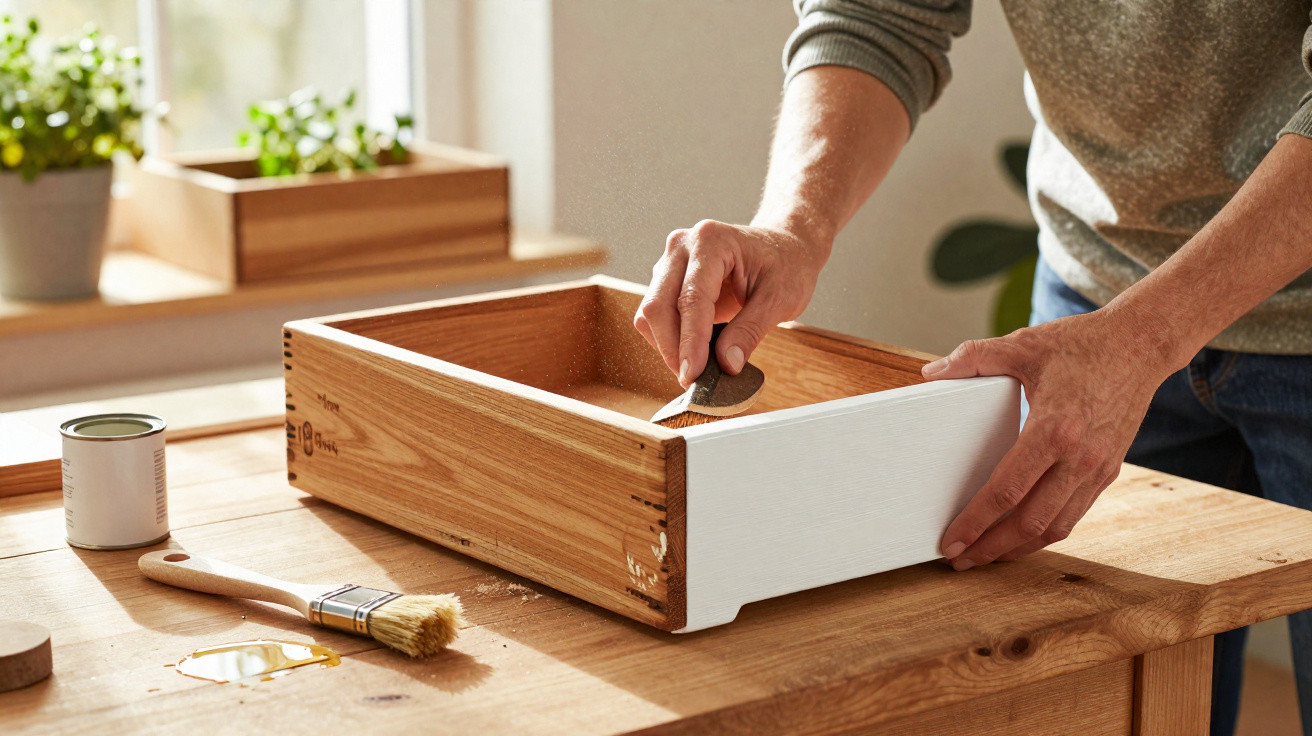
An old drawer left in a corner is often regarded as nothing more than part of a broken piece of furniture. Yet, with a few straightforward alterations, it can take on entirely new uses. Rather than throwing it away, many people upcycle drawers into decorative items and organisers, cutting down on waste, improving household storage and producing tailored solutions for different rooms.
How should you assess and prepare an old drawer for reuse?
Before starting any conversion, check the condition of the structure. Sturdy sides, a securely fixed base and no excessive dampness are key considerations. Once assessed, the drawer may become a wall cubby, tray, planter, shelf or even a side table, depending on its dimensions, material and the weight it will need to carry.
Preparing the wood properly is essential for safe reuse, as dust, peeling varnish and loose nails can affect both its durability and the finished appearance. Very old models often have flaking paint or minor splits, requiring extra care and sometimes small structural repairs.
- Initial cleaning: remove dust, cobwebs and residue with a damp cloth and mild detergent.
- Hardware inspection: take off damaged runners, exposed nails and rusty screws.
- Sanding: use sandpaper in different grits to even the surface and remove splinters.
- Repairing imperfections: apply wood filler to holes and cracks where required.
What are the most common transformations for upcycled drawers?
With only a few tools, a drawer can be turned into practical solutions for various rooms without major renovation work. Its rectangular shape makes it easy to fit onto walls, into corners, on worktops or even beneath existing furniture, creating one-off pieces suited to the available space.
Popular ideas include using it as a wall cubby, document organiser, decorative tray or even a mini bar. More imaginative options include small pet beds or book storage beside the bed. In many projects, the interior is lined with wallpaper or self-adhesive fabric to create an appealing visual contrast.
How can you protect drawer wood indoors and outdoors?
If an upcycled drawer is intended for damp settings or outdoor use, waterproofing is vital. Without this protection, the wood can swell, warp, develop mould and quickly lose its strength, particularly when used as a planter or hanging garden.
Commonly used products include marine varnish, wood stain, sealer with gloss paint, and acrylic or epoxy resins. The right choice depends on where the item will be used and the desired finish. In every case, follow the manufacturer's stated drying time, apply more than one coat and renew the protective layer regularly, especially on balconies and in outdoor areas.
What care do upcycled drawers need in everyday use?
Regular use of upcycled drawers calls for a few simple measures to maintain their structure and finish. Outdoors, it is advisable to place them beneath partial cover, keep them off direct contact with the ground, and use pots with saucers or internal liners in planters to limit water exposure to the wood.
Indoors, periodically inspect for cracks, damp patches or loose hardware. Tighten screws and touch up the finish whenever needed. This modest maintenance routine can give an old drawer a long life as a decorative and practical feature, demonstrating how a seemingly unusable furniture part can become a creative, sustainable household resource.



Comments
No comments yet. Be the first to comment!
Leave a Comment